Is Douglasville a Good Place to Buy a Rental Property in 2026?

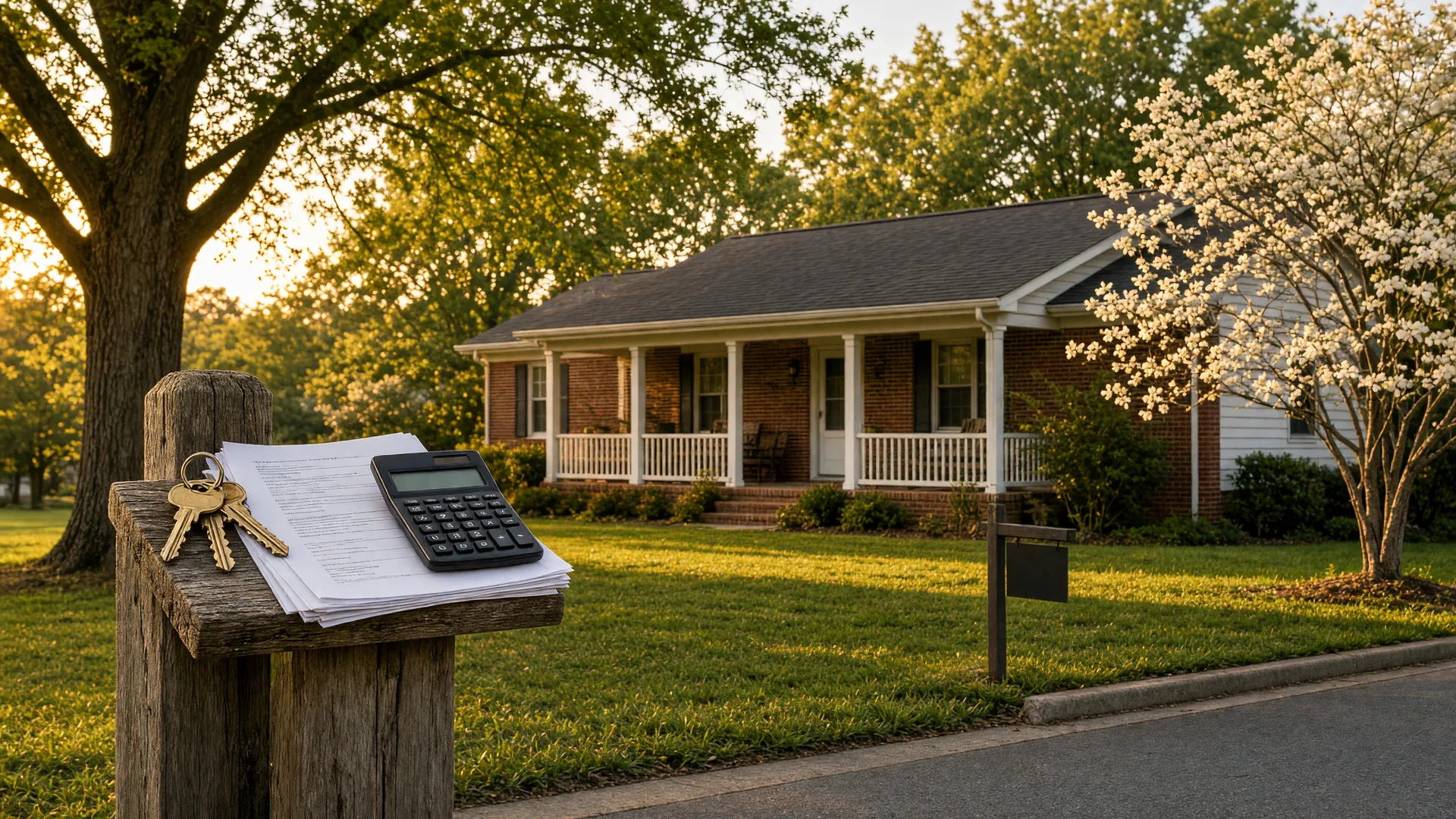
Is Douglasville a good place to buy a rental property in 2026? The honest answer is yes, for cash flow, if you buy at the right price and know the Georgia rules first. Douglasville sits at a median around $263,000, down roughly 5% year over year, which makes it one of the most affordable entry points in Metro Atlanta, and 3-bedroom rents near $1,820 to $2,010 a month support gross yields around 7%. The catch is that this is a buyer's market: appreciation is flat, so the deal has to work on rent from day one. Here is what the 2026 numbers show, where the cash flow actually comes from, and the landlord-tenant rules to know before you hand over keys to your first tenant.
What the 2026 Douglasville Market Data Says
This is a market where the investor math starts with the monthly update I publish for Douglasville. The median sale price is around $263,000, down about 5% from a year ago, with roughly 5.9 months of supply. That is a genuine buyer's market, and for a rental buyer it cuts in your favor: more inventory, more negotiating room, and a list-to-sale ratio near 95.3%, which means homes routinely close 4% to 5% below asking.
The fastest-moving band is the affordable stock. Homes in the $180,000 to $250,000 range attract first-time buyers, investors, and renters transitioning to ownership, while new construction in the $250,000 to $320,000 range competes hard with rate buydowns and closing-cost credits. Above $350,000 the buyer pool narrows sharply and days on market stretch out. What that means for you: the same inventory pressure that is frustrating sellers is creating the entry prices investors look for, especially in the older brick ranch and split-level stock.
Rents and Cash Flow: The Numbers That Matter
The reason investors keep asking about Douglasville is the rent-to-price signal. Public rental trackers put 3-bedroom house rents around $1,820 to $2,010 a month against a median price near $317,000 to $348,000, a gross yield of roughly 7% to 7.6% before expenses. Net cap rates land around 5.2% to 5.8%, with trackers reporting a median near 5.5%. For reference, that beats intown Atlanta, where caps often run 3% to 5%, though South Fulton runs higher still, near 6.1% to 7.5%.
Two caveats before the spreadsheet gets too exciting. First, gross yield is not cash flow: Douglas County property taxes, rental insurance, vacancy, maintenance, and management at 8% to 10% all come out before you see a dollar. Second, the cap rate is built on the price you negotiate, not the asking price. A home bought $30,000 below market changes the return meaningfully, which is why off-market work and BRRRR are so popular in this part of the metro. My Atlanta Investor Index ranks Douglasville among the cheapest verified entries in the region on the same public data, and the cap rate guide walks through the neighborhood-by-neighborhood spread.
Where the Deals Actually Are
Douglasville is not one market, it is a stack of pockets along I-20, and the rental pool varies with each one. The classic 3-bedroom brick ranch under $300,000 is where the rent-to-price ratio works best: older stock, straightforward tenant expectations, and a maintenance profile you can predict. Newer builds in the $250,000 to $320,000 band rent for more but carry two problems: the price is firmer, and builder incentives keep competing rents and resale values in check. Homes above $350,000 make weak rentals and slower resales today, so buy them only with a specific plan.
Tenant demand is real and broad: working families, I-20 commuters priced out of Cobb and Fulton, and renters saving toward a first home, which makes up roughly 35% of the housing here. The neighborhood character changes street to street, which is why I drive every address and check county records before recommending a deal. Areas with solid school access and proximity to the revitalizing downtown draw steadier tenants, while pockets closer to the county line skew heavier on turnover and inspections. The Douglasville living guide covers the neighborhoods, and the monthly market update has the full data.
The Georgia Landlord-Tenant Rules Every Douglasville Landlord Should Know
More than one first-time landlord has bought the right house and then lost a year of profit to a process mistake. Georgia's rules are landlord-friendly compared with some states, but they are specific, and the 2024 updates changed the stakes.
Security deposits. For leases entered into or renewed on or after July 1, 2024, the deposit cannot exceed two months' rent. On move-out you must return the deposit, or the balance plus a written itemized statement of deductions, within one month after the tenancy ends or the premises are surrendered and accepted, whichever comes first. Miss that window and you forfeit the right to withhold anything. Withhold without a lawful basis and Georgia law can hold you liable for three times the sum improperly withheld plus attorney's fees. Your protection is documentation: a dated condition checklist with photos at move-in and move-out, and a receipt for every deduction.
Rent increases. There is no rent control in Georgia, so no cap on the amount of an increase, but you cannot raise rent during a fixed-term lease unless the lease allows it. For a month-to-month tenancy, you must give at least 60 days' written notice of an increase.
Entry notice. Georgia has no statute fixing a specific notice period before you can enter a unit; the lease terms and the covenant of quiet enjoyment govern. The standard landlords follow, and the one I recommend putting in the lease, is roughly 24 hours' notice for repairs, inspections, and showings, entered only for a legitimate reason and at reasonable hours.
Evictions. For nonpayment on leases signed or renewed after July 1, 2024, you first give 3 business days' written notice to pay all past-due rent or vacate. If the tenant stays, you file a dispossessory in magistrate court, the tenant has 7 days to answer, and a default judgment produces a writ of possession immediately. If the tenant answers, there is a hearing. For a holdover tenant at will, the termination notice is 60 days. Counties and cities can layer their own rules on top of the state code, so check local ordinances before you set policy.
The Bottom Line: Who Should Buy a Douglasville Rental in 2026
Buy here if you want cash flow from day one, you are buying at or below what recent sales support, and you have a plan for managing the property, either yourself or through a local manager. Skip it if you are chasing appreciation: prices are flat to down this year, and the recovery will follow the downtown revitalization and I-20 improvements on a multi-year timeline. First-time rental buyers do well in the sub-$300,000 band, while investors with capital looking for higher yields should stack Douglasville against South Fulton on the same spreadsheet. And if you are financing, run the deal through a DSCR or conventional investment loan before you make an offer, because the payment has to fit the rent. The investor center has the strategies around all of this.
Frequently Asked Questions
Is Douglasville a good place to buy a rental property in 2026?
Yes, for cash flow, if you buy at the right price. Douglasville sits at a median around $263,000, down about 5% year over year, and 3-bedroom rents near $1,820 to $2,010 a month support gross yields around 7%. The market is buyer-friendly, so the deal has to work on rent from day one rather than on appreciation.
What is the cap rate on a Douglasville rental property?
Public trackers put net cap rates in Douglasville near 5.2% to 5.8%, with a median around 5.5%. South Fulton runs higher, closer to 6.1% to 7.5%, and intown Atlanta runs lower, often 3% to 5%. The number on any specific property depends on the price you negotiate and the expenses you model, so I underwrite every deal individually.
How long does a landlord have to return a security deposit in Georgia?
Within one month after the lease ends or the premises are surrendered and accepted, whichever comes first. The deposit must come back with a written itemized statement of any deductions. Miss the window and you forfeit the right to withhold anything, and Georgia law can hold a landlord liable for three times the sum improperly withheld plus attorney's fees.
How much notice does a landlord have to give before raising rent in Georgia?
For a month-to-month tenancy, at least 60 days' written notice. Georgia has no rent control, so there is no cap on the amount of an increase, but you cannot raise rent during a fixed-term lease unless the lease itself allows it.
How long does an eviction take in Georgia?
The dispossessory process moves through magistrate court in weeks, not months. For nonpayment on leases signed or renewed after July 1, 2024, you first give 3 business days' notice to pay or vacate. If the tenant stays, you file a dispossessory, the tenant has 7 days to answer, and a default judgment produces a writ of possession immediately.
Can I buy a Douglasville rental with a small down payment?
Conventional investment loans typically want 15% to 20% down, and a DSCR loan can qualify you on the property's rent instead of your personal income, which helps investors who already own several homes. Run the financing against the rent before you shop so you know which payment actually pencils on a $250,000 to $320,000 rental.
Let's Run the Numbers on a Douglasville Rental
Douglasville is my home market: the office is right here on Stewart Parkway. I work with first-time rental buyers, portfolio investors, and out-of-state buyers across Metro Atlanta, and I can pull the comps, check the county records, and build the underwriting with you before you make an offer. No pressure, just honest numbers from 500-plus homes in this market. I'm available. I'm ready when you are.
Market figures come from the published Douglasville market update and public trackers, and can vary by methodology and date. Georgia landlord-tenant rules are summarized from O.C.G.A. Title 44, Chapter 7; consult an attorney for your specific situation.