Living in Jonesboro, GA: Neighborhoods, Schools, and Commute Guide
Pros, Cons, Prices & Appreciation: everything you need to know about making Jonesboro home.
What it's like to live in
Jonesboro.
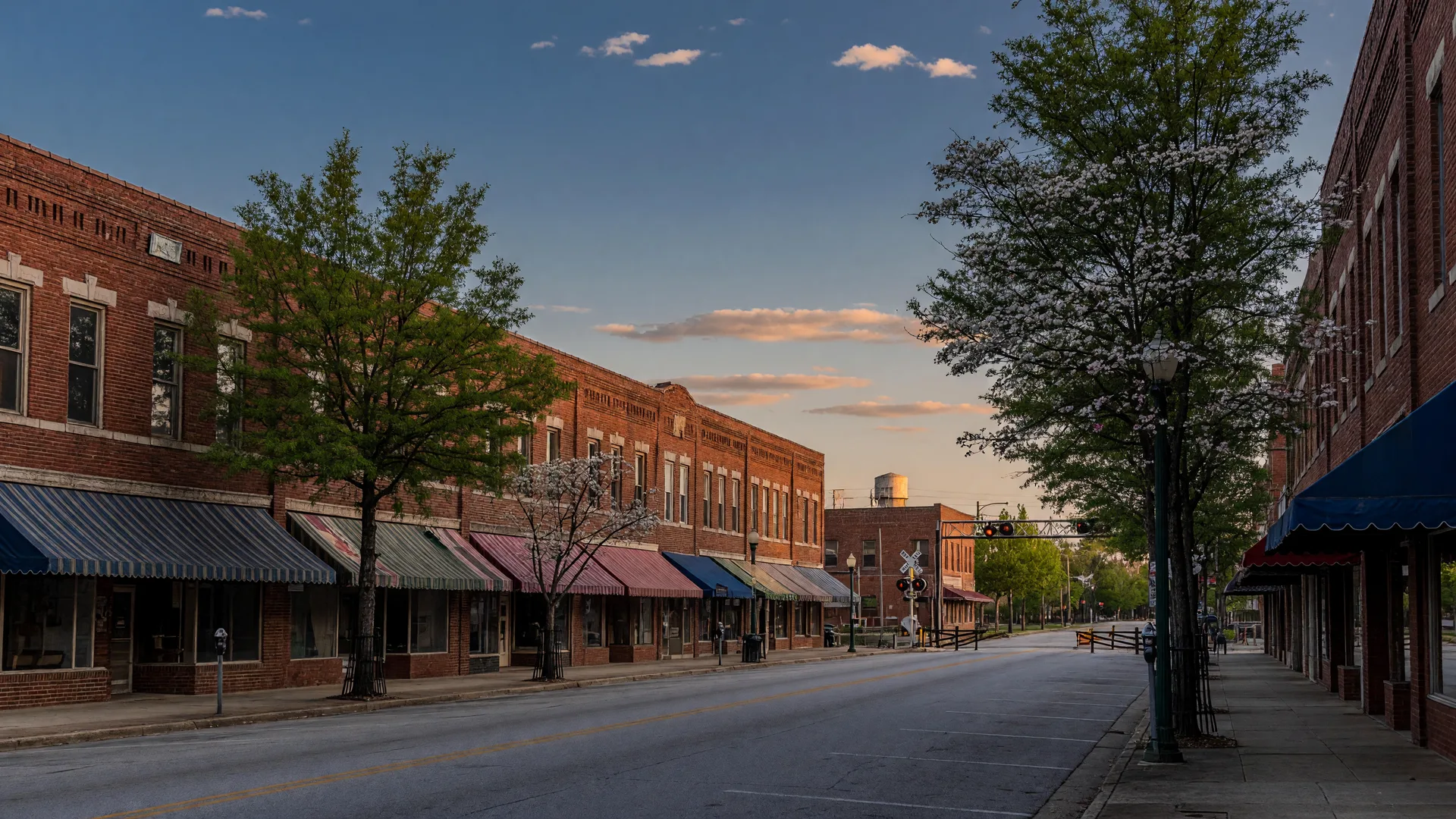
Jonesboro is the county seat of Clayton County, a historic railroad town about 20 miles south of Atlanta with a past that runs deep: it is the real-world setting Margaret Mitchell drew on for Tara in Gone with the Wind, and the downtown depot still anchors the story today. The city itself is small, roughly 6,000 residents, but it sits at the center of South Metro's most affordable housing corridor, minutes from the airport and the I-75 and I-285 flyover. Buyers here get character and history, prices that run well below the Atlanta metro median, and a commute that keeps the city and the airport genuinely close. Jonesboro is a value play first, with the area's revitalization and the airport economy as the reasons it keeps attracting new buyers.
What is it like to live in Jonesboro?
Jonesboro is a small historic city with a big-town location advantage: low South Metro prices, a genuine small-town center, and a commute that keeps downtown Atlanta and the world's busiest airport within reach. The tradeoffs are car dependency, a rush-hour corridor that backs up, and schools that vary by zone. For buyers who weigh value first, it checks more boxes than almost any suburb this close to the city.
The commute to Atlanta
- To the city: Roughly 25–35 minutes via Tara Boulevard and I-75 North to downtown Atlanta in normal traffic; 45–60 minutes at weekday peak. Hartsfield-Jackson Atlanta International Airport is about 15–20 minutes north.
- Transit: No MARTA rail in Jonesboro. The Airport and College Park stations are about a 15-minute drive north, and limited Xpress commuter bus service runs along the corridor. Jonesboro is car-dependent for most daily needs.
- Getting around: I-75 runs just west of the city with Jonesboro Road and Tara Boulevard (GA 54) as the main local arteries north to Atlanta and south toward Griffin. I-285 is a short drive north for east-west travel across the metro.
Schools and family life
- Jonesboro High School (Public: High (Clayton County Public Schools))
- Mount Zion High School (Public: High (Clayton County Public Schools))
- Jonesboro Middle School (Public: Middle (Clayton County Public Schools))
- Kay R. Pace Elementary School of the Arts (Public: Elementary (Clayton County Public Schools))
A good fit for: First-time buyers priced out of intown Atlanta, Airport and I-75 corridor workers, Investors seeking low entry prices and steady rent, History-minded buyers who value small-town character.
The cost of living feel
- Homes: median around $260,000, about ~$150 per square foot.
- Renting: typical rent around $1,300/mo.
- Median Home Price: $260K, Well below the Atlanta metro median of roughly $435K. One of the most affordable housing markets in South Metro.
- Clayton County Taxes: Moderate, Clayton County's millage rate is higher than surrounding counties, but the lower home price keeps the total tax bill manageable for most buyers.
- Cost of Living Index: Below Average, Overall living costs in Jonesboro run below both the Georgia and national averages, led by the affordable housing stock.
- Owners vs renters: A meaningful share of Jonesboro's housing is rental, with steady demand from airport workers, young families, and federal employees tied to the airport economy. Rental values keep pace with the city's low purchase prices.
Dining, parks, and community character
- Parks & Outdoors: Rum Creek Park: sports fields, walking paths, and playgrounds just north of downtown
- History & Culture: Road to Tara Museum: Gone with the Wind memorabilia in the restored historic train depot on Main Street
- Family & Nearby: Atlanta State Farmers Market in Forest Park: one of the largest farmers markets in the Southeast
An honest housing snapshot
- Townhome: $180K – $260K. Townhomes along the Tara Boulevard and Jonesboro Road corridors; popular with first-time buyers, federal workers heading to the airport, and investors.
- Single-Family Home: $220K – $340K. Brick ranches, split-levels, and ranch-style homes in established subdivisions like Fairfield, Flint River Estates, and River Oaks. The core of the Jonesboro market.
- Move-Up / Larger Homes: $330K – $450K+. Newer builds, larger lots, and updated homes at the top of the market, including areas like Silverstone at Mundy's Overlook and the newer subdivisions near I-75.
Price bands are general ranges, not promises. Every block in Jonesboro is different, which is exactly why an honest local read matters before you make an offer.
Jonesboro at a glance.
Why people love
Jonesboro.
Some of the lowest prices in the metro
With a median home price around $260K, Jonesboro is one of the most affordable places to buy within 25 minutes of downtown Atlanta. First-time buyers and investors get real access to homeownership at price points that simply do not exist closer to the city.
Rapid airport and I-75 access
Hartsfield-Jackson is roughly 15–20 minutes north, and I-75 plus the I-285 flyover are minutes away. Airport workers, flight crews, and anyone whose job pulls them across the south metro can build a genuinely short commute here.
Real history and small-town character
The downtown historic district, the Road to Tara Museum, and Stately Oaks Historic Plantation give Jonesboro an identity most suburbs lack. The weekly farmers market and community events keep the small-town feel alive.
Solid rental demand for investors
The airport economy, Fort Gillem's redevelopment corridor, and steady worker turnover keep rental demand consistent. Lower entry prices mean cash-flow math that works for owners who rent out their first home or buy specifically to hold.
North Clayton revitalization momentum
Clayton County has invested in the Jonesboro downtown and the corridor along Tara Boulevard, with new businesses, a restored rail depot, and grant-funded streetscape work drawing attention to the historic core.
More house for the money
The same budget that buys a small condo intown buys an updated brick ranch or a larger single-family home in Jonesboro, most with a yard, a carport or garage, and room to grow.
What you should know
before moving to Jonesboro.
Rush-hour traffic on Tara Boulevard and I-75
The drive north to downtown Atlanta is 25–35 minutes in normal traffic and 45–60 minutes at weekday peak. The I-75 southbound corridor is among the busiest in the metro, so time your commute before you commit.
School quality varies by zone
Clayton County Public Schools serves the city, and outcomes vary by school and feeder pattern. Some campuses are strong and some are struggling academically. Research the exact attendance zone for the address you are considering.
Limited walkability outside downtown
The historic district is walkable, but the rest of Jonesboro is car-dependent. Daily errands, school drop-off, and most services require a drive.
Aging housing stock needs attention
Much of the housing was built in the 1950s through 1970s. Well-maintained homes are great value, but older roofs, HVAC systems, and kitchens can add cost to a purchase. A thorough inspection is non-negotiable.
Central Clayton inventory can be thin
Because prices are low and demand is steady, well-priced homes in the best pockets can go quickly. Buyers who wait too long to make a decision sometimes watch their first choice sell out from under them.
What homes cost in
Jonesboro.
Typical Price Ranges by Home Type
Townhomes along the Tara Boulevard and Jonesboro Road corridors; popular with first-time buyers, federal workers heading to the airport, and investors.
Brick ranches, split-levels, and ranch-style homes in established subdivisions like Fairfield, Flint River Estates, and River Oaks. The core of the Jonesboro market.
Newer builds, larger lots, and updated homes at the top of the market, including areas like Silverstone at Mundy's Overlook and the newer subdivisions near I-75.
What it costs to live in
Jonesboro.
Well below the Atlanta metro median of roughly $435K. One of the most affordable housing markets in South Metro.
Clayton County's millage rate is higher than surrounding counties, but the lower home price keeps the total tax bill manageable for most buyers.
Overall living costs in Jonesboro run below both the Georgia and national averages, led by the affordable housing stock.
How Jonesboro home values
have trended.
-3% to +2% (mixed)
~2–3% annualized
~3–4% annualized
What your budget buys
in Jonesboro.
An updated brick ranch or a well-kept townhome in an established neighborhood. The entry point for first-time buyers and investors in the Jonesboro market.
A larger single-family home with a bigger lot, updated kitchen or baths, and room for a family. Strong value close to downtown and the airport corridor.
The top of the Jonesboro market: newer construction, premium finishes, or a larger home near the I-75 side of the city where inventory is thinnest.
Renting in Jonesboro.
A meaningful share of Jonesboro's housing is rental, with steady demand from airport workers, young families, and federal employees tied to the airport economy. Rental values keep pace with the city's low purchase prices.
How Jonesboro compares to the Atlanta metro.
Jonesboro sits at the affordable end of the Atlanta market: median prices roughly 40% below the metro average, with the tradeoff being a commute that runs longer at peak hours and schools that vary by zone. For buyers who can handle the tradeoffs, the value is genuine.
Best neighborhoods in
Jonesboro.
Downtown Jonesboro Historic District
The walkable heart of the city around the restored train depot, Main Street shops, and the Road to Tara Museum. A mix of historic homes and newer infill, plus the farmers market and community events.
Flint River Estates
Established subdivision on the southwest side with ranch and split-level homes, mature trees, and quiet streets. Popular with families and repeat buyers who value space at low prices.
Fairfield
A solid family subdivision with sidewalks and a mix of home styles. Consistently in demand because of its location between downtown and the I-75 side of the city.
Silverstone at Mundy's Overlook
A newer, higher-end pocket with larger homes and modern finishes. The closest Jonesboro comes to move-up inventory, and it shows in the price.
Indian Hill Estates
An older, affordable neighborhood with big lots and ranch homes. The entry-level price point makes it a favorite with investors and first-time buyers.
River Oaks and the Tara Road Corridor
Along the historic Tara Boulevard corridor, an area of established homes, quick highway access, and steady rental demand from commuters.
Schools & education in
Jonesboro.
Jonesboro High School
Mount Zion High School
Jonesboro Middle School
Kay R. Pace Elementary School of the Arts
Kilpatrick Elementary School
Elite Scholars Academy
Getting around from
Jonesboro.
Roughly 25–35 minutes via Tara Boulevard and I-75 North to downtown Atlanta in normal traffic; 45–60 minutes at weekday peak. Hartsfield-Jackson Atlanta International Airport is about 15–20 minutes north.
No MARTA rail in Jonesboro. The Airport and College Park stations are about a 15-minute drive north, and limited Xpress commuter bus service runs along the corridor. Jonesboro is car-dependent for most daily needs.
I-75 runs just west of the city with Jonesboro Road and Tara Boulevard (GA 54) as the main local arteries north to Atlanta and south toward Griffin. I-285 is a short drive north for east-west travel across the metro.
What to explore in
Jonesboro.
Parks & Outdoors
- Rum Creek Park: sports fields, walking paths, and playgrounds just north of downtown
- Massengale City Park: neighborhood green space on the east side with a playground and picnic areas
- Jonesboro Battle Ground Park: Civil War battlefield site and walking trails at the edge of town
- Clayton County International Park: lakeside recreation and the Spivey Splash water park minutes away
History & Culture
- Road to Tara Museum: Gone with the Wind memorabilia in the restored historic train depot on Main Street
- Stately Oaks Historic Plantation: an 1839 plantation house and heritage center open for tours
- Downtown Jonesboro Historic District: local shops, restaurants, and the weekly farmers market
- Jonesboro's railroad heritage: the depot and platforms that made the town an antebellum rail hub
Family & Nearby
- Atlanta State Farmers Market in Forest Park: one of the largest farmers markets in the Southeast
- Delta Flight Museum: aviation history at Hartsfield-Jackson, about 20 minutes north
- Weekend trips up I-75: downtown Atlanta museums, parks, and sports in under 30 minutes
- Panhandle Park: athletic fields and open space on the south edge of Clayton County
Is Jonesboro right for you?

What I'd tell a friend
Jonesboro is the most honest value play in the southern half of Metro Atlanta. You get real history, a walkable little downtown, and prices that give first-time buyers a genuine shot. Here's what I'd tell a friend: the school zone matters more than the street, so check the exact feeder pattern for that address before you fall in love. The airport commute is genuinely short, which is why so many airline and federal workers buy here. And if you are an investor, the entry prices and steady renter pool make the math work. Jonesboro is not trying to be Buckhead, and that is exactly why it works for the buyers it serves. With 20+ years and 500+ homes sold across Metro Atlanta, I know this corridor well, and I'm available when you are ready to look.
Explore more about
Jonesboro.
Living in College Park
The airport corridor's other value pocket, with MARTA rail access and downtown revitalization.
Living in Riverdale
Nearby Clayton County city with Riverdale Town Center and easy I-285 and I-75 access.
Atlanta Housing Market Report
Current market data, price trends, and inventory levels across the metro.
Contact Tommy Williams
Get honest answers about Jonesboro and any metro Atlanta neighborhood.
Ready to explore Jonesboro?
Whether you're buying, selling, or just getting a feel for Jonesboro, I'm available. I'll give you honest, straight answers about what to expect — no pressure, no fluff.
I'm ready when you are. I'll be in touch.
Thank you for reaching out. I'll review your message and get back to you shortly.
I'll be in touch
Back to HomePlease try again or call me directly. I'm ready when you are.