Living in Riverdale, GA: Neighborhoods, Schools, and Commute Guide
Pros, Cons, Prices & Appreciation: everything you need to know about making Riverdale home.
What it's like to live in
Riverdale.
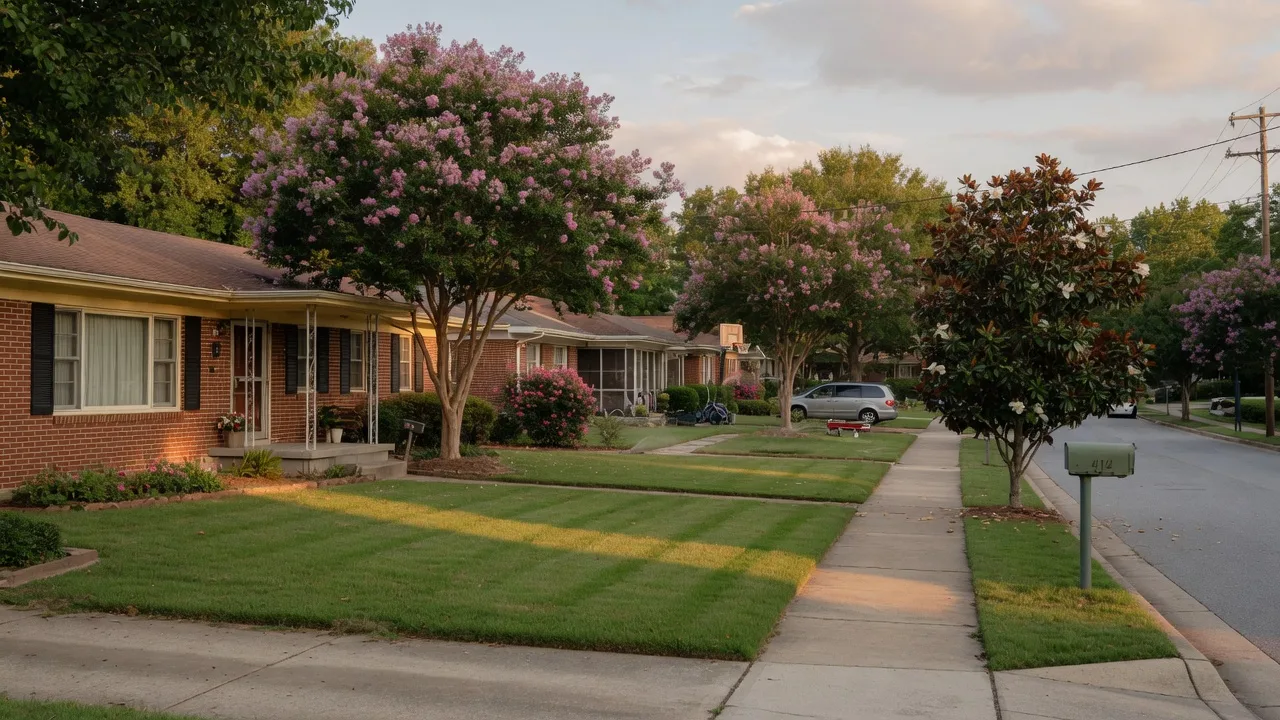
Riverdale is a city of roughly 15,000 residents in northern Clayton County, about 15 miles south of downtown Atlanta and minutes from Hartsfield-Jackson. It grew up as a railroad and agricultural town in the 1800s, and today it is best known as a practical, affordable place to live with quick access to I-75, I-285, and the airport. Main Street anchors a small historic district with local shops and the Riverdale Town Center amphitheater, while the surrounding neighborhoods are dominated by brick ranches and mid-century homes on quiet, shaded streets. For buyers who want the closest thing to an affordable intown-adjacent address, Riverdale delivers a short commute and prices well below the metro median.
What is it like to live in Riverdale?
Riverdale is a practical, affordable Clayton County city with one of the region's best locations: minutes from the airport, I-75, and I-285, with Main Street charm at its center. You trade school prestige and a bulletproof commute for prices that let a first-time buyer actually buy. If proximity and value matter more than status, Riverdale is hard to argue with.
The commute to Atlanta
- To the city: Roughly 20–30 minutes via I-75 North to downtown Atlanta in normal traffic; 35–50 minutes at weekday peak. Hartsfield-Jackson Atlanta International Airport is about 10–15 minutes away via I-285 or Riverdale Road and the airport connector.
- Transit: No MARTA rail inside Riverdale. The College Park station is a 10–15 minute drive north, and limited Xpress commuter bus service serves the corridor. For the airport commute, driving to the airport parking or taking a rideshare past the College Park terminal is the norm.
- Getting around: I-75 and I-285 meet just north of the city, making Riverdale one of the best-connected towns in Clayton County. Riverdale Road (to the airport), GA 85, and Church Street are the main local routes.
Schools and family life
- Charles R. Drew High School (Public: High (Clayton County Public Schools))
- Riverdale Middle School (Public: Middle (Clayton County Public Schools))
- Sequoyah Middle School (Public: Middle (Clayton County Public Schools))
- Church Street Elementary School (Public: Elementary (Clayton County Public Schools))
A good fit for: First-time buyers who want the city close, Airport, airline, and convention workers, Investors seeking rent-to-price value, Commuters who split time between the city and the 285 rim.
The cost of living feel
- Homes: median around $225,000, about ~$155 per square foot.
- Renting: typical rent around $1,350/mo.
- Median Home Price: $225K, About half the Atlanta metro median of roughly $435K. One of the most affordable cities in the region.
- Clayton County Taxes: Moderate, The millage rate runs above nearby counties, but the low home price keeps annual taxes affordable for most homeowners.
- Cost of Living Index: Below Average, Riverdale's overall cost of living runs below the Georgia and national averages, driven almost entirely by housing.
- Owners vs renters: Rental demand in Riverdale is steady and broad: airport workers, young families, and transplants who want an affordable base near the city. The low purchase prices give owners strong rent-to-price fundamentals.
Dining, parks, and community character
- Parks & Outdoors: Riverdale Town Center: amphitheater, splash pad, and green space for community events
- Shopping & Dining: Historic Main Street Riverdale: local restaurants, shops, and the city's small-town center
- Nearby Attractions: Delta Flight Museum: aviation history on the airport campus, about 15 minutes away
An honest housing snapshot
- Townhome: $160K – $230K. Townhomes along the 285 and I-75 sides of the city; a low-maintenance entry point popular with first-time buyers and investors.
- Single-Family Home: $190K – $290K. Brick ranches and split-levels in established subdivisions. The heart of the Riverdale market and where the best value lives.
- Updated / Move-Up: $280K – $380K+. Renovated homes with modern kitchens and baths, larger lots, and the newest pockets near I-285 and the airport side of town.
Price bands are general ranges, not promises. Every block in Riverdale is different, which is exactly why an honest local read matters before you make an offer.
Riverdale at a glance.
Why people love
Riverdale.
A genuinely short commute to the airport and the city
Riverdale sits right at the I-75 and I-285 junction. Downtown Atlanta is roughly 20–30 minutes in normal traffic, and Hartsfield-Jackson is often a 10–15 minute drive. Few suburbs this affordable put you this close to the region's biggest job engines.
Median prices far below the Atlanta average
With a median home price around $225K, Riverdale is one of the most accessible housing markets in the metro. First-time buyers, airport workers, and investors all find entry points here that don't exist north of I-20.
Main Street and the Riverdale Town Center
The historic Main Street district and the Town Center give Riverdale a recognizable center: local restaurants, a splash pad, and the outdoor amphitheater host community events through the year.
Established neighborhoods with real bones
Most of Riverdale's housing stock is well-built mid-century brick ranch homes on larger lots. With updates, these homes offer character and space that newer, smaller builds in other counties can't match.
Proximity to major employers
The airport, the Georgia International Convention Center, Chick-fil-A's support center, Porsche North America, and the growing South Clayton corporate corridor are all within a short drive.
Rental-friendly economics
Low purchase prices and steady worker turnover support consistent rental demand. Many owners buy, live, and later rent out their Riverdale home as their first investment property.
What you should know
before moving to Riverdale.
Weekday congestion on I-75 and I-285
The interchange is convenient and crowded. Morning and evening peak traffic on I-75 North and the I-285 western arc can add 15–25 minutes to a trip that is quick at off hours.
School performance varies by zone
Clayton County Public Schools serves Riverdale, and outcomes differ by campus and feeder pattern. Charles R. Drew High School is the zoned high school for much of the city, with other attendance zones splitting the rest. Verify the address before you buy.
Older housing stock needs upkeep
The mid-century inventory is solid but aging. Budget for updates to roofs, HVAC, and kitchens, and always get a thorough inspection before you make an offer.
Car-dependent layout
Aside from the Main Street and Town Center core, Riverdale is a driving town. There is no MARTA rail in the city, so most errands and commutes require a car.
Limited nightlife and upscale dining
Riverdale has solid everyday dining and family amenities, but nights out with more variety usually mean a short drive to Atlanta or the airport corridor.
What homes cost in
Riverdale.
Typical Price Ranges by Home Type
Townhomes along the 285 and I-75 sides of the city; a low-maintenance entry point popular with first-time buyers and investors.
Brick ranches and split-levels in established subdivisions. The heart of the Riverdale market and where the best value lives.
Renovated homes with modern kitchens and baths, larger lots, and the newest pockets near I-285 and the airport side of town.
What it costs to live in
Riverdale.
About half the Atlanta metro median of roughly $435K. One of the most affordable cities in the region.
The millage rate runs above nearby counties, but the low home price keeps annual taxes affordable for most homeowners.
Riverdale's overall cost of living runs below the Georgia and national averages, driven almost entirely by housing.
How Riverdale home values
have trended.
-3% to +2% (mixed)
~2–3% annualized
~3–4% annualized
What your budget buys
in Riverdale.
A solid brick ranch in an established neighborhood or a well-kept townhome. The classic first home in Riverdale, and a strong investor entry point.
An updated ranch or split-level with modern finishes, a larger lot, and room for a family. The upper tier of the mainstream market.
The top of the Riverdale market: freshly renovated homes and larger properties near I-285 and the airport side of town.
Renting in Riverdale.
Rental demand in Riverdale is steady and broad: airport workers, young families, and transplants who want an affordable base near the city. The low purchase prices give owners strong rent-to-price fundamentals.
How Riverdale compares to the Atlanta metro.
Riverdale's median price sits roughly 50% below the Atlanta metro average, which makes it a genuine first-time buyer and investor market. You trade school performance and a busy highway interchange for proximity and price. For the right buyer, that trade is worth making.
Best neighborhoods in
Riverdale.
Historic Main Street / Town Center
The walkable core of Riverdale around the amphitheater, local restaurants, and the splash pad. A mix of older homes and townhomes with the city's most community-minded atmosphere.
South Hills
An established pocket of 3–4 bedroom brick homes in the mid-to-high $200Ks. Quiet streets, mature trees, and family-friendly scale make it one of the area's most popular choices.
Amberleight
A longtime subdivision with ranch homes, wide lots, and central access to schools and shopping. Reliable value for first-time buyers.
Ashland Estates
An established neighborhood with larger lots and a mix of home styles, popular with families who want space without leaving the city.
Aspen Acres
Quiet, well-kept streets of ranch homes near the 285 side of town. Quick highway access makes it attractive to commuters.
Clayton Ridge and the 30296 Corridor
A residential area near local schools and shopping on the south side of the city, with steady demand from families and investors.
Schools & education in
Riverdale.
Charles R. Drew High School
Riverdale Middle School
Sequoyah Middle School
Church Street Elementary School
Harper Elementary School
Tara Elementary School
Getting around from
Riverdale.
Roughly 20–30 minutes via I-75 North to downtown Atlanta in normal traffic; 35–50 minutes at weekday peak. Hartsfield-Jackson Atlanta International Airport is about 10–15 minutes away via I-285 or Riverdale Road and the airport connector.
No MARTA rail inside Riverdale. The College Park station is a 10–15 minute drive north, and limited Xpress commuter bus service serves the corridor. For the airport commute, driving to the airport parking or taking a rideshare past the College Park terminal is the norm.
I-75 and I-285 meet just north of the city, making Riverdale one of the best-connected towns in Clayton County. Riverdale Road (to the airport), GA 85, and Church Street are the main local routes.
What to explore in
Riverdale.
Parks & Outdoors
- Riverdale Town Center: amphitheater, splash pad, and green space for community events
- Riverdale Regional Park: sports fields, playgrounds, and shaded trails on Wilson Road
- Clayton County International Park: lakeside recreation and the Spivey Splash water park in nearby Jonesboro
- Reynolds Nature Preserve: 146 acres of forest trails and wetland boardwalks in Morrow, minutes away
Shopping & Dining
- Historic Main Street Riverdale: local restaurants, shops, and the city's small-town center
- Old National Highway corridor: everyday retail, groceries, and fast-casual dining along the 285 rim
- The airport district: restaurants and services clustered around I-285 and the airport connector
- Farmers markets and seasonal street festivals in the Town Center through the year
Nearby Attractions
- Delta Flight Museum: aviation history on the airport campus, about 15 minutes away
- Road to Tara Museum: Gone with the Wind history in Jonesboro's historic depot
- Atlanta State Farmers Market in Forest Park: one of the largest produce markets in the Southeast
- Downtown Atlanta: museums, sports, and nightlife within a 20–30 minute drive
Is Riverdale right for you?

What I'd tell a friend
Riverdale is one of the smartest first-home markets in Metro Atlanta, and not enough buyers know it. You are 10–15 minutes from the world's busiest airport, 20–30 minutes from downtown, and the median price gives a first-time buyer a real shot at quality housing. Here's what I'd tell a friend: check the exact school zone for the address, because Drew, Sequoyah, and the elementary feeders are not all the same experience. The highway interchange is your best feature and your worst traffic pain, depending on the hour. And if you are an investor, the numbers here are hard to beat: low entry, steady rent, constant demand. I've spent 20+ years and 500+ sales across Metro Atlanta, and I can walk you through the right pockets in Riverdale street by street. I'm available when you are ready.
Explore more about
Riverdale.
Living in Forest Park
The neighboring city at the I-75 and I-285 interchange, home to the Atlanta State Farmers Market.
Living in Jonesboro
Clayton County's historic county seat, a short drive south with Gone with the Wind heritage.
Living in South Fulton
The west side of the airport corridor with more land and a range of housing options.
Contact Tommy Williams
Get straight answers about Riverdale and any metro Atlanta neighborhood.
Ready to explore Riverdale?
Whether you're buying, selling, or just getting a feel for Riverdale, I'm available. I'll give you honest, straight answers about what to expect — no pressure, no fluff.
I'm ready when you are. I'll be in touch.
Thank you for reaching out. I'll review your message and get back to you shortly.
I'll be in touch
Back to HomePlease try again or call me directly. I'm ready when you are.