What Is a Good Cap Rate in Atlanta in 2026?

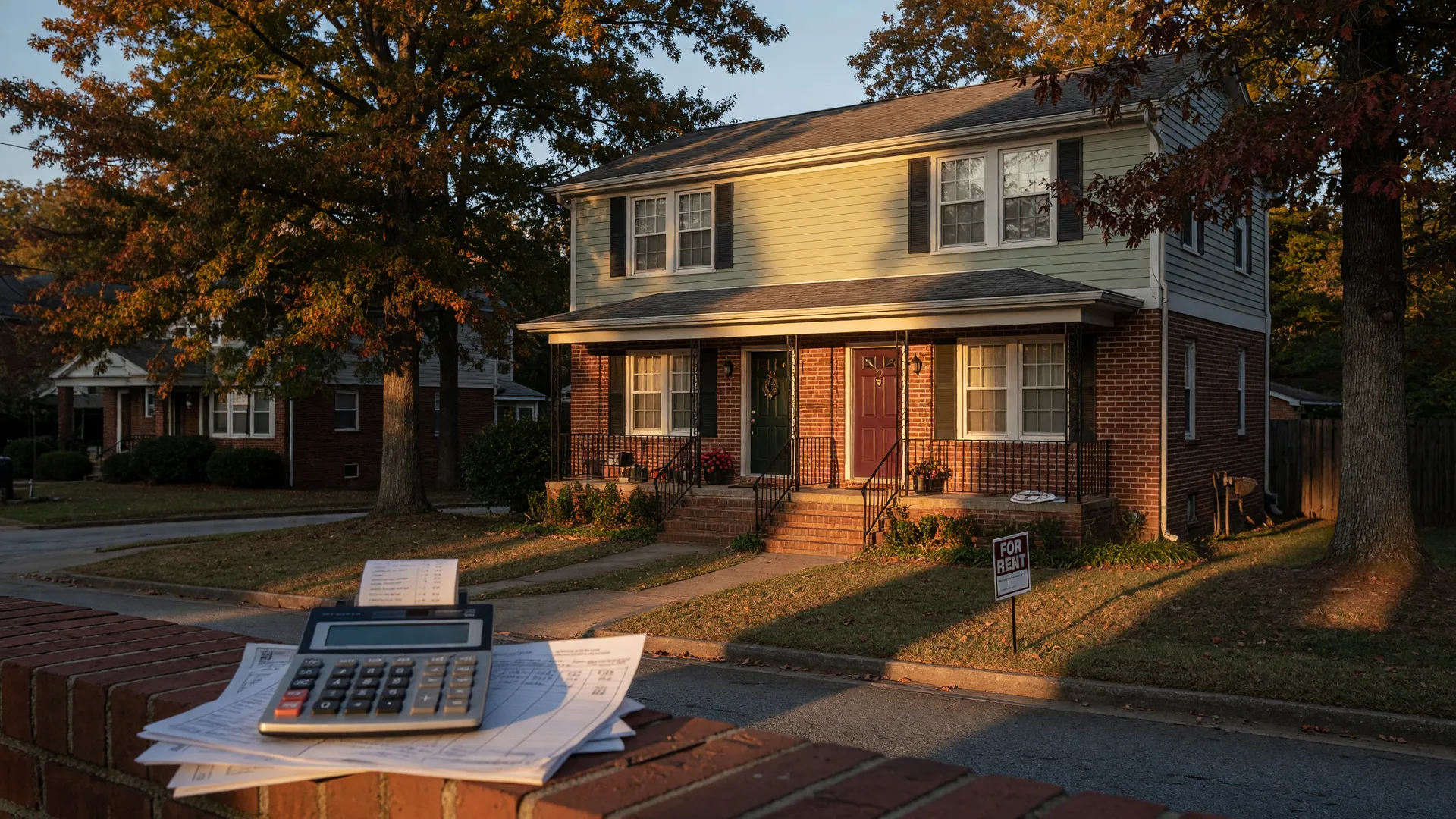
What is a good cap rate in Atlanta in 2026? The short answer is that a good cap rate in Atlanta is not one number, because the spread between intown and the outlying suburbs is wider here than in most major metros. On late-2026 public data, intown properties often trade at caps of roughly 3% to 5%, while well-bought rentals in Douglasville, South Fulton, and other outer-ring areas can clear 6% to 7.5%. Here is the neighborhood-by-neighborhood picture, how to calculate a cap rate that actually means something, and the mistakes I watch investors make when they shop by a single number.
What Is a Cap Rate and How Do You Calculate It?
A cap rate, short for capitalization rate, is the annual net income a rental produces divided by its purchase price. It is the rental world's version of a yield. Buy a property for $250,000, collect $2,000 a month in rent, pay $900 a month in taxes, insurance, vacancy, maintenance, and management, and your net operating income is $1,100 a month, or $13,200 a year. Divide $13,200 by $250,000 and you get a 5.28% cap rate.
Two details matter more than people expect. First, the cap rate is calculated before any mortgage payment. It measures the property, not your loan, so two buyers who finance differently see the same cap rate but very different cash-on-cash returns. Second, the cap rate uses what you actually pay, not what a home is "worth" on paper. That single detail separates real deals from broken spreadsheets, and it comes up again below.
What Is a Good Cap Rate in Atlanta in 2026? By Neighborhood
Public market reports published through 2026 paint a clearer picture than any rule of thumb. For institutional multifamily buildings, CBRE and Matthews surveys put Atlanta's average cap rate between roughly 4.5% and 5.6% through the year. For single-family rentals bought at market value, metro-wide typical caps run lower, around 3.8% to 4.2%, because prices are high relative to rents. Then the neighborhood data kicks in, and this is where the real spread shows up:
- Midtown and Buckhead: roughly 3% to 5%. Investors accept a thin first-year yield for appreciation potential and steady intown demand.
- West End: roughly 4.2% to 5.8%, with the same trade between yield and appreciation on the southwest side.
- Decatur: roughly 4% to 4.5% for single-family homes, depending on which side of the city line you buy.
- Douglasville: roughly 5.2% to 5.8%, with public trackers reporting a median closer to 5.5%.
- South Fulton: the strongest cash flow in the metro on 2026 data, roughly 6.1% to 7.5%, with multifamily rents up about 7.3% year over year, though vacancies run higher, near 6.2%.
Those ranges come from public market trackers and rental ROI reports and they move as rates and prices shift, so treat them as a starting point, not a guarantee. The direction is what has stayed consistent: the further from the core, the higher the cap rate, and the more of your return comes from rent instead of appreciation.
Rent-to-Price Signals by Area: Where the Cash Flow Actually Is
Investors ask about cap rates, but the rent-to-price ratio tells the same story before expenses take their cut. Using median 3-bedroom rents and median home prices reported in late 2026, here is where the cash flow math sits across Tommy's service areas:
- East Point: 3-bedroom rents around $1,550 to $1,900 against a median price near $228,000, a gross yield of roughly 8% to 10%.
- South Fulton: 3-bedroom house rents near $1,920 to $2,100 against a median value around $271,000 to $343,000, roughly 7% to 9% gross.
- Douglasville: 3-bedroom rents around $1,820 to $2,010 against a median price near $317,000 to $348,000, roughly 7% to 7.6% gross.
- Marietta: 3-bedroom house rents around $2,130 to $2,480 against medians near $346,000 to $405,000, roughly 6.8% to 7.9% gross.
- Decatur: one ZIP code, two markets. The City of Decatur (30030) sits at a median near $585,000 with 3-bedroom rents around $3,400, while 30034 in south DeKalb is near $237,000 with rents around $1,860, a gross yield near 9.4%.
These are gross ratios, before property taxes, insurance, vacancy, maintenance, and management. Net cap rates are lower, which is why the reliable deals I see in the suburbs land in the 5% to 7.5% band, with duplexes and triplexes typically running a point or two higher, in the 6% to 9% range.
Why a Higher Cap Rate Isn't Automatically a Better Deal
This is the part investors get wrong when they sort listings by cap rate. A high cap rate can mean genuine cash flow, or it can mean a neighborhood where rents are weak, properties need constant upkeep, or buyers are scarce. A low cap rate can mean overpaying, or it can mean a stable intown asset whose appreciation eventually dwarfs the thin first-year yield.
In Atlanta the trade is geographic. Intown addresses like Midtown, West End, and the BeltLine corridor trade at low caps because demand and appreciation are strong. Outer suburbs like Douglasville, South Fulton, and East Point trade at higher caps because entry prices are lower and rents hold up better against them. Neither is right or wrong, and most investors I work with hold a mix of both. The real mistake is buying a property because one spreadsheet number looks good while ignoring the neighborhood, the condition, the tenant pool, and the exit. If the deal matures into one you want to trade, an Atlanta 1031 exchange can defer the tax hit while you move the equity.
How to Run a Cap Rate Check on Any Atlanta Rental
Run the check yourself before you talk to anyone about a deal. Pull three recent rental listings for the same house type and size in the ZIP you are considering, not the metro average. Use the realistic rent, not the top of the range. Build the expense line with local numbers: Douglas County and Fulton County property taxes are real line items, rental insurance costs more than a primary home policy, and vacancy has to be in the model even in a strong market. Add management at 8% to 10% even if you plan to manage the first year yourself, because you may not want to forever.
Then compare the result to the purchase price you can actually negotiate, not the asking price. A home bought $40,000 below market changes the cap rate meaningfully, which is why BRRRR and off-market work are so popular in Atlanta: the value is built at acquisition. My Atlanta Investor Index ranks the cities I track on rent-to-price, entry price, and pace using public data, and the investor center covers the strategies around it. If you are weighing a specific property, I will pull the real comps and run the full model with you before you commit.
Frequently Asked Questions
What is a good cap rate in Atlanta in 2026?
It depends on the neighborhood and how you buy. Late-2026 public data puts intown Atlanta (Midtown, Buckhead, West End) at roughly 3% to 5%, Decatur near 4% to 4.5%, Douglasville near 5.2% to 5.8%, and South Fulton at the high end around 6.1% to 7.5%. In this market, the single-family deals that cash flow reliably land in the 5% to 7.5% band, with duplexes and triplexes a point or two higher.
How do I calculate the cap rate on a rental property?
Take the annual net operating income, which is gross rent minus taxes, insurance, vacancy, maintenance, and management, and divide it by the purchase price. If a $250,000 house rents for $2,000 a month and costs $900 a month to carry, the cap rate is about 5.3%. The mortgage payment is not part of the cap rate; it belongs in your cash-on-cash return.
Is a higher cap rate always a better investment?
No. A high cap rate can mean a weaker rental market or heavier maintenance, and a low cap rate can mean strong appreciation. In Atlanta the trade is geographic: intown areas yield less and appreciate more, while suburbs like South Fulton and Douglasville yield more up front. Match the cap rate to your strategy instead of chasing the highest number.
Does the cap rate include my mortgage payment?
No. The cap rate is calculated before financing, so it measures the property itself. Once you add a mortgage, the number that matters is cash-on-cash return, which is your annual cash flow after the loan payment divided by the cash you actually put into the deal. Both matter, they just answer different questions.
Where do Atlanta investors find the best cap rates in 2026?
On late-2026 data, South Fulton leads the metro for cash flow with caps roughly 6.1% to 7.5%, followed by Douglasville around 5.2% to 5.8%, and East Point has among the strongest rent-to-price ratios in the region. Intown neighborhoods show lower caps with stronger appreciation. My Atlanta Investor Index ranks these cities on the same public data.
Are cap rates based on the price I pay or the home's value?
The cap rate uses the price you actually pay for the property. If you buy below market value, your cap rate and your cash-on-cash return both rise. If you recalculate the cap rate at an inflated value, you get a number that flatters neither the deal nor your lender. Always underwrite on the purchase price.
Let's Run the Numbers on Your Atlanta Rental
I work with first-time rental buyers, portfolio investors, and out-of-state buyers across Metro Atlanta, and I know which ZIP codes pencil on today's rents and prices. Whether you want to compare Douglasville against South Fulton, see the off-market inventory I am tracking, or check a specific property against the market, I can pull the comps and build the underwriting with you. No pressure, just honest numbers from 500-plus homes in this market. I'm available. I'm ready when you are.
Cap rate and rent figures come from public market trackers and can vary by methodology and date. I will help you verify the numbers for a specific property before you commit.