BRRRR in Atlanta: How to Recycle Your Down Payment in 2026

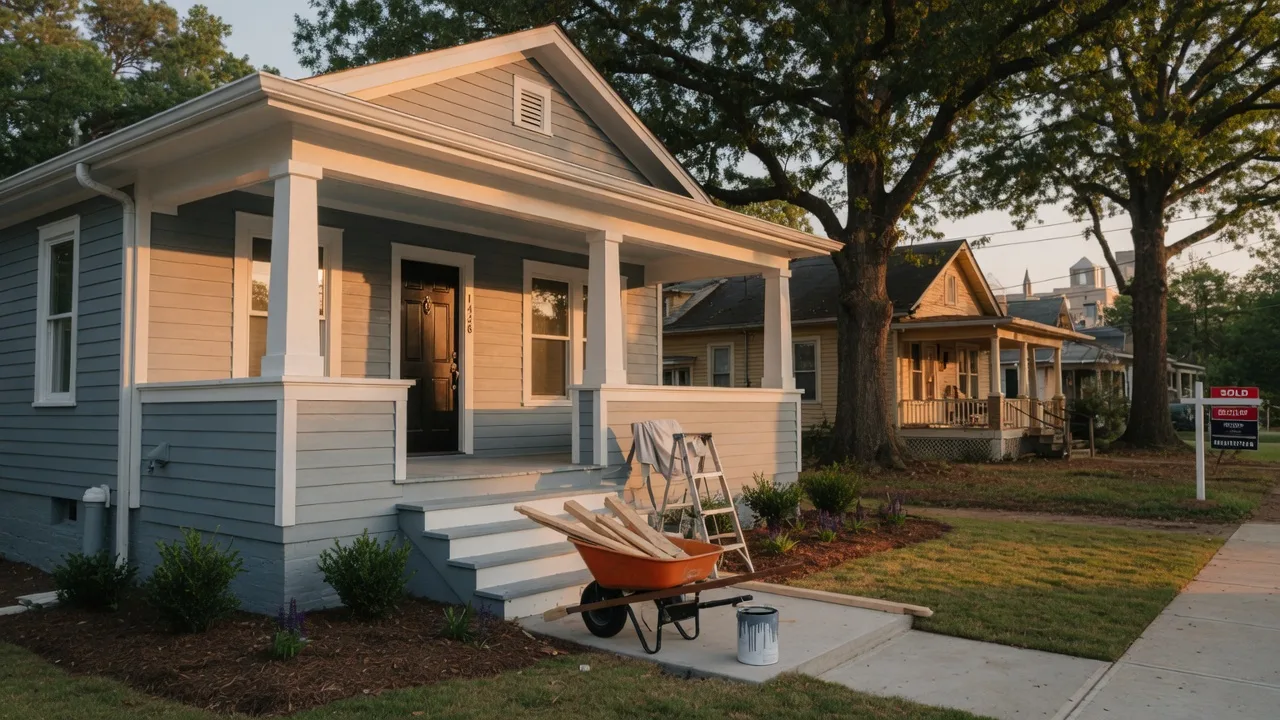
If you typed "BRRRR in Atlanta" into Google, you are asking the question that turned this strategy into one of the most-searched real estate investing topics of 2026. BRRRR stands for buy, rehab, rent, refinance, repeat, and national investor media has called it the go-to approach for this market cycle. The honest version for Metro Atlanta is more specific: the strategy works, the numbers are tighter than the social media thumbnails suggest, and the investors getting it done buy the right properties with real math behind them. Here is how BRRRR works in Atlanta in 2026, where the deals actually are, and when it is the wrong tool for your situation.
What Is BRRRR and Why Is It Trending in 2026?
BRRRR is a way to turn one pool of cash into a growing rental portfolio. You buy a property below its value, usually because it needs work. You renovate it, which raises what it is worth and what it rents for. You place a tenant. Then you refinance based on the renovated value, pulling most or all of your original cash back out, and use that cash to do it again. The appeal is simple: your down payment keeps working deal after deal instead of being locked into one house.
The strategy got hot in 2026 because the market changed around it. Mortgage rates stayed elevated, cash offers from flippers pulled back, and lenders got pickier about who they fund. Investors who could find a discount, do the work, and recycle their capital kept buying while everyone else sat on the sidelines. Atlanta investors said exactly that in early 2026: the deals are there, they are competitive, and they pencil closer to break-even cash flow than they did in 2021. That is the honest picture of BRRRR in Atlanta right now.
How the BRRRR Math Works on an Atlanta Property
The whole strategy rests on two numbers: the after-repair value, or ARV, and the 70% rule. The 70% rule says your total investment, purchase price plus rehab, should stay at or below 70% of what the finished property will be worth. Many Atlanta investors stretch that to 75% on strong rentals. The rule exists because it protects the discount you need to survive the refinance, the carrying costs, and the possibility that your rehab runs over.
Here is a realistic illustration in a mid-tier metro county like Gwinnett, where county medians sit near $415,000. You find a distressed three-bedroom that needs real work. You negotiate it at $186,000 and plan a $45,000 rehab, so your all-in is $231,000. The finished property appraises at a $330,000 after-repair value. An investment cash-out refinance covers up to 75% of that appraised value, so the new loan is around $247,500. That returns your entire $231,000 and leaves you about $16,500 ahead, and you still own the rental. Financed at roughly 7%, that loan runs about $1,647 a month in principal and interest, plus taxes, insurance, and the standard 8% to 10% set aside for vacancy and maintenance, close to what a three-bedroom rents for across the metro around $2,250 a month. The result is typically break-even cash flow with your equity and your capital working for the next deal.
That last part matters more than ever. If a deal only works when you assume appreciation, it is not a BRRRR, it is a gamble. The investors I see succeed treat the rent as the source of truth, and they only stretch the 75% cap when the rental income genuinely covers the new payment. My monthly Atlanta Investor Index ranks metro cities on rent-to-price and days on market, and it is the first thing I pull up before running a BRRRR number.
Where the BRRRR Math Actually Works in Metro Atlanta
Not every Atlanta neighborhood supports this strategy. The 70% rule needs entry prices low enough that a renovation discount exists, which points you to the affordable first-ring suburbs and South Metro corridors where the best Atlanta investment neighborhoods live. In those areas, dated inventory, expired listings, and estate situations still sell below finished value, and that discount is what your refinance is built on.
Inside the Perimeter, the math is harder. Intown prices in places like Decatur, East Atlanta, and Ormewood Park have appreciated so much that discounted rehabs are scarce, and rents rarely cover a refinanced payment at today's rates. Intown can still work as an appreciation play, but it is not a cash-flow BRRRR market for most investors. That is why my investor clients increasingly buy through the off-market list I keep: pocket listings, pre-listing conversations, and expired deals never hit the public feeds, and those are exactly the sellers who can accept a below-finished-value price.
Financing a BRRRR in 2026: Hard Money In, DSCR Out
The classic stack has two stages. On the front end, you use hard money or private money, which lends against the discounted purchase price and funds the rehab in draws, because no traditional lender will write a mortgage on a house that does not yet appraise for what you are paying. On the back end, once the renovation is done, the tenant is in, and the property is seasoned, you refinance into a long-term investment loan, and in 2026 that most often means a DSCR loan, which qualifies on the property's rental income rather than your W-2. I walk through the structure in detail in the DSCR loan guide.
Two honest cautions. First, the refinance timeline is longer than the online courses suggest: investment lenders want seasoning, and DSCR cash-out refinances in 2026 commonly close in the eleven to fourteen month range, so budget a year of carrying the hard money rate before your capital comes back. Second, every deal needs reserves for vacancy, repairs, and tenant turnover, because one slow month on a break-even rental wipes out the margin. The investor center lays out the full stack, and I am glad to run the numbers with you before you commit cash.
The 2026 Risks That Kill BRRRR Deals in Atlanta
Almost every failed BRRRR in Atlanta fails on the same four things. Overestimating the after-repair value is first, because if the refinance appraisal comes in below plan, your capital does not come back out, and the strategy stops being repeatable. Contractor cost overruns and timeline drift are second, because every extra month at hard money rates eats the discount you bought. Ignoring current market pace is third: Metro Atlanta is a buyer's market in 2026 with roughly five to six months of supply and homes averaging close to two months to sell, so your exit assumptions have to match today, not 2021. And under-reserving is fourth, because rentals are a long game and tenant problems always arrive right after the refinance liquidity does.
The Atlanta reality in 2026 is that many sound deals finish as partial BRRRRs: you recover most, but not all, of your capital, and the equity stays working in the property. That is not failure. The investors winning right now are the ones who accept that reality, run the rent numbers honestly, and buy on today's income rather than tomorrow's appreciation.
Who Should (and Should Not) BRRRR in Atlanta Right Now
BRRRR fits the hands-on investor: someone who can manage contractors, has run a renovation before or works in the trades, and has the cash buffer to carry a deal for a year. It also fits the out-of-state buyer with a trusted local team in place. It is a poor fit for a first-time investor stretching to the last dollar, or a passive buyer who wants turnkey rent without touching a contractor, because both end up forced into bad decisions at the worst moment. Those buyers are usually better served looking at rent-ready properties or starting with an owner-occupied rental strategy instead.
And if living in the property appeals to you more than managing a rehab, the owner-occupied cousin of BRRRR is house hacking, where you buy a two to four unit home with 3.5% down and rent out the other units. I break that path down in the house hacking guide.
The Bottom Line on BRRRR in Atlanta
BRRRR in Atlanta works in 2026 when the purchase price carries a real discount, the after-repair value is honest, the rent covers the refinanced payment, and the investor has the cash and the patience for the full cycle. It fails when any of those four is wishful. The metro has the inventory, the off-market deals, and the rental demand to support investors who run the math properly. If you want help finding a discounted property, stress-testing an ARV, or running the refinance math on a deal you are looking at, I am available. I'm ready when you are.
Frequently Asked Questions
What does BRRRR stand for in real estate?
BRRRR stands for buy, rehab, rent, refinance, repeat. You buy a property below market value, renovate it to raise its value, rent it out, refinance at the higher after-repair value to pull most of your cash back out, and use that recycled capital to start again on the next property.
How much money do I need to start BRRRR in Atlanta?
Plan for cash that covers the purchase, the full rehab, and six to twelve months of holding costs, because the property carries the loan while it is being fixed and filled. On a modest single-family deal with a $240,000 all-in cost, a realistic starting cash position is $70,000 to $120,000 depending on how the rehab is paid and what reserves you need.
What is the 70% rule in BRRRR?
The 70% rule says your total investment, purchase price plus rehab, should stay at or below 70% of the property's after-repair value. Some Atlanta investors stretch that to 75% on strong rentals. The rule protects the two numbers that make BRRRR work: the discount you buy at and the rent the finished property produces.
Does BRRRR still work in Metro Atlanta in 2026?
Yes, but the honest version is that full cash-out BRRRRs are harder than they were a few years ago, and many Atlanta deals pencil as partial BRRRRs where you recover most, not all, of your capital. The deals that still work come off-market or from distressed sellers, with a realistic after-repair value and rents that cover the refinanced payment.
How long does a full BRRRR cycle take in Atlanta?
Rehabs typically run eight to sixteen weeks, and filling the rental adds another thirty to sixty days. Investment lenders want seasoning, and DSCR cash-out refinances in 2026 commonly sit in the eleven to fourteen month range. Count on six to twelve months, sometimes longer, before your capital is back out.
Can I use an FHA loan to BRRRR in Atlanta?
No. An FHA loan requires you to live in the home, so it does not fit a BRRRR on an investment property. The owner-occupied cousin of the strategy is house hacking, where you buy a two to four unit property with 3.5% down, live in one unit, and let tenants cover the mortgage.
Let's Talk About Your Next Atlanta Investment Property
I work with first-time and portfolio investors across Metro Atlanta, and I track the off-market and distressed inventory that makes BRRRR math work in 2026. Whether you are evaluating a specific deal or just want to understand whether the strategy fits your cash position, let us sit down and run the real numbers together. No pressure, just honest answers with over 20 years of Atlanta market experience behind them.
A 30-minute conversation tells you whether BRRRR is the right strategy for your goals in this market. That is the starting point.