What $600K Buys in Metro Atlanta in 2026

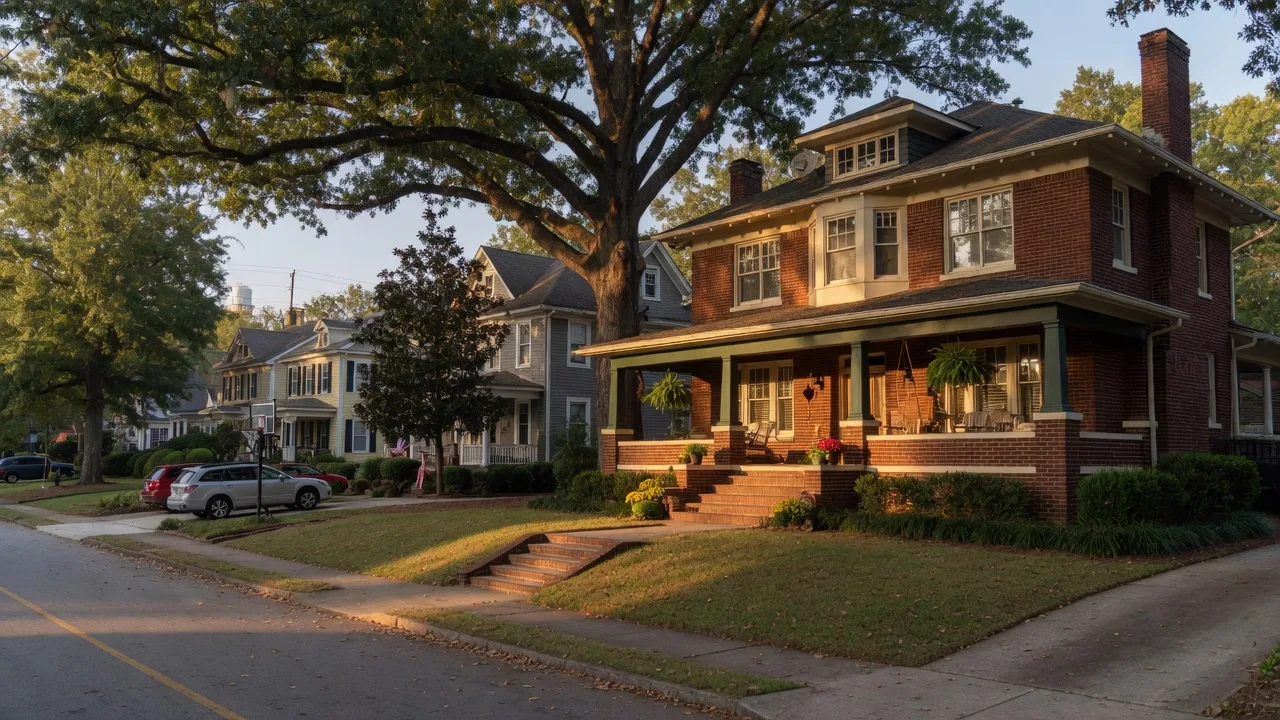
If you are shopping around $600,000 in Metro Atlanta, you have reached the sweet spot for intown single-family living. This budget sits roughly 40% above the metro median, which means you are not stretching to the edge of any neighborhood, you are inside the ones most buyers want to be in. In Virginia-Highland, Inman Park, or Decatur, $600K buys a renovated historic home. In the close-in suburbs it stretches into a larger, newer home with more land. The honest question at this price point is whether you want quality and location intown or space in the suburbs.
With the metro median sitting around $416,000 to $429,000 and the market in a buyer-friendly phase, $600K is a strong, comfortable budget with room to negotiate. Intown ZIP codes run roughly $278 to $336 per square foot, so at the top of that range your budget buys about 1,800 square feet and at the lower end stretches toward 2,200. In lower-priced submarkets closer to the metro average of about $205 per square foot, the same money reaches 2,500 to 2,900 square feet. Here is what your budget actually unlocks, neighborhood by neighborhood.
The Big Picture: What $600K Means Across the Metro
Think of $600,000 as the dividing line between entry-level intown and the premium intown ZIP codes. It buys real, move-in-ready single-family homes in Atlanta's most desirable neighborhoods, without quite reaching the enclaves like Buckhead's 30327, Tuxedo Park, or Chastain Park. It splits into two distinct experiences.
Intown, $600K buys a renovated bungalow or craftsman in historic neighborhoods, typically 1,800 to 2,200 square feet on a modest lot, often with walkable access to the Beltline, restaurants, and parks.
Close-in suburbs such as Decatur, Brookhaven, North Druid Hills, Sandy Springs, Roswell, Alpharetta, Marietta, and Smyrna give you more space, typically 2,500 to 2,900 square feet, with newer construction, larger lots, and strong schools.
The premium tier of Buckhead, Tuxedo Park, Chastain Park, and Ansley Park sits just above reach, with typical values that climb steeply past $1 million.
The reason one figure buys so much different housing is that price per square foot varies sharply between intown ZIP codes and the suburbs. Your commute and your tolerance for a smaller lot are what you trade for space. Let's break down each tier.
Intown: The Historic Neighborhoods
If you want to be in the city, near the Beltline, parks, and the energy of the core, $600K is a serious intown budget. You are buying a genuine single-family home in some of Atlanta's most sought-after historic neighborhoods, so temperament, lot size, and build year matter more than in the suburbs.
Virginia-Highland, Morningside, and Poncey-Highland
In the 30306 ZIP, which spans Virginia-Highland, Poncey-Highland, and Morningside, typical values run from the mid-$400,000s up to about $900,000. A $600K budget lands you at the comfortable middle, buying a renovated craftsman or bungalow of roughly 1,800 to 2,200 square feet, often within walking distance of the neighborhood's shops, restaurants, and the Beltline. Build years span the 1920s through recent renovations, so condition varies and inspection matters. The trade-off is lot size, which tends to be tight, but you are buying into one of the most walkable, sought-after corridors in the city.
Druid Hills, Inman Park, Candler Park, and Edgewood
The 30307 ZIP covers Druid Hills, Inman Park, Candler Park, and Edgewood, and $600K fits comfortably here. Inman Park and Druid Hills offer some of Atlanta's most beautiful historic housing, from Victorian and craftsman homes to the grander Druid Hills stock, often on tree-lined streets with mature canopies. Candler Park and Edgewood give you more affordable entry points with the same Beltline access. Expect renovated homes of roughly 1,800 to 2,200 square feet, with some larger plans at the top of the range. The trade-off is that truly large single-family homes here run above $600K, so discipline about square footage keeps you in budget.
Old Fourth Ward and Reynoldstown
The 30312 ZIP, covering Old Fourth Ward and Reynoldstown, has a median around $490,000 at roughly $336 per square foot, which means $600K buys you a large, modern townhome or a comfortable single-family home near the Beltline's Eastside Trail. Expect roughly 1,800 to 2,200 square feet in build years from the 2010s through present, much of it new construction or lightly lived-in. Old Fourth Ward trades a little of Virginia-Highland's historic character for a more walkable, Beltline-adjacent, neighborhood feel, and minutes from Ponce City Market and the Historic Fourth Ward Park.
Midtown, East Atlanta, Ormewood Park, and Grant Park
In Midtown, the 30308 and 30309 ZIPs offer condo and townhome options at $600K, with the largest units in established buildings. Further east, East Atlanta Village, Ormewood Park, and Grant Park put $600K near the top of the local market, buying a larger bungalow or craftsman with a bigger yard than the more central intown ZIPs. Grant Park in particular gives you the park, the zoo, and a strong sense of community. These neighborhoods trade a little walkability for more space and a more relaxed feel while staying firmly intown.
Close-In Suburbs: More Space, Strong Schools
The close-in suburbs are where $600K starts to buy a larger, often newer single-family home with a yard, strong schools, and a commute that is still reasonable. These are the neighborhoods most growing families land in.
Decatur and Toco Hills
In the Decatur city core and the nearby Toco Hills area (ZIPs 30030 and 30329), $600K buys roughly 2,000 to 2,600 square feet on a modest lot, a mix of renovated historic homes and newer builds, in one of the metro's most walkable, highly rated school districts. What Decatur gives you is the best of both worlds: a real downtown, top schools, and proximity to Emory. The trade-off is that lots are smaller and demand is strong, so $600K buys a comfortable family home but not a mansion.
Brookhaven and North Druid Hills
Brookhaven and North Druid Hills sit in a sweet spot between intown and suburb, with ZIPs 30319 and 30345. North Druid Hills has a median around $647,000 at roughly $278 per square foot, so $600K is right at the edge of reach, buying a 3 to 4 bedroom home of roughly 2,000 to 2,200 square feet. Brookhaven offers MARTA access, walkable village energy, and proximity to both Buckhead and intown. The trade-off is lot size, which tends to be tighter, but you gain convenience and strong schools.
Sandy Springs, Roswell, Alpharetta, Marietta, and Smyrna
Farther out, $600K buys more space and newer construction. Sandy Springs offers entry-level single-family options with top schools and Perimeter business access. Roswell and Alpharetta stretch the same money into larger, well-built homes of roughly 2,500 to 2,900 square feet in mature, family-oriented neighborhoods. In Cobb County, Marietta and Smyrna offer generous lots and a comparatively lower property tax load than Fulton or DeKalb. The trade-off is a commute that pushes 30 to 40 minutes into intown Atlanta during peak times, traded for more house, a bigger yard, and a lower tax bill.
The Trade-off: Location vs. Space vs. Commute
Every choice in this guide comes down to three competing priorities, and you will not get all three at once at $600K.
Location is the strongest argument for spending intown. Virginia-Highland, Inman Park, and Decatur deliver walkability, the Beltline, and the city's character, with a modest lot and an older or renovated home.
Space rises the farther you move out. Roswell, Alpharetta, and Marietta give you 2,500 to 2,900 square feet on a larger lot, often newer construction, with strong schools.
Commute is the cost of space. The same $600K that buys a compact intown home also buys a roomier suburban one, and the difference is 30 to 40 minutes each way. Only you can decide whether that daily drive is worth the extra square footage and yard.
My advice is to write down, before you start touring, which two of the three matter most. That single decision will cut your search list in half and save you a lot of time behind the wheel.
How to Run the Numbers at the $600K Level
At this price point the monthly cost is driven as much by taxes, HOA dues, and commuting as by the mortgage itself. Run these four numbers before you get emotionally attached to any one house.
Property taxes by county. Georgia assesses residential property at 40% of fair market value and then applies the local millage rate, which stacks county, city, and school components. In practical terms, expect an effective rate around 0.9% to 1.1% of the home's value in Cobb County, roughly 1.0% to 1.04% in DeKalb, and roughly 1.1% to 1.3% in Fulton County when the Atlanta city component is included. On a $600K home that is a difference of several thousand dollars a year between counties, so it is worth comparing a Fulton home against an equivalent Cobb or DeKalb home with the tax bill in mind.
HOA and condo dues. Newer intown townhomes and some suburban communities carry HOA fees, and Midtown condos carry monthly dues that can run several hundred dollars or more. Add the annual figure to your budget, not just the monthly mortgage.
Commuting cost. Ask your lender or an accountant to include the real cost of a longer drive, which is more than gas. If you commute five days a week from Roswell or Marietta, the extra distance has a real monthly value in fuel, maintenance, and time.
Maintenance and insurance. A 2,900-square-foot home costs more to heat, cool, insure, and maintain than a smaller intown bungalow, and older intown homes often need updates after purchase. Budget roughly 1% of the home's value annually for upkeep. These soft costs are easy to overlook and are often the reason two identical-priced homes feel so different month to month.
When you have run all four, you will know whether the intown historic home or the larger suburban home is the right answer for your budget and your life. I have helped clients work through exactly this math for over 20 years, and I am happy to run it alongside you.
The Bottom Line
A $600,000 budget in Metro Atlanta in 2026 is a strong, versatile budget that sits well above the metro median. It buys a renovated historic home in Virginia-Highland, Inman Park, Decatur, or Old Fourth Ward, a larger home in Brookhaven or North Druid Hills, and 2,500 to 2,900 square feet in Sandy Springs, Roswell, Alpharetta, Marietta, or Smyrna. What changes is square footage, land, build year, condition, and the commute you are willing to accept.
There is no single best answer for everyone, and that is exactly why the trade-off conversation matters. If you are ready to see what your budget can do, the fastest way is to start browsing the places I have covered above, then bring your short list to a conversation where we can compare the real numbers.
Browse $600K Homes Across Metro Atlanta
Search the full inventory across all the neighborhoods in this guide, from intown historic homes to larger suburban properties, and see what is available at your price point right now.
Search HomesThe Price-Band Series
This guide is part of a series comparing what different budgets buy across Metro Atlanta. Read them together to see how your money changes by price point.
Frequently Asked Questions
What does a $600,000 budget actually buy in Metro Atlanta in 2026?
A $600K budget sits well above the metro median, roughly 40% above it, and it is the sweet spot for intown single-family living. Intown it typically buys a 3 to 4 bedroom renovated bungalow or craftsman of roughly 1,800 to 2,200 square feet in sought-after neighborhoods. In the close-in suburbs the same money stretches into a larger, often newer home of 2,500 to 2,900 square feet. The choice is quality and location intown versus space in the suburbs.
Which Atlanta neighborhoods and ZIP codes fit a $600K budget?
The strongest $600K options are intown and close-in: Virginia-Highland, Morningside, and Poncey-Highland (30306), Druid Hills, Inman Park, Candler Park, and Edgewood (30307), Old Fourth Ward and Reynoldstown (30312), Midtown (30308 and 30309), Decatur and Toco Hills (30030 and 30329), and Brookhaven and North Druid Hills (30319 and 30345). Close-in suburban options include Sandy Springs, Roswell, Alpharetta, Marietta, and Smyrna for more space.
Is $600,000 a lot for an Atlanta home?
It is well above the metro median, so yes, it is a strong budget. At $600K you are comfortably inside Atlanta's most desirable intown ZIP codes rather than at their edge. It does not reach the premium enclaves like Buckhead's 30327, Tuxedo Park, or Chastain Park, but it buys a genuine, move-in-ready single-family home in the neighborhoods most buyers want to be in.
What trade-offs do buyers make at the $600K price point?
Intown, the trade-off is square footage and lot size for location, with older or renovated homes on modest lots and, often, an HOA. In the close-in suburbs you get more space and newer construction but a longer commute. At this price point school district, lot size, and lifestyle usually matter more than the house itself, because the comps in each area change what your dollar buys in square footage and finishes.
Is $600K better spent intown or in the suburbs?
It depends on what you value. Intown, $600K buys a renovated historic home or a newer build on a modest lot in neighborhoods like Virginia-Highland, Inman Park, or Decatur, with walkability and schools close by. In the suburbs it stretches into a larger, newer home with more land. If walkability and the intown lifestyle matter, spend it intown. If space and a big yard matter more, the suburbs stretch it further.
What is the realistic monthly payment on a $600,000 home?
With 10% down and rates in the mid-6% range, expect roughly $4,300 to $4,900 a month including taxes and insurance. A good rule of thumb is to add about 25% to 35% on top of principal and interest for taxes, insurance, and any HOA fees. At this price point property taxes vary noticeably by county, so compare the real tax bill for the ZIP you are considering before you commit.
Not Sure Which Path Fits? Let's Talk It Through
Every buyer at this level is weighing the same trade-offs between location, space, and commute, and there is no right answer that fits everyone. I have been helping Metro Atlanta buyers make this exact decision for over 20 years, so I can help you compare the real square footage, tax bills, HOA dues, and commute costs across the neighborhoods that fit your life. The first conversation is free and there is no pressure. I'm available, and I'm ready when you are.
I'll be in touch after we connect.