What Does $1 Million Buy in Metro Atlanta in 2026?

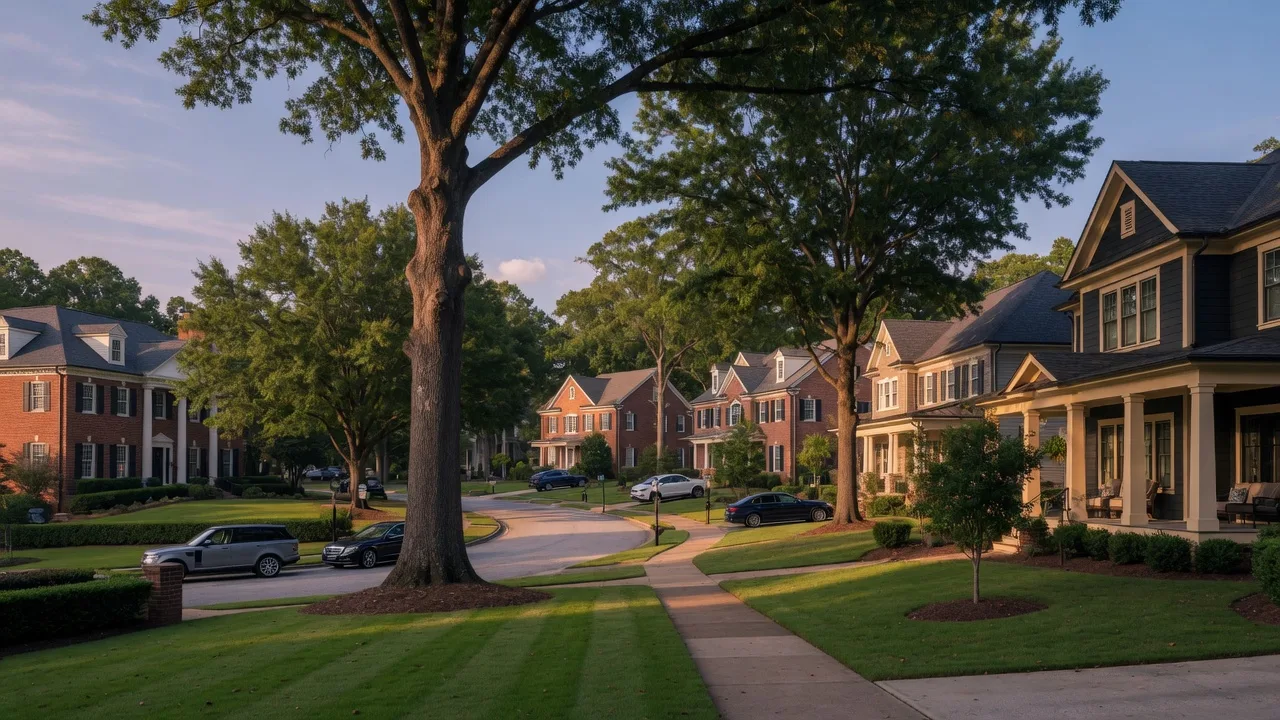
If you are shopping around the $1 million mark in Metro Atlanta, the honest answer is that a million dollars is not one single house. It is a very different home depending on whether you want to be intown, in a close-in suburb, or farther out on the western corridor. In Buckhead a million buys a large luxury condo. In Roswell it buys a six-bedroom home with room to spare. In Douglasville it can buy an estate on multiple acres. The tradeoffs are space, commute, and lifestyle, and this guide is here to help you decide what matters most before you start touring.
With Metro Atlanta's average sale price per square foot sitting around $264 and the market firmly in a buyer-favorable phase, your $1 million budget has more negotiating room than it did a few years ago. Luxury inventory is up roughly 18% year over year at the $1 million and above level, and condos are sitting longer. That means buyers at this price point can be selective. Here is what your budget actually unlocks across the metro, neighborhood by neighborhood.
The Big Picture: What $1 Million Means Across the Metro
Think of the $1 million mark as the pivot point where Atlanta divides into three very different experiences.
Intown, a million dollars buys the top tier of attached living: luxury condos and large townhomes in Buckhead, Midtown, and Old Fourth Ward, almost all of recent construction, often with concierge service and a view.
Close-in suburbs such as Decatur, Sandy Springs, Roswell, Brookhaven, Smyrna, and East Cobb give you a full single-family home, typically 3,000 to 4,000 square feet on a quarter to half acre or more, with newer builds and well-kept renovations.
Outer buildouts like Douglasville, Kennesaw, and Powder Springs stretch that same dollar considerably further, into 5,000 to 7,000 square feet of living space on one to six acres, usually built in the last 25 years.
The reason one figure buys so much different housing is that price per square foot falls sharply as you move away from the intown core. Your commute is what you trade for that space. Let's break down each tier.
Intown: Buckhead, Midtown, and Old Fourth Ward
If you want to be in the city, near restaurants, parks, and the energy of the core, a million dollars is a serious intown budget. You are buying attached living at the top of the market, so temperament and fees matter as much as square footage.
Buckhead: The New-Luxury Towers
A million in Buckhead puts you in the brand-new luxury condo towers built or closing this decade. Think roughly 1,300 to 1,800 square feet for a one to two bedroom in a new construction high-rise, with build years from the late 2000s through brand-new 2026 deliveries. Some brand-new towers start one-bedrooms around $1 million at about 1,400 square feet. If you are patient, you can find more space in an older building from the 1990s or 2000s, where the same money buys considerably more square footage in exchange for a less glamorous lobby.
The tradeoff in Buckhead is square footage versus lifestyle. You are buying a lock-and-leave home, walkability in one of Atlanta's premium submarkets, and typically a full-service building. Expect HOA dues from roughly $500 to $1,500 or more per month depending on the building and the size of the unit. Build year and condition vary widely by building, so it is worth comparing newer versus established towers carefully. More on the fees in the "run the numbers" section below.
Midtown: Top-Tier High-Rises
Midtown's condo market is broad, with a median listing well under a million, which means your budget reaches the very top of the stack. In established luxury buildings from the mid-2000s, a million gets you a large two to three bedroom of roughly 1,800 to 2,400 square feet, possibly at or near penthouse level. Build years cluster in the 2000s for most of the big-name high-rises, so you are buying a home with solid, proven bones rather than a brand-new one.
The appeal is the lifestyle: Piedmont Park, MARTA, the arts, and the BeltLine all within reach. The tradeoff is the same as Buckhead, a smaller footprint and real monthly HOA costs, offset by the convenience of living above the city's core.
Old Fourth Ward: Modern Townhomes Near the BeltLine
Old Fourth Ward is where many buyers at this price point find the best intown compromise. The neighborhood's median townhome sale is around $700,000, so a million sits at the upper end, buying the largest, newest attached units in the area. Expect a large modern townhome of roughly 2,500 to 2,900 square feet, three to four bedrooms, in build years from about 2015 through present. Many are new-construction or lightly lived-in, in excellent condition, and minutes from the BeltLine's Eastside Trail, Ponce City Market, and the Historic Fourth Ward Park.
Old Fourth Ward trades a little of Buckhead's polish for a more walkable, beltline-adjacent, neighborhood feel. The tradeoff here is that true single-family inventory in the area is limited, so most options are townhomes with an HOA.
If intown attached living is your path, the decision usually comes down to brand-new tower versus established high-rise versus large townhome. Each gives a different blend of square footage, fees, and lifestyle.
Close-In Suburbs: Space and a Yard, Still Near the City
The close-in suburbs are where a million dollars starts to buy a genuine single-family home with a yard, schools, and a reasonable commute. These are the neighborhoods most move-up families land in.
Decatur: Historic Charm and the Biggest Lots
In the Decatur city core, a million to $1.3 million buys roughly 3,000 to 4,300 square feet on lots from about a third of an acre up to over an acre. You will find both newer construction from the 2010s and renovated historic homes, so build years span widely and condition follows suit. What Decatur gives you is the best of both worlds: a walkable, highly rated school district with a real downtown, plus the largest lots of any close-in suburb at this price.
The tradeoff: because demand is strong and lots are larger, a million buys a comfortable family home but not a mansion. If you value schools and walkability over sheer square footage, Decatur is often the best value for your million in the close-in ring.
Sandy Springs: Premium Per Square Foot
Sandy Springs commands some of the highest per-square-foot prices in the metro at this level, typically $230 and up. Around $1 million, expect roughly 3,900 to 5,000 square feet on a quarter to half acre, in well-built homes from the 1990s through the 2000s, often renovated. Many of the top-of-bracket homes here run closer to $1.3 million to $1.4 million, so a firm million means being disciplined about whether you need the larger plans.
Sandy Springs pays off in location, with top-tier schools, Perimeter business access, and quick drives to intown Atlanta, Roswell, and the airport. The tradeoff is that your million does not stretch as far on space, but you get one of the most established, convenient addresses in the metro.
Roswell: The Most Square Footage for Your Money
If raw space is the goal, Roswell is the standout in the close-in ring. A million here buys large, renovated homes or newer builds of roughly 4,000 to 7,000 square feet on lots from a quarter acre to a half acre or more. Many of these are five and six bedroom homes in mature, tree-lined neighborhoods, with build years from the 1990s through recent renovations in the 2010s and 2020s.
Roswell balances size with lifestyle: historic downtown, the Chattahoochee, good schools, and easy access to Alpharetta and GA-400. The tradeoff is a slightly longer drive to intown Atlanta than Decatur or Brookhaven, but for many families the extra 2,000 square feet is well worth it.
Brookhaven: Smaller Lots, Strong Convenience
Brookhaven sits in a sweet spot between intown and suburb, and a million buys roughly 3,000 to 4,000 square feet on the smaller quarter-acre or so lots typical of the area, usually three to five bedrooms. Build years span older stock and newer infill, and condition varies, so homes here reward careful inspection. Median single-family prices are around $750,000, so your million buys comfortably at the top of the local market.
The tradeoff is lot size, which tends to be tighter, but you gain MARTA access, walkable village energy, and proximity to both Buckhead and intown. For buyers who want the feel of the city without giving up a house and driveway, Brookhaven is a strong fit.
Smyrna and East Cobb: Cobb County's Sweet Spots
Smyrna and East Cobb round out the close-in ring with strong value. Smyrna's market is gentler, with average home prices well under a million, so your budget buys a large, newer family home with room to spare, often 3,000 to 4,500 square feet on a third to half acre, in well-built 1990s through 2000s neighborhoods with recent updates. East Cobb, close to top-rated schools, offers similar space at a premium to Smyrna but still comfortably within reach at a million, with generous lots and established, family-oriented communities.
Both give you Cobb County's comparatively lower property tax load than Fulton or DeKalb, which is a real factor at this price point. We will get to that below. The tradeoff is a commute that pushes 30 to 40 minutes into intown Atlanta during peak times, traded for more house and a lower tax bill.
Outer Buildouts: Where $1 Million Goes Furthest
On the western corridor, in Douglasville, Kennesaw, and Powder Springs, a million dollars transforms into a large estate-level home. If space, land, and privacy are your priorities over commute, this is the strongest value in the metro.
Douglasville: Estate Living at Single-Family Prices Per Square Foot
Douglasville is where your million buys the most house and the most land. Expect roughly 5,000 to 7,000 square feet on one to six-plus acres, in large custom and semi-custom homes built from the 1990s through the 2020s, or recently renovated estates. Many of these are stately brick or stone homes with a fraction of the per-square-foot cost you would pay in Buckhead or Sandy Springs.
The tradeoff is the commute, roughly 30 to 45 minutes to downtown Atlanta when traffic behaves, and more at peak times. But if you work in the western suburbs, in Douglasville itself, or remotely, Douglasville at this budget is hard to beat. For buyers who want land, a pool, and a home office wing, this is the neighborhood where the million-dollar dream becomes reality.
Kennesaw and Powder Springs: Space With Good Bones
Kennesaw and Powder Springs offer the same outer-corridor value on a slightly smaller scale, and at this budget you sit comfortably at the top of both markets. A million in Kennesaw buys a large, newer single-family home, typically 4,000 to 6,000 square feet on a half to one acre, in well-planned communities with good schools and a historic downtown. Powder Springs, west of Kennesaw, stretches the same dollar a little further on land, with large homes on acreage in quiet, rural-adjacent settings.
These towns blend Space, schools, and access to both I-75 and the western bypass, with commutes into Cobb and Atlanta that are manageable for many. If you are weighing Douglasville versus Kennesaw versus Powder Springs, the decision usually narrows to where your job is and how much commute you can live with.
The Tradeoff: Space vs. Commute vs. Lifestyle
Every choice in this guide comes down to three competing priorities, and you will not get all three at once at a million dollars.
Space rises sharply the farther you move from the core. Douglasville gives you an estate; Buckhead gives you a condo. Between them, Roswell delivers the most square footage while staying reasonably close in.
Commute is the cost of space. The same $1 million that buys a concentrated intown lifestyle also buys a sprawling home on the western corridor, and the difference is 30 to 45 minutes each way. Only you can decide whether that daily drive is worth the extra bedrooms and acreage.
Lifestyle is about walkability, schools, and community. Decatur and Brookhaven deliver an intown-adjacent feel with yards. Sandy Springs and Roswell combine suburban space with strong schools. Douglasville and Powder Springs trade the commute for land and privacy.
My advice is to write down, before you start touring, which two of the three matter most. That single decision will cut your search list in half and save you a lot of time behind the wheel.
How to Run the Numbers at the $1 Million Level
At this price point the monthly cost is driven as much by taxes, HOA dues, and commuting as by the mortgage itself. Run these four numbers before you get emotionally attached to any one house.
Property taxes by county. Georgia assesses residential property at 40% of fair market value and then applies the local millage rate, which stacks county, city, and school components. In practical terms, expect an effective rate around 0.9% to 1.1% of your home's value in Cobb County, roughly 1.0% to 1.04% in DeKalb, and roughly 1.1% to 1.3% in Fulton County when the Atlanta city component is included. On a $1 million home that is a difference of several thousand dollars a year between counties, so it is worth comparing a Fulton home against an equivalent Cobb or DeKalb home with the tax bill in mind.
HOA and condo dues. If you buy intown, this is the number that surprises people. Midtown and Buckhead luxury high-rises commonly charge $500 to $1,500 or more per month depending on the building and unit size, with full-service towers at the top of that range. Townhomes in Old Fourth Ward and the suburbs typically carry far lower fees, often under a few hundred dollars a month. Add the annual figure to your budget, not just the monthly mortgage.
Commuting cost. Ask your lender or an accountant to include the real cost of a longer drive, which is more than gas. On the western corridor, the extra 30 to 40 minutes each way has a real monthly value in fuel, maintenance, and time. If you commute five days a week, that difference in distance can run into the hundreds of dollars a month, money you could instead put toward a bigger house or a shorter drive.
Maintenance and insurance. A 5,000-plus-square-foot home on acreage costs more to heat, cool, insure, and maintain than a 1,600-square-foot condo. For a luxury estate, budget roughly 1% to 2% of the home's value annually for upkeep, plus higher insurance for the larger structure. These soft costs are easy to overlook and are often the reason two identical-priced homes feel so different month to month.
When you have run all four, you will know whether the intown tower, the suburban family home, or the outer estate is the right answer for your budget and your life. I have helped clients work through exactly this math for over 20 years, and I am happy to run it alongside you.
The Bottom Line
A million dollars in Metro Atlanta in 2026 is a versatile, powerful budget. It buys a top-tier intown condo in Buckhead or Midtown, a large modern townhome in Old Fourth Ward, a full family home with a yard in Decatur, Sandy Springs, Roswell, Brookhaven, Smyrna, or East Cobb, and an estate with acreage in Douglasville, Kennesaw, or Powder Springs. What changes is square footage, land, build year, condition, and the commute you are willing to accept.
There is no single best answer for everyone, and that is exactly why the tradeoff conversation matters. If you are ready to see what your budget can do, the fastest way is to start browsing the places I have covered above, then bring your short list to a conversation where we can compare the real numbers.
Browse $1 Million Homes Across Metro Atlanta
Search the full inventory across all the neighborhoods in this guide, from intown condos to outer estates, and see what is available at your price point right now.
Search HomesFrequently Asked Questions
What does $1 million actually buy in Metro Atlanta in 2026?
A million dollars goes a long way in most of the metro but not as far as it used to. In North Fulton you get a large newer home in a top school district, in intown neighborhoods a renovated historic home or new build on a modest lot, and in the outer suburbs a substantial estate. The same budget changes meaning entirely by area.
Which Atlanta neighborhoods should I look at with a $1M budget?
The strongest $1M options are spread across Buckhead, Brookhaven, Decatur, and parts of Alpharetta, Johns Creek, and East Cobb. At this price point school district, lot size, and lifestyle usually matter more than the house itself, because the comps in each area change what your dollar buys in square footage and finishes.
Is $1 million a lot for an Atlanta home?
Yes, it is well above the metro median, and it buys you into the top tier of most markets. But in Atlanta's premium corridors, a million is entry-level luxury rather than the top of the range, which is why the same budget that buys a mansion in one county buys a townhome or smaller home in another.
What taxes come with a $1 million home in Georgia?
Property taxes vary by county, and in 2026 most metro counties have homestead exemptions that keep owner-occupied taxes lower, sometimes meaningfully for primary residences. Insurance, HOA fees, and maintenance also scale with the home. A local lender or tax professional can run the real number for the county you are considering before you commit.
Not Sure Which Path Fits? Let's Talk It Through
Every buyer at this level is weighing the same tradeoffs between space, commute, and lifestyle, and there is no right answer that fits everyone. I have been helping Metro Atlanta buyers make this exact decision for over 20 years, so I can help you compare the real square footage, tax bills, HOA dues, and commute costs across the neighborhoods that fit your life. The first conversation is free and there is no pressure. I'm available, and I'm ready when you are.
I'll be in touch after we connect.