What $400K Buys in Metro Atlanta in 2026

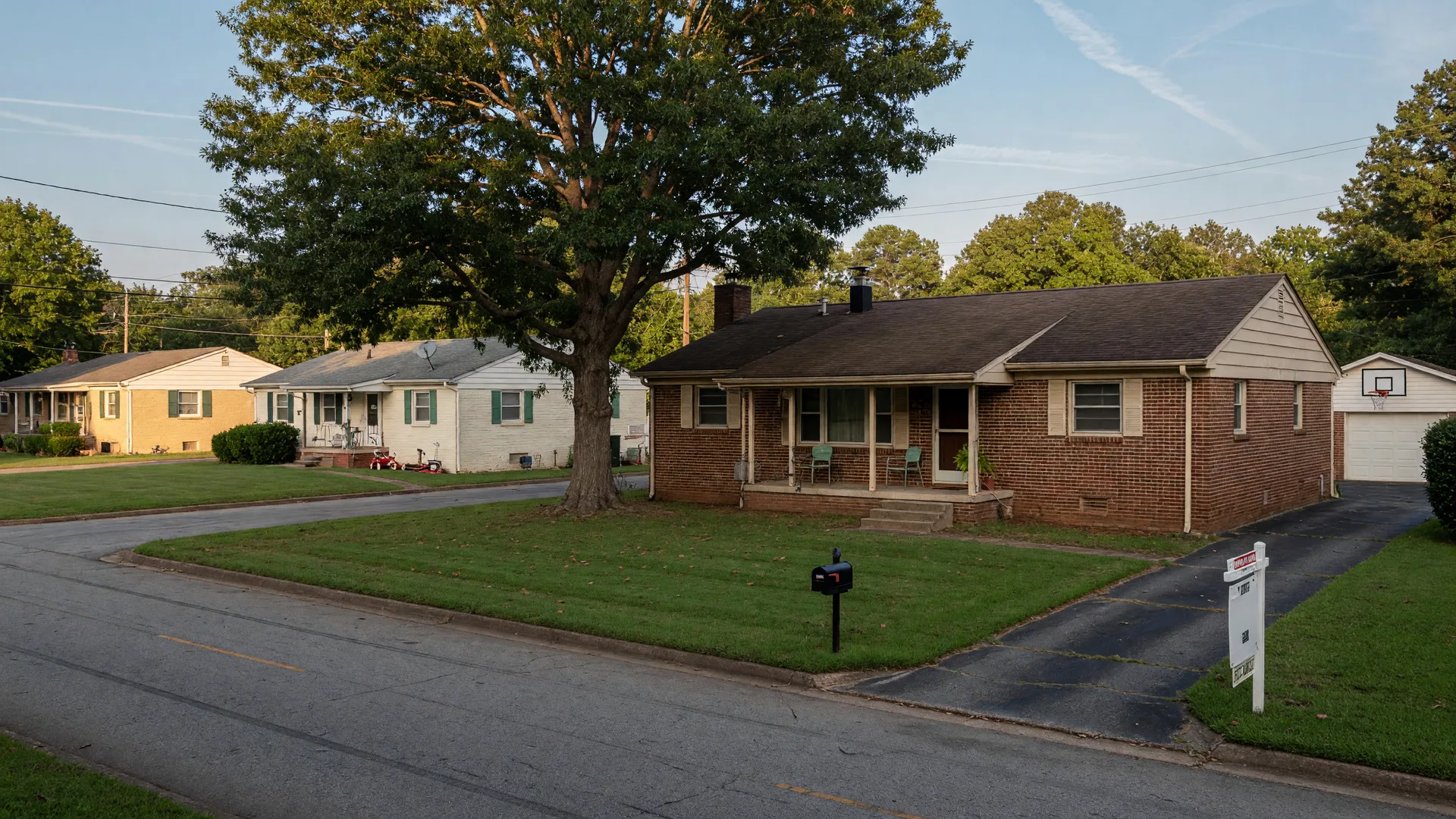
If you are shopping with a $400,000 budget in Metro Atlanta, you are right at the metro median, and that is a good place to be. The honest answer is that $400K is not one single house. It is a three-bedroom starter home with a yard in the outer-ring suburbs, a one-bedroom condo in Midtown, or a four-bedroom home in a growing community where builders are offering incentives. What you get depends almost entirely on how close to the city you want to live and how much commute you are willing to trade for space.
In 2026 the market is in a buyer-friendly phase, with more inventory on the market than we have seen in years and homes sitting longer. That gives a $400K buyer real negotiating room. With the metro average resale price sitting around $160 to $190 per square foot, your budget typically buys roughly 2,000 to 2,400 square feet of existing space, or closer to 1,900 square feet if you go new construction. Here is what that dollar actually unlocks, neighborhood by neighborhood.
The Big Picture: What $400K Means Across the Metro
Think of $400,000 as the dividing line between the intown lifestyle and the suburban family home. It does not buy a mansion anywhere, but it buys a solid, move-in-ready home in most of the metro. The metro median closed around $400K, which means at this number you are a typical buyer in a healthy market, not stretched to the top of any neighborhood.
Intown, $400K buys a one-bedroom condo in Midtown or Buckhead, or a smaller older home or townhome in intown neighborhoods like Reynoldstown and East Atlanta Village where medians run a little above this level.
Close-in suburbs such as Norcross, Decatur-adjacent areas, and parts of East Point and South Fulton give you a modest single-family home or a larger townhome, usually 1,500 to 2,200 square feet, with older construction and established lots.
Outer-ring suburbs like Douglasville, Villa Rica, Dallas, Acworth, Lawrenceville, Snellville, Conyers, McDonough, and Covington stretch the same dollar furthest, into 2,000 to 2,600 square feet, often newer construction, on a quarter-acre lot or more, frequently with builder incentives on top.
The reason one figure buys so much different housing is that price per square foot falls as you move away from the core. Your commute is what you trade for that space. Let's break down each tier.
Intown: Condos and Smaller Homes in the City
If you want to be in the city, near the Beltline, restaurants, and the energy of the core, $400K is an entry-level intown budget. You are buying attached living or a smaller older home, so temperament, HOA fees, and square footage matter more than in the suburbs.
Midtown and Buckhead: The Condo Entry Point
In Midtown, a $400K budget puts you in a one-bedroom condo in the 30308 ZIP, with listings in the $300,000 to $400,000 range. You are buying a lock-and-leave home with walkability to Piedmont Park, MARTA, and the city core, but the footprint is small and monthly HOA dues are real. In Buckhead the same budget reaches a smaller one-bedroom in an established building. This is the trade-off of intown living: lifestyle and convenience for square footage and fees.
Reynoldstown and East Atlanta Village
For buyers who want an intown neighborhood feel with a bit more room, Reynoldstown and East Atlanta Village sit in the mid-$400,000s, so $400K is just at the edge of reach. You are looking at smaller bungalows, townhomes, and condos within walking distance of the Beltline. The trade-off is that inventory is limited and homes tend to be older and smaller, but you are buying into some of the most walkable, sought-after intown enclaves in the city.
Close-In Suburbs: A House and a Yard, Still Reasonable
The close-in suburbs are where $400K starts to buy a genuine single-family home with a yard, schools, and a commute that is still manageable. These are the neighborhoods where first-time and move-up buyers land.
East Point and South Fulton
East Point and South Fulton are two of the more affordable intown-adjacent options in the metro, with single-family homes and townhomes that frequently sit near or below $400K. You get quick access to downtown via I-85 and I-285, and the airport corridor has seen real investment in new retail and infrastructure. For a buyer who wants to be close to the city without the premium ZIP-code pricing, this area is a strong value.
Norcross and Stone Mountain
In Gwinnett County, Norcross sits with a median near $315,000 to $400,000 depending on the neighborhood, buying a 3 bedroom, 2 bathroom home or a solid townhome. Stone Mountain and Lilburn round out the close-in Gwinnett options, with established communities, good schools, and commutes to job centers in Norcross, Duluth, and Alpharetta that are manageable. This is the middle ground: a real house, a real yard, and a commute that is not brutal.
Outer-Ring Suburbs: Where $400K Goes Furthest
In the outer ring, a $400K budget transforms into a larger, often newer single-family home with room to spare. If space, schools, and value matter more than a short commute, this is the strongest value in the metro.
Douglasville and Villa Rica
Heading west on I-20, Douglasville and Villa Rica offer some of the best value in the metro, with single-family homes in the $280,000 to $380,000 range on larger lots and with lower property taxes than counties closer to the city. New-construction communities line the Highway 5 and Highway 61 corridors, and builders are offering rate buydowns and closing cost credits. The commute into downtown Atlanta runs roughly 30 to 45 minutes depending on traffic, but the area has its own growing job base around Arbor Place and the industrial parks along I-20.
Dallas and Acworth
Further northwest, Dallas in Paulding County and Acworth in Cobb County sit with medians right around $370,000 to $415,000. Dallas offers new construction and larger lots in a growing corridor, while Acworth brings lake access, solid schools, and steady appreciation. Both stretch your $400K into a comfortable 3 to 4 bedroom home, and Acworth in particular has been a strong value pick for first-time and move-up buyers.
Lawrenceville, Snellville, Conyers, McDonough, and Covington
In Gwinnett, Lawrenceville has a median around $353,000 with top schools and a real downtown, and Snellville sits in the mid-$300,000s with strong family neighborhoods. South and east, Covington, Conyers, and McDonough offer medians from the mid-$300,000s to the $400K mark, with McDonough growing fast around its historic square. These are the neighborhoods where $400K reliably buys a move-in-ready home with a yard, good schools, and room for a family to grow.
The Trade-off: Space vs. Commute vs. Lifestyle
Every choice in this guide comes down to three competing priorities, and you will not get all three at once at $400K.
Space rises sharply the farther you move from the core. Douglasville and Villa Rica give you a larger, newer home; Midtown gives you a one-bedroom condo. Between them, Acworth and Lawrenceville deliver a real house and yard while staying reasonably close in.
Commute is the cost of space. The same $400K that buys a concentrated intown lifestyle also buys a roomier home on the outer ring, and the difference is 30 to 45 minutes each way. Only you can decide whether that daily drive is worth the extra bedroom and acreage.
Lifestyle is about walkability, schools, and community. East Point and South Fulton deliver city access at a suburban price. Lawrenceville, Acworth, and McDonough combine good schools with established, family-oriented communities. Midtown trades the yard for Piedmont Park and MARTA.
My advice is to write down, before you start touring, which two of the three matter most. That single decision will cut your search list in half and save you a lot of time behind the wheel.
How to Run the Numbers at the $400K Level
At this price point the monthly cost is driven by taxes, insurance, and HOA fees as much as by the mortgage itself. Run these four numbers before you get emotionally attached to any one house.
Property taxes by county. Georgia assesses residential property at 40% of fair market value and applies the local millage rate, which stacks county, city, and school components. In practical terms, expect an effective rate around 0.9% to 1.1% of the home's value in Cobb, roughly 1.0% to 1.04% in Gwinnett and DeKalb, and roughly 1.1% to 1.3% in Fulton County when the Atlanta city component is included. On a $400K home that is a real difference of a few hundred dollars a year between counties.
HOA and condo dues. New-construction communities in the outer ring commonly carry HOA fees from a few hundred to over a thousand dollars a year, and intown condos carry monthly dues that can run several hundred dollars or more. Add the annual figure to your budget, not just the monthly mortgage.
Commuting cost. Ask your lender or an accountant to include the real cost of a longer drive, which is more than gas. On the outer ring, the extra 30 to 45 minutes each way has a real monthly value in fuel, maintenance, and time. If you commute five days a week, that difference in distance can run into the hundreds of dollars a month.
Maintenance and insurance. A 2,400-square-foot home on a larger lot costs more to heat, cool, insure, and maintain than a condo, and older homes often need repairs in the first year. Budget roughly 1% of the home's value annually for upkeep. These soft costs are easy to overlook and are often the reason two identical-priced homes feel so different month to month.
When you have run all four, you will know whether the intown condo, the close-in suburb, or the outer-ring home is the right answer for your budget and your life. I have helped clients work through exactly this math for over 20 years, and I am happy to run it alongside you.
The Bottom Line
A $400,000 budget in Metro Atlanta in 2026 is a solid, mid-range budget that sits right at the metro median. It buys an entry-level condo intown, a modest single-family home in the close-in suburbs, and a larger, often newer home in the outer ring from Douglasville and Villa Rica to Lawrenceville, Acworth, and McDonough. What changes is square footage, land, build year, condition, and the commute you are willing to accept.
There is no single best answer for everyone, and that is exactly why the trade-off conversation matters. If you are ready to see what your budget can do, the fastest way is to start browsing the places I have covered above, then bring your short list to a conversation where we can compare the real numbers.
Browse $400K Homes Across Metro Atlanta
Search the full inventory across all the neighborhoods in this guide, from intown condos to outer-ring family homes, and see what is available at your price point right now.
Search HomesThe Price-Band Series
This guide is part of a series comparing what different budgets buy across Metro Atlanta. Read them together to see how your money changes by price point.
Frequently Asked Questions
What does a $400,000 budget actually buy in Metro Atlanta in 2026?
About $400,000 sits right at the Metro Atlanta median, so it buys a solid mid-range home. In the outer-ring suburbs that means a 3 bedroom, 2 bathroom single family home of roughly 1,800 to 2,200 square feet on a modest lot. Intown it usually means a one bedroom condo or a smaller townhome. The same budget changes meaning entirely by which ring of the metro you choose.
Which Atlanta neighborhoods and ZIP codes fit a $400K budget?
The best $400K value sits in the outer ring: Douglasville, Villa Rica, Dallas, Acworth, Lawrenceville, Snellville, Conyers, McDonough, Covington, East Point, South Fulton, and parts of Norcross and Stone Mountain. Intown, one bedroom condos in Midtown and areas like Reynoldstown and East Atlanta Village are reachable at or just above this level. At this price point commute and school district usually decide which area is the right fit.
Is $400,000 a good budget for a first home in Atlanta?
Yes, it is about right for a first or move-up home in most of the metro. It sits at the median, which means you are buying a typical, move-in-ready home in a good suburban community rather than the top of any market. It also leaves room to negotiate in today's buyer-friendly conditions, where inventory is higher and homes are sitting longer than they did a few years ago.
What trade-offs do buyers make at the $400K price point?
The main trade-offs are commute, school district, and lot size. In the outer suburbs your $400K buys more square footage and newer construction but a longer drive into the city. Intown it buys less space in exchange for walkability. Some new-construction communities carry HOA fees, and older homes in established neighborhoods may need updates. Decide which trade-off you can live with before you start touring.
Are there builder incentives on homes near $400K?
Yes, especially in the growing outer-ring corridors. Many builders in Douglas, Paulding, Gwinnett, and Henry counties are using mortgage rate buydowns and closing cost credits to move inventory in 2026. Those can lower your actual monthly payment below what the list price suggests, but check the HOA fees and the true build timeline, since both affect the real cost.
What is the realistic monthly payment on a $400,000 home?
With 5% down and rates in the mid-6% range, expect roughly $2,700 to $3,100 a month including taxes and insurance. A good rule of thumb is to add about 25% to 35% on top of principal and interest for taxes, insurance, and any HOA fees. That full number, not the list price, is what your budget should be built around.
Not Sure Which Path Fits? Let's Talk It Through
Every buyer at this level is weighing the same trade-offs between space, commute, and lifestyle, and there is no right answer that fits everyone. I have been helping Metro Atlanta buyers make this exact decision for over 20 years, so I can help you compare the real square footage, tax bills, HOA dues, and commute costs across the neighborhoods that fit your life. The first conversation is free and there is no pressure. I'm available, and I'm ready when you are.
I'll be in touch after we connect.