Every Builder Ad Is Shouting $20K and Free Blinds. Here's What That Deal Actually Costs in Atlanta.

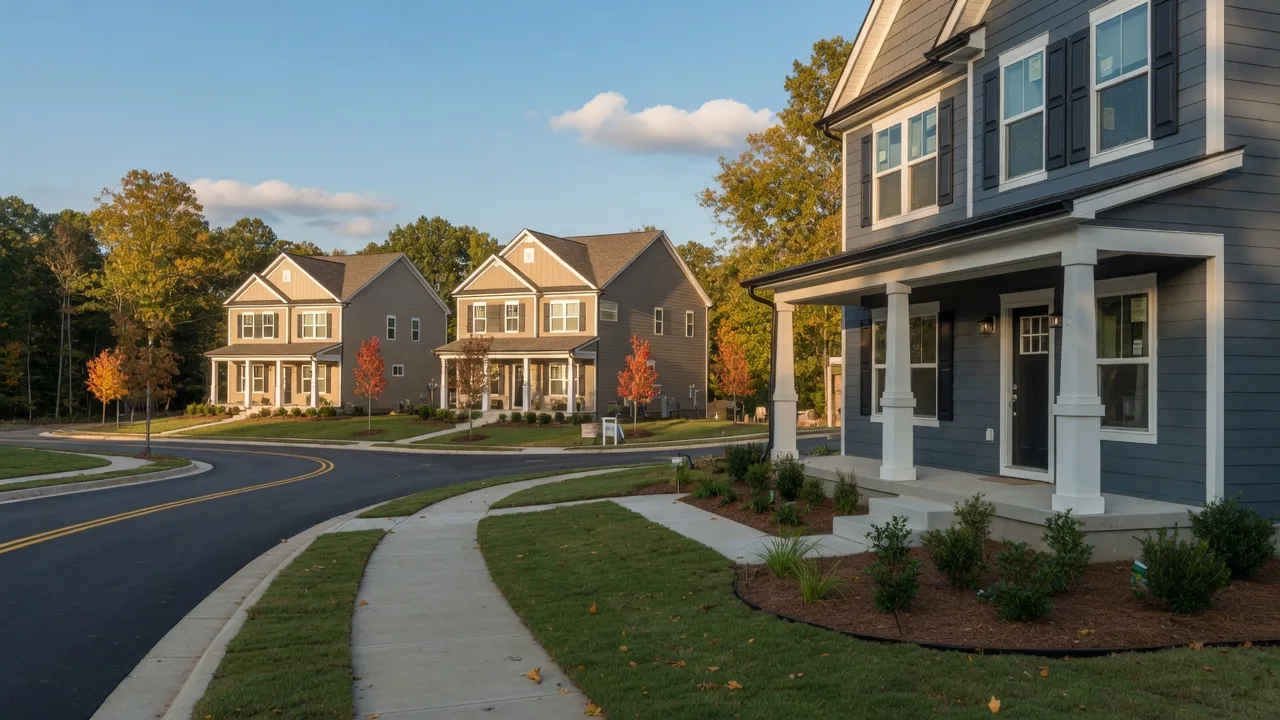
When you search for new construction incentives Atlanta, you are scrolling past a wall of identical banners: $20K Your Way, free closing costs, free appliances, free blinds. Roughly two-thirds of U.S. builders, 66% per NAHB's September 2026 survey, now advertise sales incentives, and the typical offer runs about 7% of the sale price. Here is the honest part: when six in ten builders shout the same numbers, the numbers stop meaning anything. An incentive is table stakes, not a differentiator. The real work is translating the banner into a monthly payment and deciding whether the community is worth it without the free blinds.
The Wall of Banners Is Now the Default, Not the Deal
Here is what is normal right now. Smith Douglas has advertised up to $30,000 in Flex Cash on select homes. D.R. Horton has advertised rates near 3.99% on selected quick move-in inventory through its in-house lender, DHI. Lennar has advertised up to a $7,500 closing cost credit, plus financing offers like a 4.99% fixed or a 3.75% 5/1 ARM on select Atlanta-area homes. Taylor Morrison has run limited-time rate offers. Those offers are real as of late September 2026 and they churn weekly. The published offer is the starting point, not the finish line; the deal is what shows up in writing.
Translate the Incentive Into Real Life: The Payment Math
Let's run the math on a $450,000 home with 10% down, financing $405,000 on a 30-year fixed, principal and interest only. Freddie Mac's 30-year average was 6.95% for the week ending September 17, 2026, with Georgia quotes around 7.0% to 7.1%, a picture I also track in my post on Atlanta rates brushing 7%. Rates move weekly, so treat this as illustrative math, not a lender quote.
| Scenario (P&I only, illustrative) | Monthly payment | vs. market rate |
|---|---|---|
| Market rate, roughly 7.0% | ~$2,694 | baseline |
| Rate with partial credit, 6.4% | ~$2,533 | ~$161 less |
| Buydown year one, 4.99% | ~$2,172 | ~$522 less |
Estimates exclude taxes, insurance, HOA dues, and PMI. Illustrative for a $405,000 loan; not a lender quote.
Three things to read from the table. First, half a point is not a rounding error: from 7.0% to 6.4% is about $161 a month, roughly $58,000 over 30 years. Second, the advertised 4.99% usually arrives as a temporary 2-1 buydown, not a rate for life: 4.99% year one, 5.99% year two, then the full rate. On this loan that is about $2,172, then $2,425, then back near $2,694, so get the rate written out for every year. Third, the same $20,000 does different jobs. A closing cost credit pays once and trims interest only on money you did not finance. A $20,000 price cut drops the payment to about $2,561, roughly $133 less a month, and trims about $48,000 off total payments over 30 years at 7%, about $20,000 principal and $28,000 interest. Illustrative, but the shape is real: how the incentive is delivered matters.
The Fine Print Nobody Reads
I like builders and I sell their product, but I have read enough incentive sheets to know where the questions live.
Is the base price padded to pay for the incentive? Incentives and price come from the same budget. Compare the net price, base minus credits, against closed resales in the same school district. Within a few percent, the incentive is real; at 10% or more above, the banner is buying itself.
Do the upgrade packages hold resale value? Design center pricing carries healthy margins, and most buyers get a fraction of the sticker back if they sell within a few years. Pick what you will actually use; a design credit is worth less on resale than the same dollars shaved off the price today.
What is the price per square foot after incentives? Divide the net price by heated square footage and compare it to the same number on resale comps. New construction runs modestly higher because it is new. The problem is the 15%-or-more gap the builder still calls value. Run it yourself.
How does the incentive interact with the appraisal? Appraisals come from closed comparable sales, not incentive sheets. Builders prefer credits over price cuts partly because a price cut resets the comps and pulls appraisals down, while a credit never shows in the data. Your side: if the base price was padded, the appraisal can still appraise short and the math gets re-done at closing.
Which Atlanta Communities Are Worth the Math
Free blinds are identical in every ZIP code. The community is what you live with for a decade, so here are five communities from my guide to the best new construction communities in Metro Atlanta in 2026, with approximate starting prices as of late September 2026. Confirm them with each builder before you tour.
Settingdown Farms, Cumming (David Weekley), from roughly $627,990. Mid-size single-family homes around 3,000 square feet in South Forsyth, where the school district carries the premium, and a community over a year into sales with a track record to walk instead of renderings.
Stratford at Inverness at Sugarloaf, Lawrenceville (D.R. Horton), from roughly $389,650. Express townhomes, one of the more affordable new options in Gwinnett, where incentives run aggressive on standing inventory.
Grandview Terrace, Canton (David Weekley), from roughly $349,000. Gated townhomes, 124 planned, Weekley's first Atlanta-area community aimed at first-time buyers, with Cherokee County schools at a price that needs no heroics from the rate sheet.
Carlton, Douglasville (D.R. Horton), from roughly $319,990. Express townhomes around 1,857 square feet, among the most affordable new construction in the west metro, with an easy I-20 run.
Ivey Township, Dallas (Meritage), advertised from $449,990, with recent active listings from roughly $380,000. Paulding County's square footage per dollar, from a builder known for strong standard features.
Two are Weekley and two are Horton on purpose: volume builders carry the standing inventory, and standing inventory holds the best incentives. For all 29 communities, see the full guide, and my comparison of new construction versus resale in Atlanta covers credits against resale deals.
Give the Quick Move-In a Personality
You have seen the signs: AVAILABLE NOW, and this fall the big Atlanta builders are promoting finished quick move-ins hard, including Smith Douglas September move-in inventory and D.R. Horton's Independence in Loganville with advertised locked FHA rates. Every month a finished home sits costs the builder money, so the discounts are deep. But the marketing fails when it reduces a home to a lot number. Nobody saves their biggest purchase because of a lot number; they save it because of the home. The morning light set by the orientation. The corner lot with the side yard. The finishes they would have picked anyway. I tell buyers the best quick move-in is the one they save three times: on the tour, at dusk, and again to show someone who matters why it is the one.
How a Real Agent Follows Up
This is the playbook I run, and it doubles as a checklist for testing whoever represents you. Within 48 hours of a tour you should have: the payment comparison on your actual loan amount, buydown and market rate side by side in writing; the neighborhood guide, coffee, groceries, weekend spots within ten minutes; the video from the homesite you saved, not the model, shot at the time of day you asked about; and the answer to the objection you raised on the model tour, in writing, before you ask twice. Run the same list on the builder side: does the net price per square foot answer come with a spreadsheet or a smile? Do you get the rate for every year of the loan? Are the credits in the purchase agreement or on a flyer? The best sign is never the size of the offer. It is how fast the numbers show up in writing.
Frequently Asked Questions
Do builder incentives mean the home is overpriced?
Not automatically, but check. Compare the net price, base minus credits, against closed resales in the same school district. Within a few percent, the incentive is real; 10% or more above, the banner is buying itself. Ask what the base price was before the promotion.
Is a rate buydown worth it in Atlanta?
Worth it if you will keep the home past year three and qualify at the bought-down payment. Most buydowns are temporary, so the payment climbs in year two and again in year three. Get the rate written out for every year of the loan.
Can I negotiate builder upgrades?
Often yes, especially on standing inventory. Design allowances carry good margins, so there is usually room, and an unused allowance is sometimes convertible to a closing cost credit. Whatever you negotiate goes in the purchase agreement.
Do builder incentives expire at year end?
Promotions run on quarterly and yearly cycles, so January 1 is a real reset. Year end often brings deeper offers on standing inventory, while new price lists shift the structure. Ask what happens to the offer on your date, and get the terms in writing.
What is the difference between lender credits and builder credits?
A builder credit comes from the builder in the purchase agreement, as closing costs, design allowance, or buydown money. A lender credit comes from the lender, often in exchange for a slightly higher rate. Compare both loan estimates side by side; a bigger credit on a higher rate can cost more than it saves.
The Bottom Line on New Construction Incentives Atlanta
The new construction incentives Atlanta builders are offering this fall are as generous as I have seen in years. But generous marketwide is the point: when everyone offers a deal, the table stakes do not choose for you. The community has to earn the purchase; the incentives just sweeten it. Run the payment math, get the buydown in writing, compare the net price per square foot, and pick a neighborhood that earns your payment.
Let's Run the Numbers on the Deal in Front of You
If you have a community, a price list, or an incentive flyer on your table, bring it to a conversation. I will build the payment comparison on your actual loan amount, walk the fine print, and tell you straight whether the math works. The builder pays my fee in most cases, and in over 20 years and more than 500 homes I have learned the numbers are the part worth knowing. Book time with me through Calendly and we will take it from there. I'll be in touch.
Researching new construction incentives Atlanta? I can help you separate the math from the banners. I'm available when you are ready.