New Construction vs. Resale in Atlanta: What Buyers Need to Know in 2026

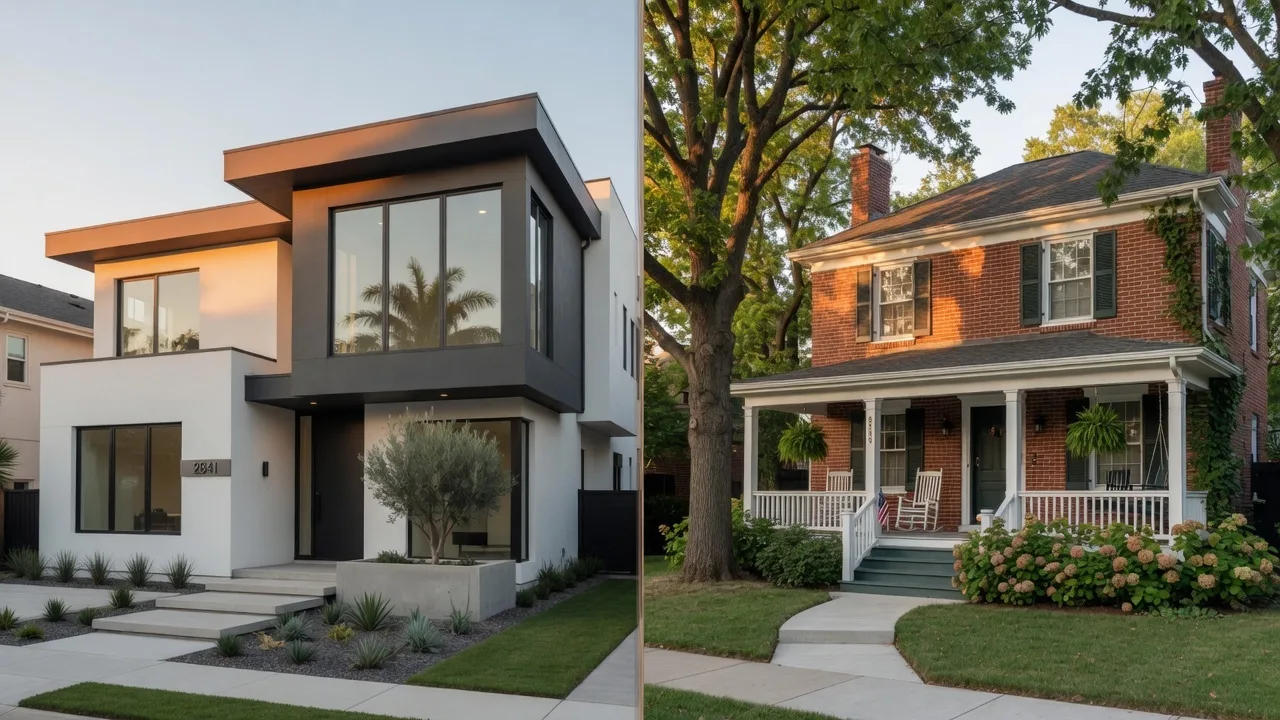
One of the first decisions Atlanta buyers face is whether to go with new construction or a resale home. Both paths can lead to the right house, but they involve very different processes, trade-offs, and costs. The market kept shifting through 2026, and mortgage rates moved again in October, so if you are comparing these two paths right now, this guide reflects the freshest Metro Atlanta data I could verify as of October 2026.
Price Differences: What the Numbers Actually Show
The price gap between new construction and resale in the Atlanta metro is real, and it matters when you set your budget. The most recent published new-construction figure for the metro is Jome's July 2026 new-home guide: a median new-home price near $488,700, with new homes averaging about $206 per square foot. No newer metro new-construction median has been published since, so that is the freshest number available. On the resale side, the Georgia MLS Atlanta MSA median sale price came in at $390,000 for August 2026, down 3.7% from July and 1.3% year over year, with 5,663 units sold. Homes.com's August report put the metro median at $395,000, and the city of Atlanta core leaned higher at about $427,000 over the trailing three months ending in August (Redfin), up 9.1% year over year.
The new-construction premium at the metro median is roughly $95,000 to $100,000, about 24% to 25%. Yet the National Association of Home Builders notes the new-vs-resale price gap has narrowed to historically low levels as builders lean on incentives to move inventory. In other words, builders are pricing new homes to compete with resale, not resting on the premium they could command a few years ago.
Inventory backs that up. Metro Atlanta is in a balanced, buyer-leaning market: months of supply sits around 5.4 months (Homes.com, August 2026, up from 4.9 a year earlier), active listings total about 28,255, up 3.1% year over year (Georgia MLS), and homes are closing at roughly 98.5% of list price (Zillow metro snapshot, late September 2026), so most homes close a small amount below asking. Your attention has real value right now, on both sides of the market.
Price per square foot tells a clearer story. New construction in the metro averages about $206 per square foot per Jome's July 2026 guide, while the metro-wide median listing price per square foot ran about $195 in August and $194 in September (FRED), so the new-build premium shows up at the square-foot level too. In established suburbs like Douglasville, Kennesaw, Marietta, or Decatur, a resale dollar buys more finished space and land, while a new build at the same price usually means a smaller footprint on a builder-controlled lot. Neither is better or worse; it depends on what you value. Just go in knowing what the premium actually buys: all-new systems, modern floor plans, energy-efficient standards, and no deferred maintenance.
Builder Incentives: What's Actually on the Table Right Now
This is where the new-construction math gets interesting, and it is the reason the price gap is narrowing. Redfin reported that 72.8% of Atlanta-area home sales in the three months ending August 31, 2026 included seller concessions, the highest share of any of the 29 metros it tracks, far above the 44.7% national average (Charlotte was next at 67.9%, Phoenix 67.4%, Las Vegas 66.7%, Raleigh 66.3%). The National Association of Home Builders separately found 63% of builders using sales incentives in July 2026, the 16th straight month at 60% or higher.
Builders are competing even harder than resale sellers because standing inventory costs them money every month. Here is what is actually being offered as of October 2026. Treat every line as a snapshot rather than a promise: builder promotions are limited-time by design, and most require the builder's preferred lender.
| Incentive Type | What Builders Are Offering Now | What to Know |
|---|---|---|
| Temporary Rate Buydown (2-1) | Smith Douglas "Build a Better Future": 2.99% via a limited-time 2-1 buydown (6.219% APR) on select homes | The most common builder offer. It cuts your payment in the early years while rates are elevated; plan for the reset. |
| Builder-Lender Rate Advantage | Buyers financing through builder-affiliated lenders averaged about 5.23% on a 30-year fixed in August 2026, versus about 6.60% through other lenders, a roughly 1.4-point gap | The gap is the incentive. Get your own lender's quote in writing before assuming the buydown is free money. |
| ARM Buydown Structure | Smith Douglas shifted its 2026 strategy from a 4.99% fixed to a 3.99% ARM buydown against a roughly 6.30% market | Aggressive year-one pricing that makes payments feel manageable, with the rate stepping up over time. |
| Flex Cash or Design Credits | Beazer "$35K-$50K Spend Your Way" flex cash; Ashton Woods $60,000 flex cash at East Harbor II at Chestatee | Money is applied to upgrades, closing costs, or a buydown. Builders prefer this over a lower price because it protects comparables. |
| Flash Promo Rates | My Home Communities "Red Tag" rates as low as 1.99% | The flashiest headline numbers. Read the term: promo rates reset after year one or two. |
| National Promo Programs | Century Communities "Rate Lock Special" with closing-cost credits and buydowns on quick move-ins; Taylor Morrison "Buy Build Secure Reduced Rates" | Bundles can stack a buydown, closing help, and design credit in one package. Compare the package in writing, not just the headline number. |
Important caveat: Nearly all of these programs require the builder's preferred lender, and some builders reflect incentive spending in base prices. Evaluate any offer in writing: total loan amount, note rate, effective rate in years one and two, closing costs, and the all-in price. Do not compare headline rates in a vacuum; compare the monthly payment and total cost at settlement.
The strongest deals right now are on quick move-in and standing inventory homes. Those are costing the builder carrying costs every month, and they are motivated to close. If you can live with builder-selected finishes, spec inventory is where the leverage sits.
Warranties, Building Codes, and What Georgia Law Now Requires
This is where new construction has a structural advantage. Georgia requires licensed residential contractors to offer a written warranty for every single-family contract over $2,500 (O.C.G.A. § 43-41-7), and the State Licensing Board's rule (553-7-.01) requires that warranty to spell out what is covered, what is excluded, and the standards used to evaluate the work. The law does not mandate exact durations, but the market standard across Georgia remains the 1-2-10 package: one year on workmanship and materials, two years on systems such as electrical, plumbing, and HVAC distribution, and ten years on structural defects, typically backed by a third-party warranty administrator. The Right to Repair Act (O.C.G.A. § 8-2-38) still requires you to give the builder written notice at least 90 days before a construction-defect lawsuit, and the builder gets 30 days to respond, inspect, or offer to settle.
What's new in 2026: Several laws and code changes took effect this year that affect both new construction and resale buyers:
1. HVAC Warranty Transfer (SB 112 / Act 285). Effective January 1, 2026. When a property with an HVAC system is sold, the existing manufacturer's warranty now automatically transfers to the new owner, without fees and regardless of product registration. The clock runs from the original installation date, not the sale date, and the change applies to HVAC warranties issued, sold, or offered on or after January 1, 2026. For resale buyers, that means the warranty on a newer home's HVAC follows the home to you, which is real protection given how costly a replacement can be.
2. New Building Codes (2024 ICC editions). Effective January 1, 2026. Georgia adopted the 2024 International Code Council editions with Georgia amendments, including the 2024 International Residential Code, International Building Code, and International Energy Conservation Code (Georgia Department of Community Affairs). New construction permitted after that date is built to updated standards for framing, energy efficiency, ventilation, and moisture management, so homes permitted in 2026 start with modern code requirements built in from day one.
3. Permit and Inspection Process Changes (SB 447 / Act 513). Effective July 1, 2026. This law revises local permit review. Land-disturbance applications must be approved, denied, or refunded within about 45 days, with automatic approvals for missed reviews, and permit records must be searchable by permit number, address, or parcel at no charge. Third-party inspection reports face tighter review windows, and any deficiency notice must specify the problem and the exact code requirement not met. That means more transparency when you review a new home's paper trail, and faster movement on development phases in some communities.
4. Expanded Contractor Licensing (SB 553 / Act 472). Effective July 1, 2026. Georgia overhauled licensing for electrical, plumbing, HVAC, low-voltage, and utility contractors under a new State Construction Industry Licensing Board, with new experience, exam, and background-check requirements. The net effect for buyers: more of the trades who build a new home must hold a Georgia license and answer to the state's warranty and disciplinary framework than in past years.
5. What did NOT change: home inspection licensing. Senate Bill 458, the proposed Home Inspector Licensing Act, was introduced in the 2025-26 session but is still pending in committee and did not become law. Georgia still has no state licensing requirement for home inspectors, so vetting your inspector matters more, not less.
What does this mean in practice? A resale home a few years old now carries its HVAC warranty with it automatically, which levels the playing field between a "recently built" resale and new construction. A brand-new build has the 1-2-10 builder warranty, the 2024 building codes, and licensed trades behind it. And for any home, the warranty process is the same: written notice, the builder's window to fix, and then the path to a claim.
Of course, new construction has its own category of issues: settling cracks, trim gaps, punch list items, and the occasional plumbing quirk. Every new home has them; the advantage is warranty leverage to get them fixed. I strongly recommend an 11-month builder warranty inspection before the one-year workmanship warranty expires, plus a third-party inspection before closing. On the resale side, you either catch an issue in the inspection period or you live with it, so budget a repair reserve of about 1% to 2% of the purchase price annually, more for older homes.
Customization Options with Builders
New construction still gives you the ability to personalize. Depending on the stage of construction, you may be able to select countertops, cabinetry, flooring, paint, and fixture finishes, and in some cases structural options like an added bedroom, a finished basement, or upgraded electrical.
Atlanta's production builders, including D.R. Horton, Lennar, Ashton Woods, and Taylor Morrison, run design center appointments where you walk through selections. Semi-custom and custom builders in Alpharetta, Cumming, and North Fulton offer more flexibility, and that means more decisions and more time.
The catch is unchanged: upgrades stack up quickly. A base price can look competitive, and then a showroom-level finishes package can push a $500K layout past $600K. I have watched buyers fall in love with a model and wince at the finished price. Resale offers zero customization, but what you see is what you get: the kitchen is what it is, and there are no surprise line items after you sign.
Lot Sizes and HOA Differences
One of the most underrated differences between new and resale in Atlanta is the land itself.
New-construction communities are almost universally governed by HOAs. In South Forsyth (Alpharetta, Milton, Cumming), Cherokee County (Canton, Holly Springs, Woodstock), Paulding County (Dallas, Hiram), and Douglas County, new subdivisions carry annual dues that run from a few hundred to a few thousand dollars depending on amenities like pools, playgrounds, and trails. Lots trend small, often well under a third of an acre, which means close neighbors and compact backyards.
Resale neighborhoods in established areas like East Atlanta, Decatur, the older parts of Douglasville and Marietta, and many South Fulton neighborhoods frequently have larger lots, looser or nonexistent HOAs, and mature trees. If you want a workshop, a garden, or genuine space between you and your neighbor, resale is usually the better path. Some buyers value the amenities and the design rules an HOA enforces; it is a lifestyle choice, not right or wrong.
Financing Differences: Builder Lenders, Rate Buydowns, and the Current Rate Environment
Financing new construction is more involved than financing a resale. You typically pick one of two roads:
Construction-to-permanent loan: Standard with custom builders. The lender releases funds as construction draws, and the loan converts to a permanent mortgage at completion. It requires a lender who actually does construction lending, and the timeline runs longer.
Builder's preferred lender: The path most production-builder buyers use. In-house financing unlocks the incentives above: buydowns, closing-cost credits, and design cash. The catch: the preferred lender may not offer the best base rate, and you surrender some flexibility on the financing side.
For resale purchases, you keep full freedom to shop lenders, compare rates, and pick any lender. Many buyers use that freedom to negotiate closing help from the seller instead.
Where rates stand now: The 30-year fixed rate moved up sharply in early October 2026. Freddie Mac's weekly survey put the national average at 7.40% for the week ending October 8, the highest reading since November 2023, with Bankrate's tracker around 7.53% and Yahoo Finance's daily average at 7.34%. That is a meaningful jump from the mid-to-high 6% range of early September, and it makes the headline market rate only half the story, because builders are effectively buying rates down with their own money.
That is why buydown offers matter so much right now. In August 2026, buyers financing through builder-affiliated lenders averaged about 5.23% on a 30-year fixed loan versus about 6.60% through non-builder lenders, a gap of roughly 1.4 points. A 2-1 buydown like Smith Douglas' "Build a Better Future" (2.99% year one via a limited-time 2-1 buydown, 6.219% APR) can turn a payment that looks like a 7% world into one that resembles a 5% world. My Home Communities has flashed "Red Tag" rates as low as 1.99%, and D.R. Horton has leaned on 3.99% buydowns nationally, with 73% of its buyers receiving a buydown in the fourth quarter of 2025. Those are headline deals, so read the reset terms carefully.
Some builders also structure permanent buydowns, where points are paid to reduce the rate for the life of the loan. Those favor buyers who expect to stay seven or more years. Weigh your expected hold time against the incentive structure: if you will not be there long enough to break even on a deep buydown, a closing-cost credit can be the better use of the money.
One more source of help: Invest Atlanta's Beltline Mortgage Assistance Program offers up to $20,000, or $30,000 for civil servants and legacy residents, toward a down payment, closing costs, or a permanent rate reduction for eligible buyers in the program's footprint. It is worth asking about if your target neighborhood falls inside the Beltline service area.
Where New Construction Is Active in Atlanta Right Now
New construction in metro Atlanta concentrates in specific corridors, and builders opened several fresh communities in 2026. Here is the activity as of October 2026:
- Paulding County (Dallas, Hiram): One of the most active new-construction corridors in the metro. Century Communities opened Hawthorne Reserve in Dallas on May 2, 2026. Strong square footage per dollar here.
- Douglas County (Douglasville, Austell, Lithia Springs): Competitive pricing with quick access to the city. Century Communities opened Magnolia Square, a townhome community in Austell, on March 28, 2026, from the upper $300s, and DRB Homes has Ansley Trails in Douglasville scheduled for fall 2026. The corridor to watch if you want new construction closer to Atlanta proper.
- Henry County (McDonough, Stockbridge): Family-friendly and price-accessible. Century opened Walker Grove in McDonough on March 28, 2026 from the mid $400s, and NexMetro opened Avilla Holloway in Stockbridge in July 2026, its first Atlanta-area built-to-rent community with 136 cottage-style rental homes. This south-side stretch keeps delivering inventory that competes well against resale, and the rental product is worth a look for investors.
- Fulton County (Fairburn): Century opened Belleview Manor in Fairburn on April 25, 2026 from the low $400s.
- Cherokee County (Canton, Woodstock): Century opened Brookshire Manor in Canton on July 11, 2026, roughly 50 single-family homes from the mid $600s, and David Weekley's Havencroft in Woodstock was nearing closeout as of October 1, 2026, with final homes priced from the high $600s to over $1 million. If you want a finished community rather than a build, this is a corridor to watch for closeouts.
- Dawson County (Dawsonville): DRB Homes has Sagewood in Dawsonville scheduled to open in October 2026.
- The bigger picture: With months of supply above five and seller concessions at record levels, builders are competing for buyers with new phases and incentives rather than pulling back. Century, DRB, David Weekley, and others keep opening or advancing communities across the west, south, and north sides of the metro.
Negotiation Tactics for Each Path
New-construction and resale negotiation are different games.
With a builder: List price is less flexible than you think; builders protect their per-square-foot positions across a community. Your leverage lives in the incentive package: rate buydowns, closing-cost credits, design credits, upgrades, and lot premiums. With standing inventory you often see five-figure bundles (Beazer's "Spend Your Way" runs $35,000 to $50,000, and Ashton Woods has offered $60,000 in flex cash at select communities). The move in 2026 is not to demand a price cut; it is to decide up front which of the credit, rate, and design allowances you want, and get them in writing.
With a resale seller: Inventory is around 5.4 months, and with 72.8% of Atlanta sales carrying concessions, the seller who has been on the market 30+ days is usually ready to talk, especially about closing costs and repairs. Negotiate the whole envelope rather than just the price: rate buydown credits, closing help, a warranty, and repair credits all are options. A few thousand in closing-cost help often matters more than a few thousand off the price, and it costs the seller less after commissions.
The strategy that wins in this market: bring your financing pre-approval, your comparable data, and concrete reasoning from current conditions (days on market, sale-to-list ratio, concession rates) that point to a realistic closing number.
Inspection Considerations for New Builds
A lot of buyers assume new construction does not need an inspection. That is a mistake.
Georgia does not require builders to have homes independently inspected before closing, and nothing changed on that front in 2026: Senate Bill 458, the proposed Home Inspector Licensing Act, is still pending in committee, so the state has no licensing requirement for inspectors. Your due diligence period, typically 10 to 14 days under the standard contract, is your window to hire one. SB 447 adds transparency around local permit reviews, but nothing replaces a private, third-party set of eyes on your own house. A professional inspector on a new build regularly finds dozens of items, most minor and a few significant: flashing, HVAC installation, grading, and electrical connections that deserve correction before you close. Get the checklist and push the builder to complete it prior to closing rather than after.
With the 2024 IRC now the standard for newly permitted Georgia homes, framing, energy efficiency, and ventilation are better than under the old standard, but codes do not guarantee craftsmanship. On the resale side, inspection is even more important: foundations, wiring, plumbing, roof, termite history, and the moisture issues common in Georgia's clay soils. On both sides, a few hundred dollars of inspection can head off five-figure surprises.
Timeline Differences
New construction takes time. It can be anything from immediate delivery (a finished standing home) to 6 to 14 months for a full build, with most Atlanta builders in the 5 to 9 month range from contract to close. Since builders include delivery language in the contract that protects them from delays, read that language carefully; material and scheduling issues can move a completion date.
Resale closes much faster. A typical Georgia resale closes in 30 to 45 days from a clean contract, and a cash buyer can close in a few weeks. If you have a lease expiring, a relocation deadline, or a closing date that has to hold, resale is almost always the practical pick. If you want a brand-new house and have flexibility, the wait for new construction is often worth it.
Pros and Cons at a Glance
| Factor | New Construction | Resale |
|---|---|---|
| Price (latest metro data) | ~$488,700 median (July 2026, Jome); ~$206 per sq ft | ~$390,000 MSA median (Aug 2026, Georgia MLS); ~$427K city core (Redfin); more sq ft per dollar |
| Seller Concessions | Stacked builder incentives; 63% of builders using them (NAHB, July 2026) | 72.8% of Atlanta sales include concessions (Redfin, Aug 2026), highest of 29 metros |
| Warranty / Legal Floor | 1-2-10 builder warranty; 2024 ICC codes; SB 553 licensed trades | Sold as-is; SB 112 / Act 285 auto-transfers the HVAC warranty |
| Customization | Design center selections; structural options | None; what you see is what you get |
| Lot Size | Small lots; HOA nearly universal | Larger lots common; HOA varies |
| Timeline | Immediate (standing inventory) to 5-14 months (build-to-suit) | 30-45 days from contract to close |
| Inspection | Recommended, not required; catches punch list | Essential; reveals hidden problems |
| Financing | Construction loan or builder's lender; incentives tied in | Standard mortgage; full lender freedom |
| Rate Environment (Oct 2026) | Buydowns to 2.99% year one; builder-lender avg ~5.23% | Market ~7.3%-7.5%; shop your own rate |
| Maintenance | Minimal for the first decade; all systems new | Age-dependent; budget ~1-2% of value annually |
| Negotiation | Incentives over price; leverage on standing inventory | Price, credits, repairs; full flexibility |
| Character | Modern layouts; uniform community aesthetic | Unique homes; mature trees, settled streets |
Which Path Is Right for You?
There is no universal answer. Here is the framework I use with my buyers:
New construction may be the better fit if: You want zero deferred maintenance and modern codes, you have five or more months of flexibility, you want to choose your finishes, and you can capture a builder incentive package (buydowns, closing help) that makes the payment compete with resale.
Resale may be the better fit if: You need to move within 60 days, you want a generous lot or an established neighborhood with mature trees, you prefer to negotiate price and lender freely, or you do not want your budget stretched by new-construction upgrade costs.
The middle ground that is working for a lot of buyers right now: A builder standing home, immediately available with the strongest incentive packages, or a recent resale under five years old, which now comes with the HVAC warranty transfer under SB 112 / Act 285 and none of the wait.
With metro inventory around 5.4 months, 72.8% of sales carrying concessions, homes closing at about 98.5% of list, and builder buydowns offsetting a 7%+ rate environment, the Atlanta metro is genuinely one of the most buyer-friendly markets in years, on both the new-construction and resale side. The key is knowing which levers to pull for your situation, and that is what I do every day. I'll be in touch.
Frequently Asked Questions
Is new construction worth the premium in Atlanta?
Sometimes. You pay a premium for a home no one has lived in, with modern systems, a warranty, and builder incentives that can offset the cost. The premium is justified when the location and school district are strong; it is harder to justify in an unproven area where resale is uncertain.
Do new construction homes appreciate faster than resale?
Not automatically. Appreciation follows supply, demand, and neighborhood momentum, not the age of the home. A new build in a hot corridor can appreciate quickly as the community fills in, while a new build in an oversupplied area can sit flat. The neighborhood matters more than whether the home is new.
What are the downsides of buying new construction?
The main ones are uncertainty in an unfinished community, an HOA with rules still being written, construction delays, and a landscape and lawn that start bare. New builds also skip the negotiated value of a resale, where a motivated seller has already done the price discovery.
How do I compare new construction and resale fairly?
Compare the total cost to own each option over the same time horizon: price, incentives, tax and insurance differences, maintenance expectations, and likely resale in your planned holding period. A resale with a fresh kitchen can match a new build's finishes at a lower price, which is why the comparison needs real numbers.
Need Help Deciding?
I have helped buyers on both sides of this decision for over 20 years. Whether you are drawn to a new build in Paulding County or a classic resale in East Atlanta, I will help you compare your actual options, not just what the builder's sales office or the listing agent tells you. I'll be in touch.