Up-and-Coming Neighborhoods in Atlanta in 2026: Where to Buy Right Now

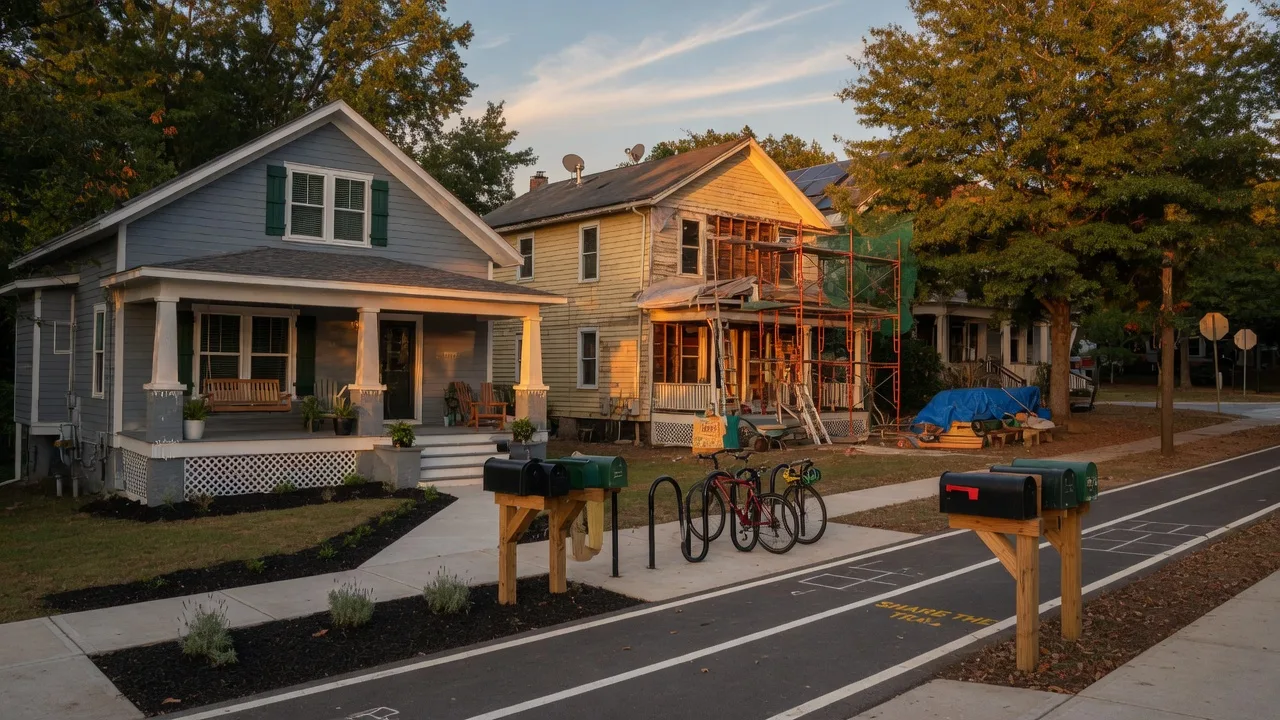
If you typed "up and coming neighborhoods in Atlanta" into Google, you are asking the question buyers in a shifting market ask most: where can I still get into this city before the prices fully catch up? The short answer for fall 2026 is that the up-and-coming neighborhoods in Atlanta are the ones riding the BeltLine Southside and Westside buildout, the development wave in West Midtown, and the MARTA expansion through North DeKalb, along with the established intown villages where value still exists. Metro Atlanta added roughly 62,000 residents in the last year and the city itself grew by about 7,000, per the Atlanta Regional Commission, and the people moving here are following the same pattern: jobs, transit, and trail access first, prices second. Here is where the momentum is real, what the data says, and how to buy one of these areas without overpaying.
What Makes a Neighborhood "Up and Coming" in Atlanta Right Now?
An up-and-coming neighborhood is one where the pieces of a price move are already in place but the prices have not finished catching up. In Atlanta in 2026, that usually means three signals at once. Public investment: a BeltLine trail segment, a MARTA station or expansion, a transit-oriented project. Private investment: new apartments, retail, and a visible share of homes being renovated block by block. And buyer demand: stronger showing traffic and faster sales than the neighborhoods next door, before the price gap closes.
This matters more than ever because Atlanta is currently a buyer's market, with roughly five and a half months of supply and homes averaging close to two months to sell. Buyers have time and leverage, which is exactly why emerging neighborhoods still work right now. You can negotiate in West End or Doraville in a way you could not in Buckhead or Midtown, where demand already overshot supply. That gap is the opportunity, and it is measurable. My appreciation data by neighborhood tracks exactly which areas are gaining while the metro as a whole cools.
The BeltLine Southside Effect Is Reshaping West End and Oakland City
The single biggest force in Atlanta's up-and-coming story is the BeltLine, and in 2026 that focus has moved south. The Southside Trail is expected to close the loop before the FIFA World Cup arrives in the city, which makes the West End corridor newly connected to everything the trail already delivered on the Eastside and Westside. Major projects like Murphy Crossing in Oakland City are in motion, and that kind of anchor development changes the math for every block around it.
The neighborhoods in the middle of it are West End, Adair Park, Westview, and Sylvan Hills, the ZIPs around 30310 and 30311. Here is the honest data point: Zillow shows values in the 30310 West End area down about 5.4% year over year as of mid-2026. That sounds negative until you see it for what it is, an emerging corridor pricing at entry levels right as multi-year public investment lands. Buyers who get in on this side of the price move are buying intown Atlanta for a fraction of what the same house costs across the trail. I cover the streets, the stock, and the commute in my West End guide and the neighborhood profile.
West Midtown: Development, Jobs, and a New Skyline in 30318
West Midtown has become the address where Atlanta's job growth and its housing growth meet. The Westside Paper, The Interlock, and Echo Street West are all delivering new space for the tech and media employers that keep moving into the corridor, and every new job brings renters and buyers behind it. What makes West Midtown still "up and coming" rather than fully arrived is the mix: brand-new construction next to older residential stock, which means the older blocks still carry prices below the new towers.
It is also one of the few places in the metro where a buyer can watch the neighborhood physically change month to month. If you want the specifics on what is being built, what it costs, and which blocks to compare, my West Midtown ZIP guide breaks down the corridor block by block. For buyers who want the same job access at a lower entry, the stretch of neighborhoods feeding into it, from the West End up through Smyrna, is worth the commute math.
Chamblee and Doraville: North DeKalb's MARTA Reinvention
North DeKalb is quietly running one of the more interesting plays in the metro. Chamblee and Doraville are redeveloping along Peachtree Boulevard around their MARTA stations, with new transit-oriented housing, retail, and a walkable core that did not exist ten years ago. Older Ranch and brick stock in the surrounding neighborhoods still trades at entry prices, and that combination, transit access plus dated inventory plus visible reinvestment, is the classic up-and-coming formula.
It works for a few different buyers: first-timers who want MARTA access without intown prices, commuters who work downtown or at the airport, and households that outgrow apartments but want to stay in DeKalb. My Doraville guide, the Chamblee guide, and the Doraville guide lay out what each pocket delivers. If school districts matter to you, these areas also feed some of the more affordable parts of DeKalb's school map, which keeps resale broad when you eventually move.
Intown Value: East Atlanta, Reynoldstown, and the Southside Villages
Inside the Perimeter, the up-and-coming story is about the villages that are now connected by the BeltLine rather than isolated by it. East Atlanta Village has the restaurant and nightlife base buyers want, and the surrounding bungalows in 30316 and 30317 still price well below the most-searched intown ZIPs. Reynoldstown has some of the best BeltLine access in the city, which is exactly why it keeps showing up on buyer lists, and Ormewood Park and Kirkwood round out the corridor of value between Decatur and downtown. I mapped the full trail-adjacent picture in the BeltLine neighborhoods guide.
These are also the neighborhoods where my search-demand data shows buyers are increasingly pointing. The Villages deliver the walkable, character-heavy lifestyle at entry prices, and they are still small enough that a few renovated homes change the whole block's pace. For the specifics on the bungalow stock, the commute, and what sells in each pocket, start with the East Atlanta Village profile, the Reynoldstown profile, and my East Atlanta ZIP guide.
How to Buy in an Up-and-Coming Neighborhood Without Overpaying
An up-and-coming neighborhood is only a good deal if you buy it correctly, and the process is more forgiving now than it has been in years because of the buyer's market. Four things make the difference. First, pull six months of closed sales in the specific ZIP, not the neighborhood next door, and compare them to the areas you expect it to become. Second, look at the block, not the listing: one or two renovated homes per block is a tipping point, an avalanche of construction is a different risk. Third, verify the plan: trail segments, stations, zoning, and retail are public record, and I help you read them. Fourth, buy the condition honestly: a home that needs work in an emerging area carries renovation risk, but it also carries the biggest upside when the area matures.
Every buyer I work with in these neighborhoods gets that straight conversation about what the street is today and what it is on track to become. The same discipline is what keeps investors coming back, and my Atlanta Investor Index ranks metro cities on rents and days on market if you want the numbers behind the momentum.
The Bottom Line on Up-and-Coming Atlanta Neighborhoods
The up-and-coming neighborhoods in Atlanta in 2026 are West End, Oakland City, Westview, and Sylvan Hills along the BeltLine Southside; West Midtown around its development wave; Chamblee and Doraville on the MARTA corridors; and East Atlanta, Reynoldstown, and Kirkwood intown. They share the same three signals, public investment, renovation momentum, and rising buyer interest before prices have fully adjusted, and they are all buyable right now because the market favors buyers. If you want help comparing two of these areas, pulling the real comps, or figuring out which one fits your budget and your commute, I'm available. I'm ready when you are.
Frequently Asked Questions
What does 'up and coming' mean for an Atlanta neighborhood?
It means an area where the pieces of a price leap are already in place: new development or renovation, transit or trail access, jobs, and a growing pool of buyers, before prices have fully caught up with all of it. In Atlanta in 2026, the clearest up-and-coming neighborhoods sit along the BeltLine Southside and Westside, in West Midtown, and along the new MARTA corridors in North DeKalb.
What are the most up-and-coming neighborhoods in Atlanta in 2026?
The ones with the strongest momentum right now are West End, Adair Park, Westview, and Oakland City along the BeltLine's Southside Trail; West Midtown around the new development projects; Chamblee and Doraville in North DeKalb; and East Atlanta Village, Reynoldstown, and Kirkwood intown. Established areas like Buckhead and Midtown are great markets, but they have already priced in their momentum.
Is it too late to buy in an up-and-coming Atlanta neighborhood?
No, and the reason is the market itself. Metro Atlanta is a buyer's market in 2026, with roughly five and a half months of supply and homes averaging close to two months to sell. That gives you time to look and negotiate, which is exactly when emerging neighborhoods still make sense. The window does not stay open forever, but it is open right now.
How do I find an up-and-coming Atlanta neighborhood before prices rise?
Follow the public investment: where the BeltLine and MARTA are building, where new apartments and retail are going up, and where at least a couple of renovated homes are selling on every block. Then compare six months of closed sales in the ZIP versus the surrounding area. If sales are picking up and prices are still below the neighborhoods next door, that is the signal to look seriously.
Are up-and-coming Atlanta neighborhoods safe to buy into?
Buying into an emerging neighborhood is a real decision, not a blanket yes. The honest approach is to walk the block at different times of day, check the street-level conditions, confirm the school and commute facts for the specific home, and ask what is actually planned nearby. I give every buyer on these streets a straight conversation about what the area is today and what it is becoming.
Should investors and first-time buyers look at the same up-and-coming neighborhoods?
Sometimes, but for different reasons. A first-time buyer in West End or East Atlanta Village gets entry pricing into intown Atlanta and stands to benefit as the area matures. An investor looks for the same momentum but needs the rent to carry the deal, so they weigh cash flow and days on market more heavily. My monthly Atlanta Investor Index ranks metro cities on those exact numbers.
Let's Find the Right Up-and-Coming Atlanta Neighborhood for You
I have spent over 20 years and more than 500 sales across Metro Atlanta, and I track the trails, the stations, and the development that move these neighborhoods. Whether you want to compare West End against East Atlanta Village, run the numbers on a specific block, or see what your budget actually buys in 2026, let us sit down and talk it through. No pressure, just honest guidance from someone who watches these streets change every month.
A 30-minute conversation tells you which of these neighborhoods fits your budget, your commute, and your plan. That is the starting point.