Can I Make a Non-Contingent Offer Before Selling My House? Atlanta Strategy Guide
Found the next house but haven't sold yours yet? Here is how a non-contingent offer makes you the strongest buyer in any market, and the strategies that make it possible without selling first.

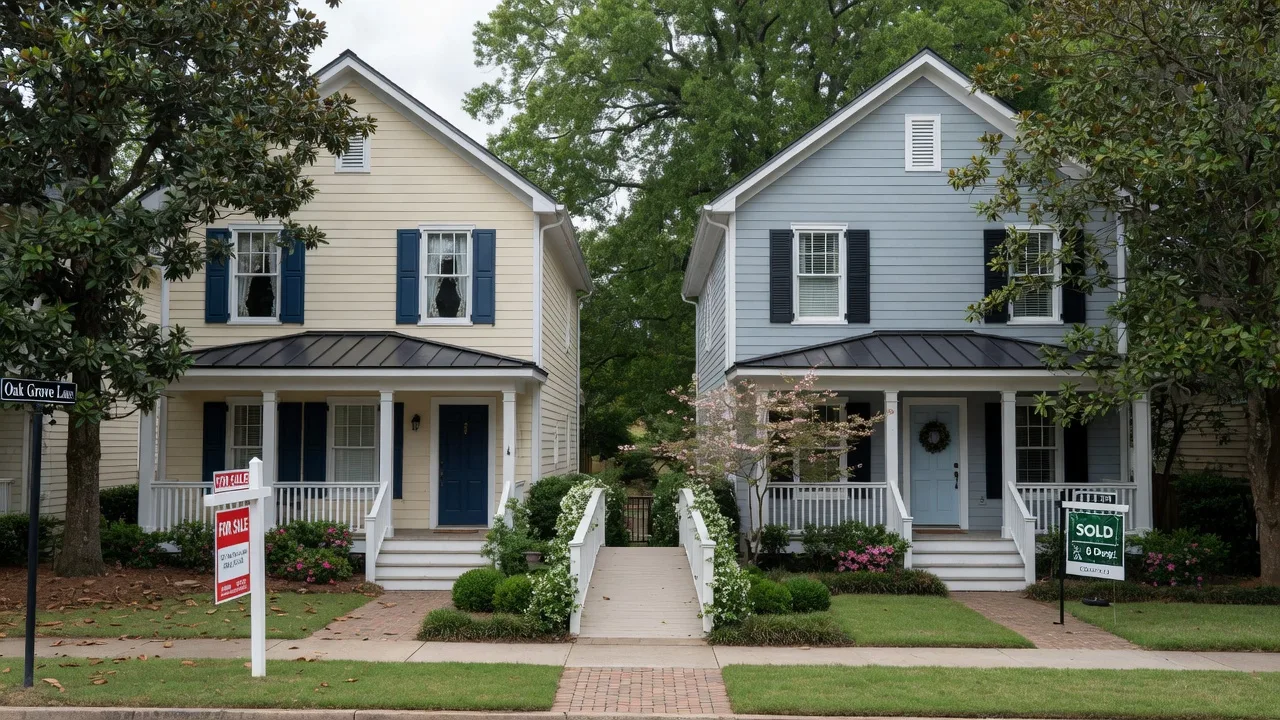
Found the next house but haven't sold yours yet? You are not alone. That gap between finding the right home and being able to buy it is the single most common frustration I hear from Atlanta move-up buyers. And the solution comes down to one question: can you make a non-contingent offer before your current house sells?
The short answer is yes. But the real answer is more nuanced. A non-contingent offer changes everything about how a seller sees your offer, and it can be the difference between winning the home you want and watching someone else move in. Here is what it takes, what it costs, and when it makes sense.
1. What Is a Non-Contingent Offer?
A non-contingent offer is exactly what it sounds like: an offer on a home that does not include a home-sale contingency. You are not telling the seller "I'll buy it if my house sells first." You are saying "I'm buying it."
In a standard home purchase, a buyer who still needs to sell their current home adds a contingency clause that says, essentially, "This deal only goes through if my home sells within a certain timeframe." If that home does not sell, the buyer can walk away with their earnest money intact. That protection is valuable for the buyer, but it adds risk for the seller.
A non-contingent offer removes that clause entirely. The buyer is committed to the purchase regardless of whether their current home sells. That changes the dynamic of the negotiation significantly.
2. Why Sellers Prefer Non-Contingent Offers
If you have ever been on the seller's side of a transaction, you know that the home-sale contingency is the most unpredictable variable in the deal. The seller has no control over whether the buyer's home sells. They cannot make that buyer's phone ring. They cannot speed up that buyer's inspection timeline. They just have to wait.
Here is what a non-contingent offer signals to a seller:
- Certainty. No risk that the deal falls through because of factors outside the seller's control.
- Speed. A non-contingent offer typically closes faster. There is no waiting period for the buyer's home to sell.
- Clean terms. Fewer moving parts means fewer things that can go wrong between ratified contract and closing.
- Competitive edge. In multiple-offer situations, the non-contingent offer almost always wins, even if the price is slightly lower.
A seller who receives two offers at the same price, one contingent and one non-contingent, will choose the non-contingent offer every time. It is not personal. It is risk management.
3. Why You Would Want to Make One
The obvious question: why take on the risk of buying without selling first? Because in competitive situations, non-contingent beats contingent every time.
In metro Atlanta, desirable properties in neighborhoods like Alpharetta, Roswell, Sandy Springs, Brookhaven, and the intown neighborhoods (Midtown, Buckhead, Grant Park, Inman Park) still draw multiple offers. Sellers want the sure thing. If your offer depends on selling your current home first, you are asking the seller to wait on a process they cannot control. Many will simply choose the buyer who removes that uncertainty.
A non-contingent offer also puts you in control of your timeline. You shop for your next home on your schedule, not on the schedule of a ticking clock after your current home sells. You can be picky. You can wait for the right property. You are not pressured to accept the first offer on your current home just to free up cash.
4. How to Do It Without Selling First
Making a non-contingent offer requires access to capital before your old home sells. You need the down payment, closing costs, and reserves without waiting for the sale proceeds. Here are the most common ways Atlanta homeowners do it.
Bridge Loan
A bridge loan is a short-term loan secured by the equity in your current home. It gives you cash for the down payment on your new purchase. When your current home sells, you pay off the bridge loan from the proceeds.
- Typical fees: 2 to 2.5% of the advance amount
- Interest accrues monthly during the holding period
- Requires 20%+ equity in your current home and credit typically above 680
- Loan term: usually 6 to 12 months
HELOC (Home Equity Line of Credit)
If you already have a HELOC in place, you can draw on it for the down payment. This is often the simplest approach if you set up the HELOC before you start shopping.
- Lower upfront costs than a bridge loan
- You pay interest only on what you draw
- Requires sufficient equity and qualification
- Works best when planned in advance, not as a last-minute solution
Savings or Liquid Assets
Some buyers simply have enough cash on hand for the down payment without tapping their home equity. If you can cover a 20% down payment from savings, you can make a non-contingent offer with no financing contingency at all. This is the cleanest approach but requires significant liquid assets.
Equity Advance Programs
Companies like Homeward and HomeLight offer equity advance programs where they give you a portion of your current home's equity upfront. Some even guarantee to buy your home if it does not sell within a specified window. This lets you make cash-like offers.
- Fees typically 1 to 3% of the advance plus monthly holding costs
- You can often make offers that look like cash to the seller
- If the home does not sell in 120 to 180 days, the provider may buy it at 85 to 90% of the initial valuation
Each approach has different costs and qualification requirements. The right one depends on your equity position, timeline, and comfort with the terms. I help clients compare these options side by side before making a decision.
5. The Math: What a Non-Contingent Offer Costs You
Making a non-contingent offer is not free. There are real costs involved, and understanding them upfront is the only way to make a smart decision. Let me walk through a realistic scenario.
Sample Scenario: $500,000 Purchase with Bridge Loan
Assuming 20% down ($100,000), bridge loan covers the full down payment.
| Cost Item | Amount |
|---|---|
| Bridge loan origination fee (2.25% of $100,000) | $2,250 |
| Monthly interest on bridge loan (assume 9% APR, 3-month holding period) | $2,250 |
| Two mortgage payments during overlap (current home + new home, 3 months) | $6,000 to $9,000 |
| Appraisal and closing costs on bridge loan | $500 to $1,000 |
| Total estimated cost | $11,000 to $14,500 |
Note: Actual costs vary based on loan terms, holding period, and your specific mortgage rates.
So the real question: is $11,000 to $14,500 worth it to win the home you want? For many buyers, the answer is yes. That is roughly 2 to 3% of the purchase price. If the alternative is losing out on a property in a neighborhood where prices are rising, the non-contingent offer pays for itself.
For buyers who use savings rather than a bridge loan, the cost drops to just the extra months of double mortgage payments (or none, if you time it right). A HELOC typically costs less than a bridge loan but still carries interest on the drawn amount.
6. Atlanta Market Context: How Much Does It Matter Right Now?
Metro Atlanta's housing market in mid-2026 sits in a balanced-to-slightly-leaning-seller position. With around 4.66 months of inventory and median home values near $425,000, the market is not the frenzy we saw in 2021 and 2022. But it is not a buyer's market either.
In this kind of market, non-contingent offers are not as critical as they were during the seller's boom when every well-priced listing drew 10+ offers. But they still give you a clear edge on desirable properties. The difference is that today, a non-contingent offer is a differentiator rather than a requirement.
For homes in the hottest neighborhoods, especially in the $400K to $1M range where I work most often, a non-contingent offer can still be the deciding factor. In a multiple-offer situation with three or four buyers, the seller will almost always choose the buyer who removes the risk of a failed home sale. It is the same logic as a cash offer vs. a financed offer: certainty wins.
7. When It Is Worth It
Not every situation calls for a non-contingent offer. Here is when it makes sense to take on the extra cost and risk.
Worth It When:
- You found "the one." The property checks every box and you do not want to risk losing it.
- Hot neighborhood. Areas like Brookhaven, Grant Park, Alpharetta, or Inman Park where inventory is low and demand is steady.
- Competitive situation. Multiple offers expected, or the seller has already told you they want a clean offer.
- You have the equity. You are sitting on 20%+ equity and can comfortably cover the costs of the bridge period.
- Timeline matters. You need to move by a specific date and cannot wait for your current home to sell first.
8. When to Stay Contingent
A non-contingent offer is not always the right move. Sometimes the smarter decision is to make a contingent offer and wait for your home to sell. Here is when staying contingent makes sense.
Stay Contingent When:
- The market favors buyers. In a true buyer's market, sellers are more willing to accept contingent offers because they have fewer options.
- You need the equity for the down payment. If the equity in your current home is the only way to fund the next purchase, and you cannot cover bridge loan costs, wait until you sell.
- The financial risk is too high. Carrying two mortgages for 3+ months would stretch your budget. Do not take on that kind of pressure.
- Your current home is hard to sell. If it needs significant repairs or is in a slow-moving area, do not commit to buying until you have a confirmed sale.
- You are risk-averse. Some buyers prefer the safety net of a contingency even if it means losing a few deals. That is a perfectly valid choice.
Non-Contingent vs. Contingent: Side by Side
Here is how the two approaches stack up from both the buyer's and seller's perspective.
| Non-Contingent Offer | Contingent Offer | |
|---|---|---|
| What the seller sees | Certainty. This buyer is ready to close regardless of their current home. | Risk. This deal could fall through if the buyer's home does not sell. |
| Timeline to close | Standard 30 to 45 days. No waiting on another sale. | 60 to 90+ days. The buyer's home must sell and close first. |
| Competitive strength | Strong. Beats contingent offers in multiple-offer scenarios. | Weak. Often the first offer eliminated when sellers have choices. |
| Buyer's financial risk | Higher. Two mortgages during the overlap. Bridge loan fees. | Lower. Only buy once your current home sells. No double payments. |
| Buyer's flexibility | High. Shop on your timeline. Move once. No hurry to sell. | Lower. Must sell before buying. May need temporary housing. |
| Best for | Competitive neighborhoods. Strong equity. Financially ready. | Buyer's markets. Tight budgets. Slow-to-sell current homes. |
How Tommy Williams Helps Navigate the Dual Transaction
Making a non-contingent offer is not a decision you make in a vacuum. It depends on knowing exactly what your current home is worth, how quickly it will sell, and whether the numbers work for your specific financial situation.
With over 20 years of experience and over 500 homes sold across metro Atlanta, I have guided dozens of families through this exact decision. Here is what my process looks like:
- Honest home valuation. I will tell you what your home will realistically sell for and how fast. That number drives the entire strategy.
- Cost comparison. I run the numbers on every option: bridge loan, HELOC, equity advance, or contingent offer with a strong pre-listing plan. You see the full cost picture before you decide.
- Lender introductions. I connect you with lenders who understand non-contingent strategies and can move quickly when you find the right home.
- Timeline coordination. The goal is to minimize the overlap. I align the sale of your current home with the purchase of your next one so you carry two payments for the shortest time possible.
- Realistic guidance. If a non-contingent offer does not make sense for your situation, I will tell you. My job is to help you make the smartest move, not the boldest one.
"Mr. Williams has consistently demonstrated professionalism and delivers high-quality service. I have purchased several homes with his assistance, and each experience has been handled with expertise and care. Over the years, the time and dedication he has invested in helping me acquire my homes have built not only a strong professional relationship but also a valued friendship."
Related Resources
If you are exploring the non-contingent offer route, these guides will help you understand the full picture:
- Buy Before You Sell Program Overview — How the full program works and who it is for
- Can You Buy a House Before Selling? — The key strategies explained
- Atlanta Buy Before You Sell — Local market perspective and strategies
- Buy Before You Sell Georgia — Statewide program options and qualification
Frequently Asked Questions
What is a non-contingent offer?
A non-contingent offer is one with no financing or sale contingency, meaning you commit to close by the agreed date even if your current home has not sold yet. It is the strongest kind of offer in a seller's market, and it becomes possible through bridge financing or by selling first.
How do I make a non-contingent offer if I have not sold my home?
You need financing in place that does not depend on the sale of your current home, typically a bridge loan, a home equity line of credit, or a cash-out refinance. Your lender confirms you can close without a contingency, and your offer carries that proof. Your agent should present the funding plan alongside the offer.
Is a non-contingent offer risky for me?
The risk is carrying both homes if your sale drags on, so you want a realistic plan for selling your current home and a clear understanding of the monthly overlap cost. Non-contingent is not about ignoring risk, it is about having the financial structure to absorb the timeline.
What if my home does not sell while I am non-contingent?
Then you carry both properties or adjust your plan: lower the price, rent out the current home, or tap more equity. The strategies work when sellers build in a fallback from the start, which is why the conversation about your exit plan happens before you make the offer, not after.
Tommy Williams
Bailey Heritage Homes · License #287291
Over 20 years · over 500 homes sold · Metro Atlanta
With over 20 years of experience and over 500 homes sold across Metro Atlanta, I bring deep local knowledge and a steady hand to every transaction. Whether you are buying your first home or selling a luxury property, I make the process seamless from start to closing.
I'll be in touch.