Where Does Metro Atlanta Feel Quieter? A Guide to Its Calmer Neighborhoods

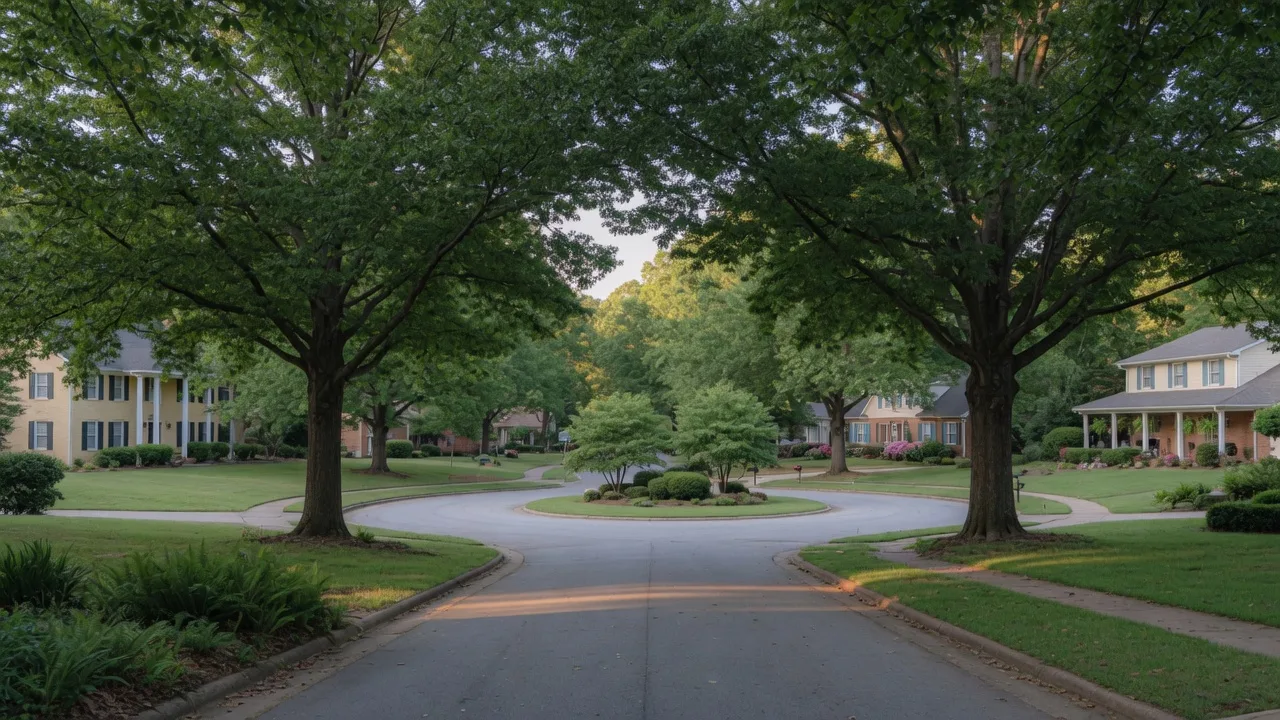
If you want a slower pace but still want to stay in Metro Atlanta, you have more good options than you might think. Quiet is not the same as boring, and it is not the same as far. It is the product of a few concrete things, and once you know what those are, you can predict almost exactly how calm a neighborhood will feel before you ever step out of the car. Here is an honest look at where Metro Atlanta feels quieter, what actually creates that feeling, and the tradeoffs that come with it.
What Actually Creates the Feeling of Quiet
Before we talk neighborhoods, it helps to understand what drives the calm. Five factors do most of the work:
- Lot size and spacing. The distance between houses is the single biggest predictor of perceived quiet. On a quarter-acre or larger lot, neighbors are physically out of earshot and out of sight. On postage-stamp lots, you hear every lawn mower and every conversation.
- Buildout age. Fully built-out communities from the 1970s through the early 2000s have mature trees and settled traffic patterns. New buildouts can be noisy for years while land is cleared, homes are constructed, and machinery rolls through on schedule.
- Tree canopy. Mature trees both muffle sound and visually soften a street. A neighborhood with a closed canopy reads as calm even when it is not truly silent.
- Traffic and distance from interchanges. Streets just off a highway on-ramp carry constant whoosh and headlight traffic. A neighborhood's peace depends heavily on how far the bedrooms sit from the main arteries that feed it.
- HOA, school zones, and noise buffers. Planned communities with HOA covenants often sit on quieter internal roads and buffer their edges with green space and berms. Great school zones pull in families of similar routines, which keeps daytime noise lower. Creeks, greenways, and tree lines act as natural sound barriers between you and the connector.
The Lively Side: Be Honest About Intown
Parts of the city are wonderful, and they are not quiet. Buckhead, Midtown, and Old Fourth Ward are lively by design. You get restaurants, bars, the BeltLine, a younger energy, and walkable daily life. That energy is the whole point, and for many buyers it is the right call.
What you trade is calm. In Old Fourth Ward and on Midtown's condo corridors, you hear city noise at night, sirens are a normal part of the soundscape, and parking is part of everyday life. Buckhead has leafy pockets, but the main corridors carry steady traffic. If your goal is a slower pace, intown is rarely where you will find it, no matter how pretty the particular block is. Know that going in, and you will not feel let down.
The Quieter Ring: North Metro Suburbs
North of the city, the suburbs that feel quiet usually combine mature canopy with generous lots and settled traffic. This is the ring where couples and families land when they want lower stress and a reliable routine.
Roswell and Johns Creek sit at the top of the list. Roswell's historic core is livelier around Canton Street, but its residential grids and the stretches along the Chattahoochee are genuinely peaceful, with mature oaks and large setbacks. Johns Creek is planned, low-traffic, and heavily treed; its internal roads are quiet almost all day, and the schools are among the strongest in the state. The tradeoff is a car-dependent life with no real downtown core.
Alpharetta is a good middle ground. Downtown Alpharetta and the Halcyon area are deliberately active, but the surrounding residential neighborhoods and the Windward side are quiet. You can live in a calm subdivision and still drive five minutes to a real town center when you want company. If you want both a slow home life and an easy social life, Alpharetta threads that needle.
Sandy Springs is quieter than you would expect given how close it is to Buckhead and the Perimeter. The city has invested heavily in parks, trails, and tree preservation. The ride through its residential stretches is peaceful, and you trade a little square footage for proximity. It reads as suburban calm with city access.
East Cobb and Smyrna round out this ring nicely. East Cobb is the classic settled suburb: mid-century and newer homes on wooded lots, excellent schools, and no significant downtown to draw crowds. Smyrna is a touch livelier near its Village, with a strong school system and easy access to the Battery and I-285, though its closer-in roads carry more traffic. Both are quiet enough that the noise you notice is mostly your own.
Decatur deserves a careful mention. It is intown-adjacent and its square can be busy on weekends, but the residential streets around Adair and the City of Decatur's school district feel calm, mature, and walkable. It is one of the few places where you can get a fairly quiet house and still walk to a real main street. The price and inventory are the tradeoffs; Decatur homes do not come cheap or stay long.
Planned Quiet: Peachtree City
Peachtree City is a special case and worth its own mention. It is a fully planned community built around golf-cart paths, so much of the local travel happens on quiet cart trails rather than heavy streets. The neighborhoods are leafy, the schools are strong, and the pace is unmistakably slower. If your definition of quiet is a calm, safe, family-oriented routine with minimal car traffic on local roads, Peachtree City delivers it about as well as anywhere in the metro. The honest trade is that it feels far from the city, and the social scene is quiet by design.
The Further-Out Buildouts: More Space, Longer Commute
If your budget needs to go further, or you want acreage, the western buildouts deliver the most physical quiet in the metro: Douglasville, Dallas, Villa Rica, Powder Springs, and Mableton. Land is cheaper here, lots are bigger, and in the lake and acreage areas you can get real separation from your neighbors, which no amount of curb appeal can replicate intown.
This is where HOA-planned communities shine and where lot size does the heavy lifting. A home on a half-acre or full acre with a tree line between you and the road feels genuinely quiet in a way a close-set subdivision never will. The trade is real and you should hear it plainly: commutes into the city core can run 40 to 55 minutes, and walkable options are limited. For people who work remotely, shift their own hours, or simply value the space over the drive, these areas are excellent. For anyone who needs to be downtown daily at rush hour, that silence comes at a steep daily price.
The Tradeoffs, Stated Honestly
Every quiet neighborhood trades something for its calm. Say it plainly so you can decide with open eyes:
- Quieter usually means a longer commute. The further out you go for space, the more time you spend on 285, 400, or 20. Map the drive at the exact time you would make it, not at noon.
- Quieter usually means fewer walkable spots. The neighborhoods with big lots and mature trees rarely have a main street you can walk to. Peachtree City and Decatur are the notable exceptions.
- New buildouts start loud. If you buy into a brand-new community, expect construction noise for a few years before the trees and traffic settle.
- HOA communities trade rules for calm. The covenants that keep things tidy and quiet also tell you what you can park in your driveway and what color your front door can be. Decide which matters more before you shop.
- School zones are a double-edged quiet. Great schools pull in families of similar schedules, which lowers daytime noise. They also make the neighborhood more desirable and, often, more expensive.
How to Test Quiet on a Real House Hunt
You can feel most of this out before you buy. Drive the street at 6:30 in the evening and again at 7:30 on a Saturday morning, the two times quiet either holds or collapses. Park with the windows down for ten minutes. Check how far the bedroom faces the main road. Verify the build year, the lot dimensions, and whether there is a tree buffer between you and the connector. Ask whether the school zone is stable and whether any commercial construction is approved for the nearby parcels. These five minutes of homework tell you more than any neighborhood rating ever will.
Metro Atlanta is big enough that you can genuinely have a slower pace without leaving it. It is about matching the right factors to your life: how often you commute, how much yard you want, whether you can live with HOA rules, and how fast you want the nearest social life. Get those four decisions right and the quiet will take care of itself.
Frequently Asked Questions
Which neighborhoods in Metro Atlanta are the quietest?
The quietest areas tend to be the established suburbs with larger lots, deeper setbacks, and mature tree canopies, like parts of East Cobb, Peachtree City, and the more residential corners of Decatur and Marietta. Streets off the main corridors in any suburb can also be surprisingly calm.
What makes a neighborhood feel quiet?
Traffic volume, lot size, setbacks, tree canopy, and the flight paths and rail lines nearby all shape how quiet a street feels. A home on a dead-end street with a big wooded lot can be peaceful in a busy city, while a home on a cut-through road can be noisy in a quiet suburb.
How do I test how quiet a neighborhood is before buying?
Visit at the times that matter to you: weekday morning rush, evening, and weekend. Listen for road noise, trains, planes, and loud landscaping. Also check the future development plans, because a quiet street today can change when new construction or a road project is approved nearby.
Are quiet neighborhoods far from Atlanta conveniences?
Not necessarily. Some of the quietest streets sit minutes from the action in areas like Brookhaven, Decatur, and East Cobb. You often trade a little urban energy for more peace, but you can find calm streets within easy reach of the amenities you actually use.
Ready to Find Your Quiet Corner?
I have spent over 20 years and more than 500 transactions helping buyers across Metro Atlanta match the right neighborhood to the right lifestyle. I know which streets are actually quiet at night, which buildouts are still settling, and which commutes quietly eat your sanity. I'm available and ready when you are.
I'll be in touch.