Is the Atlanta Housing Market Crashing? The Honest Answer for 2026

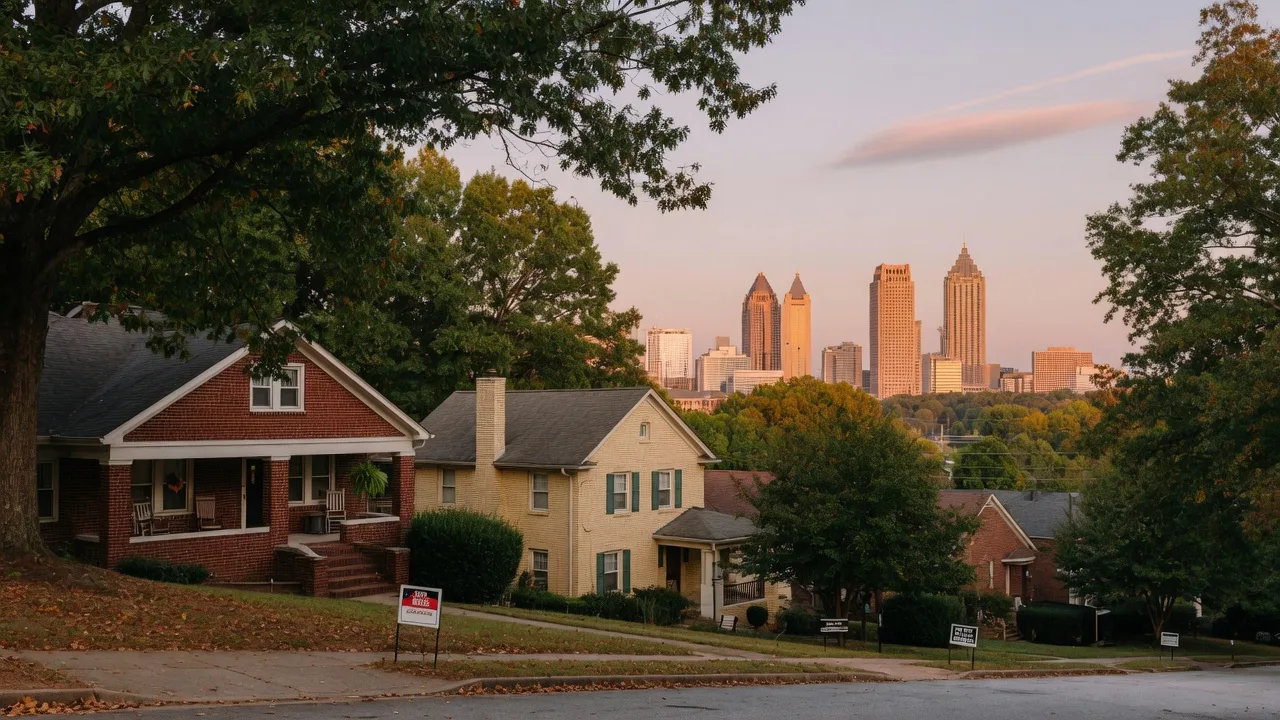
Is the Atlanta housing market crashing? If you typed that into Google this fall, you are not alone. It has become one of the most searched real estate questions in Metro Atlanta right now, and I understand why. Foreclosures are up, sales are slower, and prices have slipped from their peak. Put those three headlines together and a crash sounds plausible. After 20 years and more than 500 homes sold in this market, here is my honest answer: no, the Atlanta housing market is not crashing. It is correcting, and the correction is mild, orderly, and frankly overdue.
Why the Crash Question Is Everywhere Right Now
Search interest in this exact question has spiked because the market feels different than it did two years ago. In 2022, homes in many Atlanta neighborhoods sold in about 30 days, often with multiple offers and waived contingencies. Today the typical home takes 55 to 70 days to sell, and the Georgia MLS report published September 15, 2026 describes a market that has shifted from buyers competing for homes to homes competing for buyers. Add a rise in foreclosure starts and a stream of national headlines about cooling prices, and you have the recipe for alarm.
I get the worry. Most people have lived through exactly one housing downturn in their adult lives, and it was 2008. Every correction since then gets measured against that memory. So let me do what I always do with worried sellers and buyers: skip the fear and put the numbers on the table. You can find the broader picture in my monthly Atlanta market report, but here is the September snapshot.
Is the Atlanta Housing Market Crashing? The Numbers Say No
The word crash implies a collapse, and collapses look a certain way in the data. Let me lay out what Metro Atlanta actually shows right now:
- Prices are down low single digits, not double digits. Median home prices across the metro are roughly 1.6% to 2.9% below a year ago, depending on the measure, with the metro median landing in the upper $300,000s to low $400,000s. A 2% dip is a market cooling off, not a market falling apart.
- Intown Atlanta is still appreciating. The city of Atlanta proper tells a stronger story: Redfin puts the median sale price near $425,000 for the three months ending August 2026, up about 5.6% from a year earlier. The softer numbers are concentrated in parts of the suburban ring, not the whole metro.
- Inventory is up, but nowhere near a glut. Months of supply sits at roughly 4.6 to 5.4, up from about 3.1 a year ago. Buyers have real choice again, which is what a correction is supposed to deliver, but supply is still well short of the six to seven months that marks a genuinely loose market.
- Sellers are negotiating, not panicking. With homes averaging 55 to 70 days on market instead of 30, sellers are making price and closing-cost concessions. That is buyer leverage working, the healthy end of a correction.
Read those four points against the word crash and they do not fit. For more depth on where prices are heading from here, my earlier post on whether Atlanta home prices will go up or down in 2026 walks through the forecasts neighborhood by neighborhood.
What a Real Crash Looks Like, and Why Atlanta Doesn't Fit
People ask me about 2008 more than anything else right now, so let me be direct about the difference. In a real housing crash you see prices falling 20% or more in a year, bank-owned properties piling up on the market, and waves of people forced to sell because they lost income. None of that is happening in Metro Atlanta.
The clearest proof is the bank-owned inventory. While foreclosure starts have climbed from historic lows, the number of REO, or bank-owned, homes across the metro actually fell from 213 in April 2025 to 52 in April 2026. Distressed properties are not flooding the market, and without a distressed wave, you cannot have a 2008-style collapse. What you have instead is a market shaking off the excess of the pandemic years, which I analyzed in detail when Atlanta home sales dropped earlier this year.
The Foreclosure Headline, Explained
The foreclosure numbers deserve their own honest read, because they are the main engine of the crash fear. Metro Atlanta recorded about 2,520 foreclosure starts in the first quarter of 2026, more than half of Georgia's total, and filing activity is up roughly 50% from a year ago. Here is the context that matters: that rise is from historic lows, and a foreclosure start is not a foreclosure sale. Most starts get resolved through payment plans, loan modifications, or sales before the auction.
Still, if you are the one behind on payments, the aggregate statistics are cold comfort, and the smart play is to act early while you have options. My foreclosure help hub lays out the Georgia timeline and the moves that protect your equity, whether that means catching up, selling before the auction, or working out a short sale.
What the Correction Means for Buyers
If you have been waiting to buy, this is the market you were waiting for, with one honest caveat: mortgage rates are still in the upper 6% range, so affordability has not fully returned. But on everything you can control, buyers have leverage they have not had in years. You can take your time, compare homes, negotiate on price and closing costs, and request repairs instead of waiving inspections. My post on buying now versus waiting on rates runs the real math, and the question of whether Atlanta is a good place to buy still comes back yes for most buyers, because the fundamentals, jobs, growth, and long-term demand, have not changed. Start with my buying guide if you are new to the process.
What the Correction Means for Sellers
For sellers, the correction has one hard rule: price at today's market value, not at the peak numbers from 2024. I have watched this play out all year. Homes priced realistically are still selling in this market, often near asking, while homes priced at what the market used to be simply accumulate days on market and end up reducing anyway. My selling guide covers the strategy, and my deep dive on how long it actually takes to sell in Atlanta shows the do's and don'ts in a 55 to 70 day market. If you want a straight answer on what your house is worth today, start with my free home valuation, and we can build the plan from there.
The Bottom Line: This Isn't a Crash, but It Is a Different Market
Is the Atlanta housing market crashing? No. It is correcting, and corrections are how markets heal after a period like 2021 and 2022 pushed prices ahead of where incomes could keep up. That correction is now giving buyers back their leverage, giving sellers a fair (if less euphoric) market, and giving both sides a reason to negotiate with facts instead of fear. The playbook that wins here is simple, and it is the one I have used for two decades: know the real numbers for your specific neighborhood, price and offer with your eyes open, and move when the timing serves your life, not because a headline told you to.
Frequently Asked Questions
Is the Atlanta housing market crashing in 2026?
No. Median prices across Metro Atlanta are down roughly 1.6% to 2.9% from a year ago, which is low single digits, not the double-digit collapse of a real bust. Foreclosure starts are up from historic lows, but bank-owned inventory actually fell, so distressed supply is not flooding the market. This is a correction, not a crash.
Are Atlanta home prices dropping right now?
It depends on where you look. The broader metro median is down in the low single digits year over year, while the city of Atlanta proper is up about 5.6% over the three months ending August 2026, with a median near $425,000. South Metro and some suburban rings are softer. Prices are moving neighborhood by neighborhood, not everywhere at once.
Why are foreclosures up in Atlanta if the market isn't crashing?
Foreclosure starts rose roughly 50% from a year ago, but they climbed from historic lows. Metro Atlanta recorded about 2,520 starts in the first quarter of 2026, and most starts never end in a foreclosure sale. At the same time, the number of bank-owned homes in the metro fell from 213 in April 2025 to 52 in April 2026. That is not a distressed wave.
How long does it take to sell a home in Atlanta now?
The typical Metro Atlanta home is taking 55 to 70 days to sell, roughly double the 30 days at the 2022 peak. That longer window is the correction working as intended: buyers have time to compare, sellers have time to market well, and the pressure that pushed prices past fair value is gone.
Is it a good time to buy a house in Atlanta during this correction?
For most buyers, yes. Inventory is at roughly 4.6 to 5.4 months of supply, up from about 3.1 months a year ago, homes are sitting long enough to negotiate on, and sellers are open to price and closing-cost concessions. The trade-off is mortgage rates in the upper 6% range, which is why you should run the numbers on the home, not the headlines.
Should I wait to sell my Atlanta home because prices are correcting?
Sell for your reasons, not the calendar. If you have a life event driving the move, waiting for a few percent one way or the other rarely changes the outcome and costs you months. What matters is pricing at today's market value rather than the peak numbers from 2024, because a realistic price is what generates offers in this market.
Wondering What This Market Means for You? Let's Talk
Every correction looks scary from a distance and manageable up close, once you know your numbers. Whether you are buying, selling, or just trying to understand your equity, I can give you a straight read on your situation and a plan that fits your timeline. I'm available. I'm ready when you are.
Tommy Williams · Bailey Heritage Homes · GA License 287291 · tomwillsellga.com