Can I Buy Another House Before I Sell My Current Home? Here's What Atlanta Homeowners Need to Know
Found the next house but haven't sold yours yet? Here is the legal and financial reality of buying before you sell in Georgia, plus the strategies that make it possible.

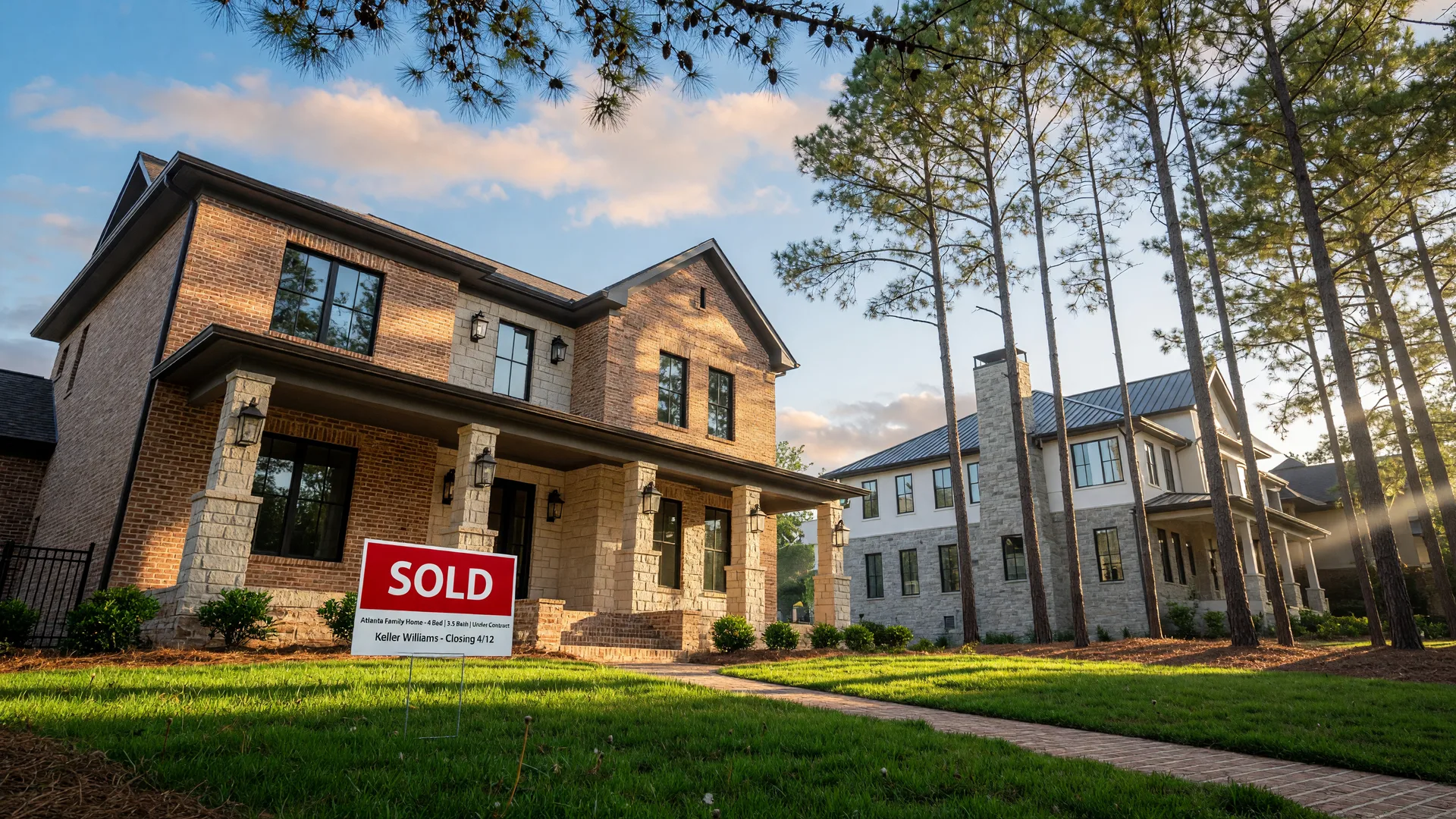
Found the next house but haven't sold yours yet? You are not alone. This is the single most common question I hear from Atlanta homeowners who are ready to move up. And the answer might surprise you.
The Short Answer: Yes, You Can. No Restrictions.
There is no law in Georgia that requires you to sell your current home before buying another one. You can absolutely buy a house while you still own your current home. No one stops you. No government agency requires a sale order. From a legal standpoint, you can own two homes at the same time with no issue.
So the answer to "Can I buy another house before I sell?" is a simple yes. Every day, Atlanta homeowners close on a new purchase while their current home is still listed, under contract, or even unlisted. It happens all the time.
But the legal answer and the practical answer are two different things. The real question is whether you qualify to carry two mortgages and whether you have a strategy to bridge the gap between the two transactions.
The Real Question: Can You Afford Two Payments?
This is where most homeowners get stuck. When you buy a home before selling your current one, your lender counts both mortgage payments in your debt-to-income ratio. That means you need to qualify for the new mortgage on top of your existing one.
Let's put some real numbers on this. Here is what the monthly payment looks like on a $400,000 home at current rates:
Estimated Payment on a $400K Home
Now add your current mortgage. If you're paying $1,800 on your current home, your total monthly housing obligation during the overlap is roughly $4,379. Lenders want this total to stay below 43% of your gross monthly income.
Example assumes 20% down payment, 7% APR on a 30-year fixed mortgage, and estimated Atlanta-area property taxes and insurance. Actual payments vary based on rate, loan program, and location.
For some homeowners, carrying two payments for two to three months is manageable. For others, it is a non-starter. The key is knowing which camp you fall into before you start shopping.
Four Strategies That Make Buying Before Selling Possible
If carrying two full mortgage payments is not in your budget, you have options. Here are the four most common strategies Atlanta homeowners use to buy before they sell.
Strategy 1: Bridge Loan
A bridge loan is a short-term loan that uses the equity in your current home as collateral. You take a lump sum advance to cover your down payment and closing costs on the new home. When your current home sells, you pay the bridge loan off from the proceeds.
- You can make a non-contingent offer, which is much stronger in competitive situations
- Typical fees run 2 to 2.5% of the advance amount
- Interest rates are higher than a standard mortgage (expect 8 to 12% APR)
- You need at least 20 to 30% equity in your current home to qualify
- Loan term is usually 6 to 12 months, with interest-only payments during that period
Strategy 2: HELOC (Home Equity Line of Credit)
A HELOC is a revolving line of credit secured by your current home's equity. Instead of taking one lump sum, you draw what you need and pay interest only on the amount you actually use. This makes it more flexible and often cheaper than a bridge loan.
- Lower upfront costs than a bridge loan (typically just appraisal and documentation fees)
- Interest rates are generally lower than bridge loans (prime rate plus a margin, currently around 8 to 10%)
- No prepayment penalties, so you pay it off as soon as your home sells
- Works best when you have significant equity (20%+) and want to keep costs down
Strategy 3: Contingent Offer
A contingent offer includes a clause that says the purchase depends on the sale of your current home. If your house sells within an agreed timeframe (typically 30 to 60 days), the deal proceeds. If it does not, you walk away with your earnest money back.
- No additional debt or financing costs
- Less competitive in multiple-offer situations. Many sellers in desirable Atlanta neighborhoods will choose a non-contingent offer over yours
- Works best when your current home is priced to sell quickly and in a high-demand area
- Lower risk because you never take on two payments
Strategy 4: iBuyer and Trade-In Programs
Companies like Opendoor, Offerpad, and Knock offer instant-buy programs where they purchase your current home directly at a predetermined price. Some programs let you use that equity as a credit toward your next purchase. This is the fastest option, but it comes at a cost.
- You can close quickly and use the cash as a buyer with no contingency
- Service fees typically range from 5 to 8% of the sale price, compared to the traditional 5 to 6%
- The guaranteed purchase price is usually 85 to 92% of market value
- Best for homeowners who prioritize speed and certainty over maximum sale price
What Lenders Look At When You Buy Before You Sell
To qualify for a new mortgage while you still own your current home, lenders evaluate three main factors. Understanding these upfront will save you time and frustration.
Debt-to-Income Ratio (DTI)
This is the biggest hurdle. Your DTI is the sum of all your monthly debts (including both mortgages) divided by your gross monthly income. Most conventional loan programs cap DTI at 43% for manually underwritten loans, though automated underwriting can go up to 50% in some cases. The lower your DTI, the more options you have.
Equity Position
Lenders want to see enough equity in your current home to serve as a safety buffer. For bridge loans and HELOCs, you typically need 20% or more equity. A higher equity position also means you can access more funds for your down payment.
Credit Score
Bridge loans and HELOCs typically require a 680 or higher. A higher score gets you better rates on both the new mortgage and the bridge financing. If your score is below 680, you may still qualify, but your options narrow and your costs go up.
Atlanta Market Context: Why a Balanced Market Makes This Easier
The Atlanta housing market in mid-2026 has shifted from the frenzy of 2021-2023 toward something more balanced. With roughly 4.7 months of inventory, buyers have more room to negotiate and sellers are more willing to work with contingencies and flexible timelines. Here is why that matters for the buy-before-you-sell decision:
- More seller concessions: Nearly 70% of sales in the Atlanta metro include some form of seller concession. That gives you room to negotiate closing costs or rate buydowns.
- Longer days on market: Homes in many Atlanta neighborhoods are sitting 30 to 60 days before going under contract. This gives you a wider window to sell your current home if you use a contingent offer.
- Less bidding war pressure: While desirable neighborhoods like Buckhead, Decatur, and Alpharetta still see competing offers, the average home is getting 2 to 3 offers instead of 8 to 12. This reduces the premium you pay for a non-contingent offer.
- Rate environment: At 7% mortgage rates, fewer buyers are jumping into the market. That means less competition on the buying side, but it also means your current home may take slightly longer to sell.
In a balanced market, the buy-before-you-sell decision comes down to math rather than panic. You have time to evaluate your options, compare costs, and pick the strategy that fits your financial situation. That is a much better position than trying to figure this out during a seller's market where every day matters.
What Most Atlanta Homeowners Do
After 21 years and more than 500 transactions across Metro Atlanta, here is what I see most often. The most popular approach among Atlanta homeowners is a combination strategy rather than a single method.
Most Common: HELOC + Contingent Offer
Homeowners open a HELOC on their current home to cover the down payment, then make a contingent offer on the new home. This keeps the bridge cost low (HELOC interest only on what you draw) while still giving the seller a path to a clean closing. If your home sells within the contingency window, you pay off the HELOC and move in. If not, you walk away.
Second Most Common: Bridge Loan + Non-Contingent Offer
Homeowners with substantial equity (30%+) and strong credit use a bridge loan to make a clean, non-contingent offer. This is the most competitive approach and works best in desirable neighborhoods where multiple offers are still common. The tradeoff is higher bridge loan fees and interest.
Third Most Common: Sell First with Leaseback
Many Atlanta homeowners choose the financially conservative route: sell first, negotiate a 30 to 60 day leaseback with the buyer, and then buy. This avoids all bridge financing costs and dual-payment risk. It works best when the market is balanced and buyers are willing to grant leasebacks.
The right strategy for you depends on your equity, your income, your timeline, and your comfort level with risk. I have helped homeowners use all three of these approaches, and the right fit is rarely the same for two different families.
What About FHA Loans and Down Payment Requirements?
If you are planning to use an FHA loan or you are concerned about down payment requirements, the buy-before-you-sell math changes slightly. FHA loans have stricter DTI limits and require you to occupy the home as your primary residence. If you already own a home, the lender will want to see that you can carry both payments or that your current home is under contract with a firm closing date.
For conventional loans, the down payment on a $400,000 home can range from 3% ($12,000) for a first-time buyer to 20% ($80,000) to avoid PMI. If you are a move-up buyer, you likely have equity from your current home to fund that down payment. The challenge is accessing it before closing.
For a deeper look at loan options and down payment requirements, read my guides on FHA vs. conventional loans in 2026 and down payment requirements for Georgia homebuyers.
Why Work With Tommy on a Dual Transaction
Buying before you sell is one of the most complex real estate maneuvers you can attempt. It requires coordinating two sets of lenders, two closing dates, two inspections, two attorneys, and two moving plans. One missed detail can leave you carrying two mortgages longer than expected or scrambling for temporary housing.
After 21 years and more than 500 closed transactions in Metro Atlanta, I have developed a process that keeps dual transactions on track. Here is what that looks like:
- Realistic equity assessment. I start with a market analysis of your current home, not an automated Zillow estimate. You need to know exactly where you stand before choosing a strategy.
- Strategy matching. Not every option fits every homeowner. I help you match the right approach to your equity, income, timeline, and risk tolerance.
- Lender connections. I work with lenders who understand bridge financing and HELOCs and can move quickly when timing matters.
- Timeline coordination. The hardest part of a dual transaction is timing both closings. I manage the schedule so your purchase and sale overlap as little as possible.
- Problem resolution. Every transaction hits a snag. Having an agent who has navigated hundreds of both sides means those snags get resolved quickly, not reactively.
"Mr. Williams has consistently demonstrated professionalism and delivers high-quality service. I have purchased several homes with his assistance, and each experience has been handled with expertise and care. Over the years, the time and dedication he has invested in helping me acquire my homes have built not only a strong professional relationship but also a valued friendship."
More Resources on Buy Before You Sell
This article is part of a larger series covering buy-before-you-sell strategies for Georgia homeowners. Here are the best next steps:
- Buy Before You Sell Main Guide — the complete overview of move-up strategies in Georgia with costs and timelines
- Buy Before You Sell Programs in Georgia — specific programs and lenders available to Georgia homeowners
- FHA vs. Conventional Loans in 2026 — which loan type works best for move-up buyers
- Down Payment Requirements for Georgia Homebuyers — what you need to put down on your next home
Frequently Asked Questions
Can I qualify for two mortgages at the same time?
It is possible if your income supports both payments and your debt-to-income ratio stays within the lender's limits. Lenders count the new payment and often the existing one, so qualifying gets harder the bigger the second payment is. Some lenders also allow the existing payment to be excluded if you show a signed contract and quick closing.
What are my options for buying before I sell?
The main routes are a bridge loan, a home equity line of credit, a cash-out refinance, or a buy-before-you-sell program. Each uses your current home's equity in a different way, and the best choice depends on how much equity you have and how quickly your current home can close.
How does a buy-sell contingency work?
A buy-sell contingency makes your offer on the new home contingent on selling your current one by a set date. It protects you from carrying two homes, but sellers in a multiple-offer situation can treat it as a weakness and pick a buyer without a contingency. In 2026's buyer's market it is a more accepted strategy.
What if my current house does not sell in time?
That is the risk to plan for before you sign anything. Have a realistic price, a marketing plan, and a fallback like bridge financing or a rental bridge if the sale slips. Talking through the timeline with your agent and lender up front is what keeps the transaction from becoming stressful.
Tommy Williams
Bailey Heritage Homes · License #287291
With over 20 years of experience and over 500 homes sold across Metro Atlanta, I bring deep local knowledge and a steady hand to every transaction. Whether you are buying your first home or selling a luxury property, I make the process seamless from start to closing.
Ready to find out if buying before selling works for you?
I will assess your equity, explain your options, and help you choose the right strategy for your situation. The first conversation is always free.
I'll be in touch.